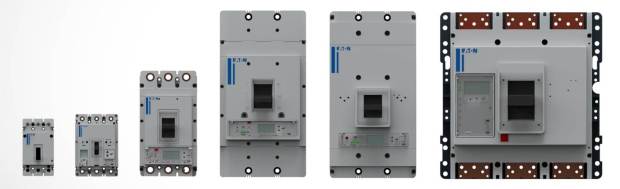
circuit breaker

Revolutionizing Machine Building: Unveiling Eaton’s Power Defense Circuit Breaker

Introduction

In the dynamic realm of machine building, every component plays a crucial role in ensuring optimal performance, safety, and efficiency. One such indispensable component is the circuit breaker, which acts as the guardian of electrical systems. Eaton, a global leader in power management solutions, has taken circuit breaker technology to the next level with their groundbreaking Power Defense series. In this blog, we will delve into the exceptional features and benefits of Eaton’s Power Defense Circuit Breaker, exploring how it’s set to revolutionize the landscape of machine building.

The Power of Innovation

Eaton’s Power Defense Circuit Breaker stands as a testament to the company’s dedication to innovation and excellence. With its advanced technological features, it addresses the evolving needs of machine builders by ensuring reliability, safety, and efficiency like never before.

PROTECTED Arc flash reduction

CONNECTED Built-in communications

GLOBAL IEC / CCC / UL / CSA

**1. Enhanced Reliability

Machine builders understand the critical nature of uninterrupted operations. The Power Defense Circuit Breaker boasts state-of-the-art technology that significantly reduces the risk of nuisance tripping. This is achieved through intelligent and adaptive algorithms that accurately predict potential faults, allowing the circuit breaker to distinguish between genuine faults and transient disturbances. By minimizing false trips, machine builders can expect enhanced reliability, reduced downtime, and increased productivity.

**2. Smart Connectivity

The Power Defense Circuit Breaker is not just a hardware marvel; it’s also a smart solution. Integrated with IoT capabilities, it enables remote monitoring and real-time diagnostics. This empowers machine builders to monitor the health and status of the circuit breaker from a centralized location, optimizing maintenance schedules and minimizing the need for manual intervention.Such connectivity paves the way for predictive maintenance, enabling proactive measures that prevent potential issues before they disrupt operations.

**3. Adaptive Protection

The machine-building landscape is characterized by diverse and dynamic applications, each with its unique power requirements. The Power Defense Circuit Breaker’s adaptive protection mechanism caters to this versatility. It dynamically adjusts its tripping characteristics based on load conditions, ensuring optimal protection without compromising operational efficiency. This adaptability translates to reduced wear and tear on equipment, longer component lifespan, and ultimately, cost savings.

**4. Compact Design

Space constraints are a common challenge in machine design. Eaton’s Power Defense Circuit Breaker addresses this concern with its compact yet robust design. By incorporating cutting-edge materials and engineering techniques, the circuit breaker offers high breaking capacity in a reduced footprint. This not only optimizes panel space but also allows for more efficient heat dissipation, enhancing the overall system’s performance and longevity.

**5. Customization Options

No two machine-building projects are identical. Recognizing this diversity, the Power Defense Circuit Breaker comes with a range of customization options. Whether it’s adjusting trip settings, integrating additional communication protocols, or incorporating specialized protection functions, Eaton’s solution can be tailored to match the unique requirements of each machine builder’s application.

Conclusion

Eaton’s Power Defense Circuit Breaker is a game-changer for machine builders, ushering in a new era of reliability, efficiency, and safety. With its innovative features such as enhanced reliability, smart connectivity, adaptive protection, compact design, and customization options, this circuit breaker is set to redefine the way machines are built and operated. As machine builders embrace this cutting-edge technology, they can look forward to streamlined operations, reduced downtime, and increased profitability. With Eaton’s Power Defense Circuit Breaker, the future of machine building is brighter than ever before.

Learn More: CMAFH eNewletter: What will you build. How will you defend it? Eaton Power Defense

cropped-cmafh-logo-with-tagline-caps.png

CMA/Flodyne/Hydradyne is an authorized  Eaton Electrical distributor in Illinois, Wisconsin, Iowa and Northern Indiana.

In addition to distribution, we design and fabricate complete engineered systems, including hydraulic power units, electrical control panels, pneumatic panels & aluminum framing. Our advanced components and system solutions are found in a wide variety of industrial applications such as wind energy, solar energy, process control and more.

Avoiding a mental breakdown when choosing circuit breakers

Guest contributor: Jessica Yeh, Phoenix Contact USA

Sizing circuit breakers is confusing because there are so many factors to take into consideration. Of course, there are the typical concerns: price, size, and delivery time. But what about everything else?

What trip mechanism should be used? What ampere rating? Dual rated or regular voltage ratings? Why do I need a lockout/tagout? Does a shunt do the same thing as an auxiliary? What does bidirectional mean? What approvals do I need to take into consideration? Do I need NEC Class 2? NEMA? CSA? UL? IEC or IEEE certifications?

These are just a few of the things to consider when choosing a circuit breaker for a specific application.

Stop the ride, I want to get off!

Here’s the thing. Selecting breakers is a complex task, but the following list will give you a few basic ideas to get started in the right direction. This is by no means everything you should consider, but it’s a nice breakdown.

(The good kind, not the mental kind.)

What type of protection are you looking for?

Breakers are activated by various factors including PCB components in the case of electronic breakers, heat in terms of thermal breakers, magnetism for both thermal-magnetic and hydraulic-magnetic breakers, and more. Each trigger has a different reaction time. Depending on how critical the equipment you’re protecting is, you may want to use this basic guide.

Size matters (Use the 80 percent rule)

It’s common practice to choose a breaker with an ampere rating at around 80 percent of the nominal rating of your application. This ensures that you have a nice little buffer in case the current spike is particularly strong. The breaker will be able to trip well before the current level can get too high and cause damage.

Embrace the trip curves  

When someone says “trip curve,” you either have one of two reactions.

A) Cringe and gulp down the nauseating feeling at the thought of having to squint over all those lines and numbers, or

B) Pass the information along to someone else so that they can exhibit reaction A.

While many companies add their own custom trip curves, the most common include B, C, and D curves, which are considered industry standard.

What you want to keep in mind when it comes to trip curves is that it’s not about all the little calculations, but the overall picture. Besides thinking “how fast does this thing need to trip?” also consider it in terms of your equipment.  Sensitive devices should be protected by a breaker that reacts quickly. On the opposite end, equipment with higher startup currents like motors would probably be best protected by a breaker with a delayed trip curve.

Need for approvals

You may have heard the term “Listed” or “Recognized.” You may have also heard the terms “supplemental” and “branch” protection. Depending on your requirements and the type of breaker you’re using, you might need to select a specifically approved breaker. In most cases, these are the four basic types you’ll often see.

Supplementary protectors (UL Recognized) interrupt an electrical distribution circuit and are intended to protect equipment.

Branch circuit protectors (UL Listed) open a circuit during overload and short circuit and are intended to protect the circuit conductors.

Completing the outfit

When choosing an outfit, you always want to get the basics down first, before you start accessorizing. Outfitting a cabinet is no different. Once you’ve chosen your breaker, you can add additional bells and whistles to give you a little something extra. Here are just a few options.

To reset or activate/deactivate the breaker remotely, you would use its remote reset/control. Combined with remote status indication, you can easily service and maintain breakers without going to a job site.

But if you’re already on site, the local status indication feature uses color codes that allow you to easily service and maintain breakers.

Busbars reduce wiring by connecting a series of breakers to a common a power source.

And finally, lockout/tagout keeps things safe by attaching to the trip mechanism and preventing unwanted tampering during testing or maintenance.

As you get further into the process, you’ll still have to consider some of the more advanced questions raised above, but this list gives you some of the basic break(er)down that you need to know to get started! To learn more about circuit breakers and overcurrent protection options, visit www.phoenixcontact.com/cbpluggable

cropped-cmafh-logo-with-tagline-caps.png

CMA/Flodyne/Hydradyne is an authorized Phoenix Contact distributor in Illinois, Wisconsin, Iowa and Northern Indiana.

In addition to distribution, we design and fabricate complete engineered systems, including hydraulic power units, electrical control panels, pneumatic panels & aluminum framing. Our advanced components and system solutions are found in a wide variety of industrial applications such as wind energy, solar energy, process control and more.