
Exploring the ctrlX Core: Revolutionizing Automation and Control
In the ever-evolving landscape of automation and control technology, the ctrlX CORE has emerged as a game-changer. Developed by Bosch Rexroth, the ctrlX CORE represents a significant leap forward in how we design and implement automation systems. This blog post delves into what makes the ctrlX CORE stand out and how it’s reshaping the future of industrial control.
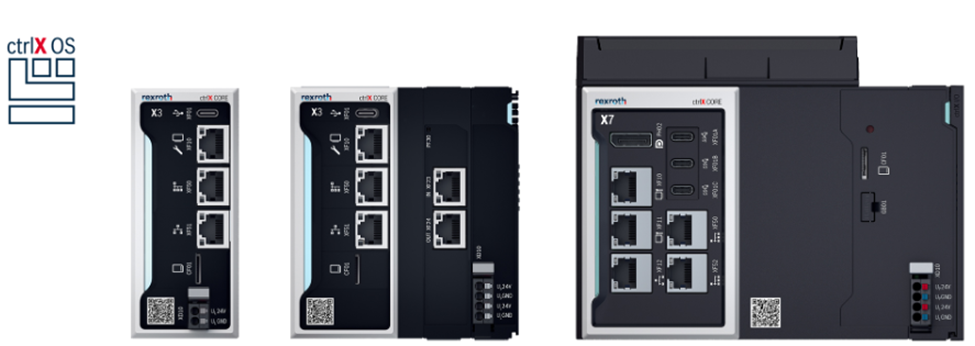
What is the ctrlX CORE?
At its core, the ctrlX CORE is a highly flexible, scalable, and modular control platform designed to meet the diverse needs of modern industrial automation. It integrates a range of functionalities into a single, compact unit, enabling unprecedented levels of efficiency and adaptability in automation systems.
Key Features and Benefits
- Modular Design: The ctrlX CORE’S modular architecture allows users to tailor their automation solutions with various modules and components. This flexibility ensures that the system can be customized to specific application requirements, making it suitable for a wide range of industries and use cases.
- Open Architecture: Embracing an open architecture, the ctrlX CORE supports a broad spectrum of standards and protocols. This openness facilitates seamless integration with existing systems and third-party devices, providing users with greater freedom and interoperability.
- High Performance: Equipped with advanced processing capabilities, the ctrlX CORE delivers exceptional performance in terms of speed, responsiveness, and data handling. This high-performance backbone is crucial for real-time control and complex automation tasks.
- Scalability: One of the standout features of the ctrlX CORE is its scalability. Whether you need a small, simple controller or a more robust system with extensive I/O capabilities, the ctrlX CORE can scale to meet your needs. This scalability helps future-proof investments and allows for easy upgrades as requirements evolve.
- Intuitive User Interface: The ctrlX CORE offers an intuitive user interface that simplifies programming, configuration, and monitoring. With tools designed to streamline workflows and reduce complexity, users can quickly set up and manage their automation systems.
- Edge Computing Capabilities: Leveraging edge computing, the ctrlX CORE processes data locally, reducing latency and improving response times. This capability is particularly beneficial for applications requiring real-time analytics and decision-making.
Applications Across Industries
The versatility of the ctrlX CORE makes it applicable across a variety of industries:
- Manufacturing: In manufacturing, the ctrlX CORE can drive complex production lines, coordinate multiple machines, and ensure high precision and efficiency.
- Logistics: For logistics and warehousing, it can manage automated guided vehicles (AGVs), conveyor systems, and sorting equipment, optimizing operations and reducing downtime.
- Energy: In the energy sector, it supports the automation of renewable energy systems, power distribution, and monitoring of critical infrastructure.
- Automotive: The CtrlX Core is also used in the automotive industry for controlling assembly lines, testing equipment, and other automation processes.
Looking Ahead
As industrial automation continues to advance, the ctrlX CORE stands out as a pivotal innovation. Its combination of modularity, performance, and flexibility makes it a valuable tool for businesses looking to enhance their automation capabilities and stay competitive in a rapidly changing market.
Bosch Rexroth’s ctrlX CORE is more than just a control platform; it’s a step towards a more connected, intelligent, and adaptable future in industrial automation. For businesses seeking to leverage the latest in automation technology, the ctrlX CORE represents a powerful and forward-thinking solution.
Here is a showcase for Node RED, one of the most popular apps for the ctrlX.
Unleashing Creativity and Efficiency with Node-RED
In the rapidly evolving world of technology, staying ahead often means finding new and efficient ways to integrate and automate processes. Enter Node-RED, a powerful tool that’s been making waves in the tech community for its versatility and ease of use. If you haven’t heard of it yet, it’s time to get acquainted.
What is Node-RED?
Node-RED is an open-source flow-based development tool designed for wiring together hardware devices, APIs, and online services. Developed by IBM, Node-RED provides a browser-based flow editor that makes it incredibly easy to create and manage workflows with minimal coding. Think of it as a visual programming environment where you can drag and drop nodes (blocks of code) to build applications or automate tasks.
Why Node-RED?
**1. Ease of Use: Node-RED’s drag-and-drop interface simplifies the process of designing and deploying workflows. You don’t need to be a coding expert to get started; the visual nature of the tool allows you to create complex systems by simply connecting different nodes.
**2. Flexibility: Whether you’re working with IoT devices, APIs, or just need to automate a task, Node-RED has a vast library of pre-built nodes and integrations. This flexibility allows you to connect to almost any service or device with minimal configuration.
**3. Rapid Prototyping: Node-RED is ideal for prototyping and experimentation. Its visual interface allows you to quickly iterate on your design, test different workflows, and see results in real-time.
**4. Community and Ecosystem: Being open-source, Node-RED has a vibrant community that contributes to its ecosystem. There are countless nodes available for various purposes, from integrating with social media platforms to controlling home automation systems.
How Node-RED Works
Node-RED uses a flow-based programming model where you build your application by connecting different nodes in a flow. Each node represents a specific function or task, such as sending an HTTP request, processing data, or interacting with a database.
- Nodes: These are the building blocks of your application. Each node performs a specific function, such as a sensor reading, data transformation, or sending a notification.
- Flows: Flows are the connections between nodes. They define the path that data takes through your application, specifying how data should be processed and transferred between nodes.
- Debugging and Monitoring: Node-RED provides built-in tools for debugging and monitoring your flows. You can see real-time logs, inspect data as it moves through your nodes, and quickly identify issues.

Programming Flow
Practical Applications
**1. IoT and Home Automation: Node-RED is a popular choice for IoT applications and smart home automation. You can easily connect sensors, actuators, and other devices to create custom automation rules and control systems.
**2. API Integration: If you need to integrate multiple APIs or services, Node-RED’s flexible nodes make it straightforward to connect and manage data from various sources. This can be particularly useful for aggregating data or creating custom dashboards.
**3. Data Processing: Node-RED’s ability to process and transform data makes it a powerful tool for data pipelines. You can fetch data from different sources, perform transformations, and output the results to your desired destination.
**4. Rapid Prototyping: Whether you’re building a new application or testing an idea, Node-RED’s ease of use and rapid prototyping capabilities allow you to quickly validate concepts and iterate on your designs.
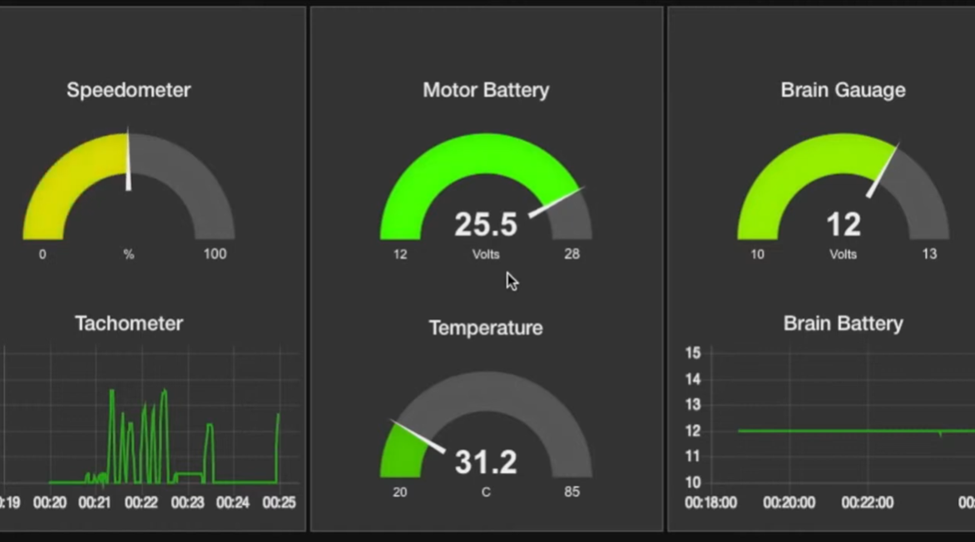
Sample Node Red Dashboard Visualization Credit: Richard Hopkins
Conclusion
Node-RED is transforming how we approach building and integrating applications. Its visual, flow-based programming model simplifies complex tasks and opens up possibilities for both technical and non-technical users. Whether you’re looking to automate your home, integrate APIs, or prototype new ideas, Node-RED offers a powerful and user-friendly platform to bring your projects to life.
So why not give Node-RED a try? Dive into its capabilities and see how it can streamline your workflow and spark your creativity in the world of technology.
Contributor:

John Raysa, Application Engineer – CMAFH
johnraysa@cmafh.com
CMA/Flodyne/Hydradyne is an authorized Bosch Rexroth distributor in Illinois, Wisconsin, Iowa and Northern Indiana.
In addition to distribution, we design and fabricate complete engineered systems, including hydraulic power units, electrical control panels, pneumatic panels & aluminum framing. Our advanced components and system solutions are found in a wide variety of industrial applications such as wind energy, solar energy, process control and more.
 Machine Geeks