The Sensitive Arm system provides real-time, low-latency force feedback while utilizing integrated torque sensors across all joints.
Kassow Robots , a leading manufacturer of 7-axis collaborative robots, announced its Sensitive Arm technology across its complete range of 7-axis collaborative robots. Introduced at Automate 2025 in Detroit, MI, this advanced force control system integrates high-resolution torque sensors into all seven joints of each robot, enabling manufacturers to automate delicate and contact-sensitive tasks with greater precision, safety and flexibility.
The Sensitive Arm system provides real-time, low-latency force feedback while utilizing integrated torque sensors across all joints. With a sensor resolution of up to 0.024 Nm/bit and a control frequency of 30 kHz, the system enables compliant and nuanced motions essential for complex tasks such as assembly, surface finishing, inspection and delicate handling.
“The Sensitive Arm is transforming how manufacturers approach automation of complex assembly and finishing operations,” said Dieter Pletscher, global sales manager at Kassow Robots. “Our customers are seeing immediate benefits in applications requiring controlled contact forces from precision assembly to surface finishing while maintaining the industrial strength and flexibility that Kassow Robots’ 7-axis design is known for.”
Operators can fine-tune how the robot responds to external forces using a dedicated interface that makes it easy to adjust parameters such as stiffness, damping and end-effector compliance. The system also enables one of the smoothest and most responsive hand-guiding experiences on the market, with minimal resistance and high sensitivity, enabling fast and intuitive programming by demonstration. This significantly reduces the time and complexity involved in deploying new applications.
By eliminating the need for external force and torque sensors, the Sensitive Arm simplifies system integration while improving feedback accuracy. It also improves collaborative safety by enabling faster, more reliable detection of impacts or unexpected contact, creating safer conditions for human-robot interaction on the factory floor.
The Sensitive Arm is available across Kassow Robots’ entire 7-axis collaborative robot portfolio, including new high-payload models, expanding automation possibilities for complex and sensitive tasks. Kassow Robots‘ expanded lineup now offers significantly greater payload capacities while maintaining precision and safety.
To learn how Kassow Robots is advancing collaborative robotics with the Sensitive Arm, please visit https://www.kassowrobots.com/.
In addition to distribution, we design and fabricate complete engineered systems, including hydraulic power units, electrical control panels, pneumatic panels & aluminum framing. Our advanced components and system solutions are found in a wide variety of industrial applications such as wind energy, solar energy, process control and more.
Bountourakis is a Greek manufacturing company specializing in HORECA equipment, supplying Inox stainless steel kitchen units, showcases, and tables—particularly well-known across Heraklion on Crete. To scale up its welding operations, the company turned to Kassow Robots’ partner Netelco S.A. Together, they implemented the KR1805 cobot, enabling flexible welding with both Laser and TIG technologies.
Challenge
A shortage of skilled welders was limiting Bountourakis’ ability to meet growing production demands. “Like a lot of businesses, we find it really hard to find someone who can weld and who can sometimes be flexible with their hours during busy times. As our production is on the island, it makes it even harder,” says Adonis Bountourakis, Head of Production of Bountourakis.
Despite having invested in a laser welder, the company lacked enough staff to operate it, causing significant delays—especially for small parts, which could take days to complete. The goal was to make welding easier, faster, and more scalable.
Solution
Netelco S.A delivered a custom robotic welding cell, equipped with a gripperchanger that allows the robot to switch between laser and TIG welding tools. The laser welder, provided by the customer, was successfully integrated into the setup by Netelco S.A. “We had an initial meeting, then the customer sent us the laser welder and asked us to do some welding with the robot. We showed him how it works. He was really happy with it and decided to go for Kassow Robots. It was a really smooth process”, says Anastasios Paraskevopoulos, sales rep at Netelco S.A.
Thanks to the KR1805’s long reach and 7th axis, the robot is now capable of welding a wide variety of parts such as refrigerators, cooking appliances, ovens and washing /hygiene units—and ready to handle more complex tasks in the future.
Benefits
Bountourakis highlights the ease of use, flexibility, and robustness of the KR1805 cobot. The company has significantly increased its welding throughput while reducing dependence on manual labor—scaling production and staying competitive in a demanding market.
Curious to see how others are automating welding with Kassow Robots? Check out another use case where a flexible cobot setup made all the difference.
In addition to distribution, we design and fabricate complete engineered systems, including hydraulic power units, electrical control panels, pneumatic panels & aluminum framing. Our advanced components and system solutions are found in a wide variety of industrial applications such as wind energy, solar energy, process control and more.
With its Edge Edition cobots, Kassow Robots has miniaturized the robot controller to about 10 percent of its original size and launched the world’s first 7-axis cobots in which the controller is integrated into the base of the robot. In this interview, founder and CEO Kristian Kassow talks about the advantages of this innovation.
Why did you develop the Edge Edition, and had there been anything like it before?
Our goal has always been to make it as easy as possible for our customers to integrate cobots into their production, with an explicit focus on SMEs. Our Edge Edition offers multiple advantages here: it’s designed for industrial use, offers a high level of maneuverability thanks to its 7 axes, and delivers unique compactness. It also has a small footprint of just 160 x 200 millimeters. That is because we have miniaturized the controller to just 10 percent of the original size and integrated it into the robot base. Another benefit worth mentioning is that the Edge Edition can be easily connected to any DC power supply, such as the battery of a mobile robot.
What customer groups are you targeting with the Edge Edition?
Lots of them, all industries with intralogistics tasks at their production sites can benefit from our Edge Edition! The Edge Edition offers the additional benefit of being a multifunctional cobot, allowing users to switch between tasks seamlessly. This includes the ability to use it for the production of Product A, followed by a quality check, and then for palletizing. The Edge Edition comes into play and shows off its advantages when a cobot becomes an efficient assistant to mobile robots.
We believe that mobile applications will be the primary use for the Edge Edition. This means using cobots in combination with an AMR or AGV.
Can you tell us more about your cobots being an assistant to mobile robots?
One way in which the cobot can be made mobile is by moving the lightweight cobot installation to a new location and programming it for a new application. The programming of a cobot is much easier than in the case of a traditional industrial robot. Another way to make the most of mobility is to use it for the same tasks that come up at various locations during the production process. Let me give you an example. A combination of an AGV/AMR and a cobot can take over the task to take care of the loading of boxes which will be used for packaging.
With the Edge Edition from Kassow Robots, the controller has been integrated into the base of the 7-axis cobot.
Why does the Edge Edition contribute to an easy integration of AGV/AMR-cobot solutions?
To summarize: The Edge Edition saves space because the robot arm and controller form a compact unit that can be installed quickly. In addition, as mentioned earlier, the direct current (DC) connection on all Edge Edition cobots satisfies all the requirements for connecting a cobot directly to the battery of an AGV or AMR. At the end of the day, we want to make it easier for our customers to integrate cobots into mobile solutions.
A look at today’s AGVs and AMRs quickly reveals just how little space they offer. Robot controllers are mostly bulky, making it harder to automate tasks. Our Edge Edition cobots feature a slim base. We help system integrators and end customers simplify the implementation of these AGV/AMR & cobot solutions.
All five Edge Edition cobots have a DC connection. They are powered by direct current and can be connected to mobile robots’ batteries, for example.
*This interview was originally published in September 2024 by the German magazine Automation Praxis
If you have any questions or require further information regarding Kassow Robots, please contact us: sales@cmafh.com
In addition to distribution, we design and fabricate complete engineered systems, including hydraulic power units, electrical control panels, pneumatic panels & aluminum framing. Our advanced components and system solutions are found in a wide variety of industrial applications such as wind energy, solar energy, process control and more.
The discussions surrounding automating the United States’ manufacturing sector have never been more sustained or indeed more relevant than today. There are few who would argue that the combination of labor and skills shortages, together with the drive to attain greater levels of productivity, means that automation is now becoming an essential part of manufacturing for a greater number of businesses, especially SMEs.
There are still however, certain perceived barriers inhibiting the adoption of automation for some businesses, amongst them are complexity, investment cost, training and skills. The new ZiMo flexible robot cell from Zimmer Group addresses these perceived barriers by offering a cost-effective and straightforward process automation solution for small, medium-sized and alternating batch sizes. Zimmer’s flexible robot cell enables both rapid deployment and intuitive operation, smoothing the path to the introduction of automation.
The proliferation of collaborative robots (cobots) in recent years, together with a general increase in the adoption of the smaller variety of industrial robots, has certainly sparked a greater interest in automation and encouraged many to explore the possibilities through the integration of robots for a wide range of tasks. The robot or cobot itself however is but one part of the overall solution. The robot still must be installed alongside the manufacturing process, interfaced to the line and equipped with the necessary tooling and technologies to enable it to perform the required tasks.
(Left to Right: ZiMo with small parts gripper – ZiMo with gripper change system – ZiMo for flexible applications)
Flexible, Mobile Process Automation
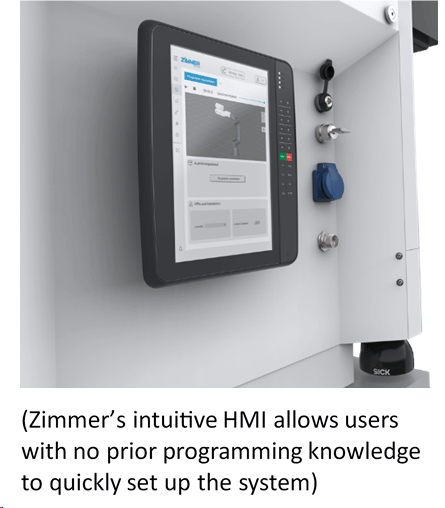
ZiMo’s compact design and mobile positioning concept enables the rapid deployment of the system where and when it is needed, overcoming the perception of complexity. This, combined with a comprehensive range of Gripper and EOAT options, means that the system can be easily configured for a variety of handling and process operations. The fact that ZiMo can be used without the need for any complex integration means that the handling system offers absolute freedom of use and the versatility to be quickly and easily reconfigured for new assembly, pick and place or even training requirements. A significant benefit for users of ZiMo is the fact that no prior programming knowledge is required when commissioning the system. ZiMo’s “robot neutral” concept means that this flexible robot cell can be used with a wide range of smaller industrial robots or cobots and be set up and commissioned intuitively via the Zimmer human machine interface (HMI). This saves valuable time and resources, allowing users to focus entirely on areas of production that offer real added value for their business.
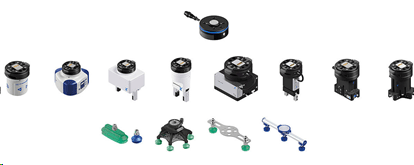
A comprehensive range of accessories including gripper and vacuum systems, sensor technology and the MATCH robot modules, mean that should production needs or processes change, ZiMo can be reconfigured quickly, without any significant effort or expense, to meet the new requirements. In instances where the system is to be used in conjunction with one of the smaller industrial robot types, floor scanners can be integrated on each of the four corners of the system to provide the safe operating environment required when using this type of robot.
(Zimmer’s MATCH modules complement a comprehensive range of accessories for the ZiMo system)
Vincent Zimmer, Managing Director with ZIMMER Group US, comments on the advantages of the system: “ZiMo makes it possible for users, even those with no prior automation or programming experience, to take advantage of the benefits of a collaborative robot by supporting their employees in monotonous, time-consuming tasks throughout the day, and at night if required. The variable set-up options for the workbench and its compact size make ZiMo a reliable, flexible robot cell for almost any small robot application, including loading and unloading of machines, pick-and-place tasks, or assembly as well as laboratory automation. Users of the system will benefit from reduced cycle times, enhanced productivity and improvements in consistency and quality.”
The ZiMo concept of a mobile, flexible automation platform, capable of being used with small industrial robots or cobots from a wide variety of manufacturers, and which is simple and intuitive to set up and deploy, will no doubt alleviate the obstacles for those looking to take their first steps into automation, or indeed those seeking to further expand the use of this type of technology within their manufacturing operations.
Zimmer Group is among the leading manufacturers in the automation industry with standardized solutions for mechanical and plant engineering that have become globally recognized as high-quality, durable products. Under the slogan “THE KNOW-HOW FACTORY”, Zimmer Group specializes in six technologies: Handling, Damping, Linear, Process, Machine Tooling and System Technology.
Their specialty is in manufacturing grippers and end-of-arm tooling components for robotics and the automation industry. They also manufacture clamping and braking elements, industrial shock absorbers, machine tooling components along with soft-close technology for the furniture industry.
CMA/Flodyne/Hydradyne is an authorized Zimmer Group distributor in Illinois, Wisconsin, Iowa and Northern Indiana.
In addition to distribution, we design and fabricate complete engineered systems, including hydraulic power units, electrical control panels, pneumatic panels & aluminum framing. Our advanced components and system solutions are found in a wide variety of industrial applications such as wind energy, solar energy, process control and more.
Navigating the complex world of robotics integration can be daunting, especially when faced with the varied costs and technical specifications.
The question, “How much does a robot cost?” is not easily answered as the price is influenced by various factors, such as; technology, application, and design.
In this article, we’ll navigate through the confusing world of robot pricing to provide a clear and detailed breakdown of the costs involved.
By understanding these key elements, you’ll be better equipped to make informed decisions that suit your budget and operational goals.
Stay with us as we discuss the specifics and shed light on how to effectively manage these investments.
Key Takeaways
Cost Influences
Technology Level: Advanced technologies such as AI, machine learning, and real-time data processing greatly increase a robot’s cost.
Design Customization: Custom features tailored to specific tasks or environments can escalate costs due to specialized design and production.
Application Specificity: Robots designed for specific industries or critical tasks often come with a higher price tag due to the specialized capabilities and certifications required.
Types and Costs
Industrial Robots: Essential for tasks like welding and assembly, with prices typically ranging from [$25,000 to $400,000] depending on functionality and sophistication.
Cobots: Designed for safe interaction with humans in shared spaces, generally cost between [$15,000 and $45,000], reflecting their accessibility and technological features.
Cartesian Robots: Ideal for precise linear motions, used in applications such as 3D printing, priced between [$10,000 and $50,000] based on size and precision capabilities.
Humanoids: Advanced robots mimicking human behaviour, significantly more expensive, typically starting at [$100,000 and can exceed $1 million], due to high-level AI and mobility technologies.
Considerations
Application Suitability: Ensure the robot’s capabilities align with the intended tasks and operational demands.
System Compatibility: Assess integration needs with existing systems to avoid additional costs for modifications.
Maintenance Expenses: Consider ongoing maintenance costs, availability of parts, and technical support to ensure sustainable operations.
Training and Integration Costs: Significant resources are needed for training on the proper use and maintenance of new robotics systems to ensure safety and efficiency.
Adaptability and Longevity: Robots that can be easily reprogrammed or upgraded can adapt to changes and extend their useful life, offering better long-term value.
ROI Metrics: It’s crucial to define metrics to assess the return on investment from robotics, considering financial returns as well as quality, efficiency, and customer satisfaction improvements.
What influences the price of a robot
When considering a robot purchase, it’s important to understand the characteristics that contribute to its price.
The cost can be greatly influenced by the robot’s design complexity, materials used, the technology it incorporates, and its intended application.
Factors such as the precision of tasks it performs, the software it requires, and additional features like sensing and vision systems also play a role.
For more detailed insights on a specific robot model, like the 7-axis collaborative robot models from Kassow Robots, each specification adds layers to the cost.
Technology and Software
The sophistication of the technology and software within a robot influences its price. High-end robots incorporate advanced algorithms for pathfinding, autonomous decision-making, and machine learning, which require substantial investment in research and development.
Additionally, user interface software that enhances the usability and functionality of the robot also adds to the cost.
These systems must be continually updated and optimized to handle complex tasks and easily interact with human operators and other automated systems.
The integration of Internet of Things (IoT) connectivity and real-time data processing capabilities further escalates the price, making the robot more adaptable and efficient but also more expensive.
Design and Customization
The level of design and customization involved in a robot’s creation directly impacts its cost.
Robots designed with specific requirements for particular industrial tasks, such as extra limbs, specialized tools, or enhanced mobility features, require unique engineering and design solutions.
Each custom feature needs to be planned and tested, which increases the research and development cost.
Furthermore, specialized designs often necessitate the use of unique components and technologies not typically found in standard robots, driving up manufacturing complexity and costs.
This custom engineering ensures the robot can perform designated tasks efficiently but also results in a higher price tag due to the increased labour and material costs involved in its production.
Material and Build Quality
The choice of materials in robot construction is essential as it affects both the durability and functionality of the robot, which influences its cost.
High-quality materials that can withstand high stress, wear, and environmental conditions are necessary to ensure the longevity and reliability of the robot. These materials often come at a premium, especially when they are lightweight yet strong metals or composites that offer superior performance.
Additionally, the precision required in machining and assembling these high-grade materials increases manufacturing costs.
Robots built with less expensive materials may reduce upfront costs but can lead to higher maintenance expenses and shorter lifespans, which could increase overall costs in the long run.
Application and Industry
Robots are increasingly tailored for specific industries, which can affect their costs. For example, robots designed for the healthcare sector may require precise and gentle handling capabilities, sophisticated diagnostic tools, and compliance with strict regulatory standards.
Similarly, robots used in manufacturing might need to handle heavy loads, perform at high speeds, and operate continuously. These specialized capabilities need advanced technology and strong construction, which increases the costs.
Additionally, the critical nature of tasks performed by these robots often requires extensive safety features and redundancy systems, further increasing their price.
Image Source: Alexander Burkle / Kassow Robots
Production Volume and Economies of Scale
The production volume of robots can also influence their cost. Limited production runs are more expensive on a per-unit basis because they cannot capitalize on the economies of scale enjoyed by mass-produced models.
Custom or low-volume robots often require specialized assembly processes and parts, which are more expensive than those used in high-volume manufacturing.
Conversely, when robots are produced in large quantities, the cost per unit decreases due to more streamlined manufacturing processes and bulk purchasing of materials. Therefore, companies looking to use robots extensively might find it more cost-effective to invest in models that are produced on a larger scale.
Research and Development Costs
The investment in research and development (R&D) impacts the cost of robots. Developing clever robotic technologies often requires time and resources in R&D to create, test, and refine advanced systems.
This includes the costs associated with prototyping, simulation, and field testing to ensure that the robots meet specific performance criteria and safety standards.
Regulatory Compliance and Certification
Robots must often meet various regulatory and safety standards, which can vary widely depending on the industry and the region in which they are sold.
Compliance with these regulations can involve additional costs related to certification processes, modifications to meet specific legal requirements and ongoing compliance monitoring.
For example, robots used in pharmaceutical or food production environments must adhere to especially strict standards, adding to their overall cost.
Training and Support Services
The complexity of modern robots often requires training for end-users. The cost of providing training programs, user manuals, and technical support can be considerable.
Additionally, ongoing support services, including maintenance and updates to software and hardware, also contribute to the total cost of ownership of a robot.
Supply Chain and Logistics
The cost of parts and the complexity of the supply chain logistics involved in sourcing and assembling robot parts can affect the final price of the robot.
Fluctuations in material costs, tariffs, and transportation fees, as well as the efficiency of the supply chain, can all impact costs.
Robust supply chains are essential for timely and cost-effective production but can be expensive to establish and maintain.
Brand and Market Positioning
The brand reputation and market positioning of the robot manufacturer can also play a role in pricing.
Established brands with a proven track record of reliability and excellent service might charge a premium for their robots.
Additionally, pricing strategies may vary based on market positioning, with some brands positioning themselves as providers of cost-effective solutions while others target the luxury or high-performance segment of the market
Types of robots and their price tags
Industrial robots
Industrial robots are essential in modern manufacturing, capable of performing a variety of tasks including welding, painting, and assembly with incredible precision and efficiency.
The cost of these robots is determined by factors such as payload capacity, reach, speed, and the level of customization required.
Basic models start at lower prices, which typically include a controller and basic software. More advanced models with comprehensive customization options, higher payload capacities, and enhanced capabilities will have a higher price tag.
Such price variations reflect the various needs of different industries, from automotive to electronics, where the demands on robotic systems differ widely.
The substantial range in prices ([$25,000 – $400,000]) accommodates businesses of all sizes, from small manufacturers to large enterprises with heavy-duty requirements.
Unlike traditional industrial robots, cobots are equipped with advanced sensors and safety features to ensure safe operation without the need for protective barriers.
The cost of cobots varies depending on their design, payload, and the complexity of the tasks they are programmed to perform.
Prices for simpler models that perform light duties have a smaller price tag when compared with more advanced models equipped with high-tech features such as vision systems and enhanced learning capabilities.
This price range [$10,000 – $50,000] reflects the growing market for robots that are accessible to small and medium-sized enterprises and not just large manufacturing facilities.
Cartesian robots are characterized by their three principal axes of movement — X, Y, and Z — which makes them ideal for precise linear applications such as 3D printing, CNC machining, and assembly operations where high accuracy is required.
The simplicity of their design generally makes them more affordable than more complex robotic systems.
Prices for Cartesian robots can range from about [$10,000 – $50,000] with the more basic models costing a lot less than models with better reach and load capacity, precision capabilities, and customized control systems.
This cost range supports industries that require precise, repetitive movements in a controlled environment.
Humanoids
Humanoid robots are among the most technologically advanced types of robots, designed to replicate human motion and interaction.
They use sophisticated AI, machine learning algorithms, and sensory systems to navigate complex conditions and perform varied tasks.
Due to their sophistication and the technology required, humanoid robots are typically the most expensive.
Prices range from roughly [$100,000 – $1 million] with the more advanced models, equipped with the most advanced features and capabilities, having the highest prices
These robots are mainly used in research, healthcare, and service industries where human-like interaction and adaptability are crucial.
This price bracket highlights the cutting-edge nature of humanoid robotics and the investment required for their development and deployment.
What to consider before buying a robot
Before purchasing a robot, it’s essential to define your needs and consider factors like compatibility with existing systems, long-term costs, and potential operational enhancements.
We are here to help you select a robot that aligns with your operational goals, ensuring efficiency, compliance, and a solid return on investment.
Let’s take a deeper look.
Define the Purpose and Requirements
Before investing in a robot, clearly define what you need the robot to achieve. Consider the tasks it will perform — whether it’s assembly, packaging, inspection, palletizing,labelling, or quality control.
This will help determine the type of robot you need, such as industrial, collaborative, or service robots.
Different tasks require different levels of precision, speed, and payload capacity. Aligning your business needs with the robot’s application capabilities ensures that you select a robot that can meet your operational goals without overspending on unnecessary features.
Compatibility With Existing Systems
Evaluate the compatibility of the new robot with your current machinery and software systems.
It’s important to make sure that the robot can integrate into existing production lines or work environments. Check if additional equipment or software is needed for integration and whether the robot supports the communication protocols used in your facility.
Incompatibility can lead to additional costs for modifications or updates to your systems, so prior confirmation will save time and resources in the long run.
Scalability and Flexibility
Consider the scalability of the robotic system. As your business grows, your robotic needs might change, requiring different functionalities or additional units.
Choose robots that are known for their flexibility in handling various tasks or those that can be easily upgraded with new capabilities.
Investing in scalable and flexible systems can prevent future bottlenecks and reduce the need for complete overhauls as your operation expands.
Maintenance and Support
Understanding the maintenance needs and the support available for a robot is essential. Ask about the maintenance schedule, availability of spare parts, and the technical support provided by the manufacturer.
Robots with high maintenance costs can affect the total cost of ownership. Also, consider the availability of local service technicians who can perform repairs and regular maintenance to minimize downtime.
Total Cost of Ownership
Beyond the initial purchase price, assess the total cost of ownership, which includes installation, maintenance, training, and potential downtime costs.
Estimate energy requirements, consumables, and whether the robot will need regular software updates. A cost analysis will help in making an informed decision by comparing the long-term financial impacts of different robotic systems on your operations.
Regulatory Compliance and Safety Standards
Before investing in a robot, ensure it meets all relevant regulatory and safety standards for your industry and region. Compliance is vital in sectors such as healthcare, food processing, and automotive manufacturing, where safety and precision are important.
Non-compliance can lead to legal issues, fines, or operational halts, which can be costly. Understanding the certifications that the robot has, such as ISO standards or specific industry compliance, is needed to protect your operations and ensure worker safety.
Environmental Considerations
Environmental factors such as temperature, humidity, dust, and exposure to chemicals can impact a robot’s performance and lifespan. Choose a robot designed to withstand the specific conditions of its working environment.
For example, robots in heavy industrial settings may require strong construction and protective measures against heat and particulates, whereas cleanroom robots need specific designs to prevent contamination.
Staff Training and Adaptation
Evaluate the level of training your staff will need to operate and maintain the new robotic system.
Assess whether you have the right skills available internally or if you will need to hire new staff or provide training to existing employees.
The ease of use of the robotic system and the availability of vendor training programs can also be a decisive factor. Ensuring your team is well-prepared can improve productivity and reduce downtime due to operational errors.
Future-Proofing Technology
Invest in technology that can adapt to future advancements. This includes considering whether the robotic system is equipped with abilities such as machine learning, adaptability to new software updates, and compatibility with newer technologies.
Choosing a robot that is suitable for upgrades can extend its useful life and protect your investment.
Return on Investment (ROI)
Calculate the expected return on investment (ROI) for the robotic system. This includes analyzing productivity gains, cost savings from labour reductions, and improvements in quality and consistency.
A clear understanding of the financial impact and payback period will help justify the investment and ensure that the robot meets your business objectives.
Financial planning is key to ensuring that the robot contributes positively to your bottom line.
How much in approximative costs can you expect to save on an assembly line with the help of cobots?
Integrating cobots (collaborative robots) on an assembly line can lead to cost savings of approximately 20-30% by enhancing operational efficiency and reducing labour costs. These savings are achieved through the automation of repetitive tasks and allowing human workers to focus on more complex operations.
What is the average price tag of a robot?
The cost of robots varies widely, from a few thousand dollars for basic models to several hundred thousand or more for advanced, specialized machinery.
How long does it typically take to see a return on investment from a robot purchase?
The time it takes to see a return on investment (ROI) from a robot can vary based on the type of robot and its application. However, for industrial and manufacturing settings, companies often report seeing an ROI within two to three years, especially when robots are used in high-volume or high-labor-cost tasks.
Can robots be leased or rented instead of purchased outright?
Yes, robots can be leased or rented, providing a more flexible financial option for businesses that need robotic technology but may not be ready to commit to a full purchase. Leasing or renting can also offer the advantage of keeping the technology up-to-date, as companies can upgrade to newer models at the end of the lease term.
What are the ongoing costs associated with operating a robot?
Beyond the initial purchase, the ongoing costs of operating a robot include maintenance, repairs, software updates, and possibly energy consumption. Training for personnel on how to operate and maintain the robot also adds to the costs.
Final Thoughts
Understanding the cost of robots involves considering their technological complexity, design, materials, and intended application.
This guide provides a foundational understanding to help you navigate the initial investment and long-term benefits of robotic integration.
Equipped with this knowledge, businesses can make informed decisions on their investments in robotics, ensuring they meet their operational needs and maximize return on investment.
With careful planning and consideration, integrating robotics can be a transformative investment for any enterprise.
In addition to distribution, we design and fabricate complete engineered systems, including hydraulic power units, electrical control panels, pneumatic panels & aluminum framing. Our advanced components and system solutions are found in a wide variety of industrial applications such as wind energy, solar energy, process control and more.
Cobots (collaborative robots) are becoming a vital way to help manufacturers improve their productivity. Strong, fast and simple to use, they can make production processes more efficient and business more competitive. We look at what cobots do, how they support production and how Kassow Robots has been growing since the majority stake acquisition by Bosch Rexroth.
A lot has happened in the year and a half since the Danish cobot manufacturer became part of Bosch Rexroth: With the move to a new location, it was possible to expand the production capacity in a highly professional manner and to increase revenue significantly. The team has grown: in Copenhagen, where the company was founded, at the subsidiary in Prague, and within the sales team based in Ulm. Kassow Robots has greatly expanded its global sales activities by participating in trade fairs in various countries and in events within Bosch Rexroth. The dynamic development has one constant: CEO and founder Kristian Kassow as an intensive driving force.
Cobot market continues to expand
Cobots are an important part of intelligent manufacturing and an effective measure to reduce the pressure on costs while securing production in times of workforce lack. They are increasingly used in industry to automate processes which are done in the same working space as human colleagues. Cobots enable small and medium-sized enterprises to automate with their own staff – because collaborative robots can be easily programmed and operated by almost anybody. There is already a high demand for them, and the market is set to continue expanding*.
They can perform a range of jobs easily and offer plenty of flexible automation options with significant benefits:
They can be integrated easily into the production process with minimal changes to the rest of the line – providing a cost-effective entry-point to robotic automation, which can be expanded over time.
They are fast and accurate, which improves production efficiency and helps lower overall operating costs.
They work safely alongside people.
Cobots take on laborious or repetitive tasks, enabling the human workforce to focus on more value adding tasks – which helps address skill shortages.
Seven axes and powerful flexibility
At Bosch Rexroth, we see cobots as an important and versatile part of future proof solutions for factory automation – which is why we’ve expanded our product range with the collaborative robots of Kassow Robots.
The company develops, produces and sells unique and efficient 7-axes lightweight collaborative robots for industrial applications. Their cobots are extremely user-friendly, giving companies great flexibility and enabling small and medium-sized enterprises without in-house robotics specialists to achieve complex automation and programming cost-effectively and independently.
Kassow Robots has designed its cobots to work in the tightest of production spaces. Equipped with seven axes, they can reach around corners like a human arm, and can lift a payload of up to 18 kg. Currently the product family comprises five collaborative robot models, with reaches of 850 to 1800 millimeters, and joint speeds of up to 225 degrees per second.
New products are continually in development. At this year’s Automatica, Kassow Robots presented the Edge Series: a prototype of a controller integrated into the cobot base, delivery of which will start in the beginning of 2024. With no extra controller cabinet to be placed near the cobot, the 7-axes cobots can then be used in even more flexible and space-saving ways, which is very important for mobile applications like AMRs (Autonomous Mobile Robots).
Setting business up for further growth
Thanks to the majority shareholding of Bosch Rexroth, Kassow Robots is now expanding its production and its sales activities worldwide. With CEO and co-owner Kristian Kassow leading the company, the team is primed to introduce their cobots on the world stage, through trade show participation and internal events as well as developing the sales partners network. It currently includes more than 60 partners worldwide, and it continues to grow.
Electronics engineer Nikolaj Thorup Frederiksen working on the new KR Edge Series (image source: Kassow Robots).
To facilitate this growth, Kassow Robots moved to a new location one year ago. The modern building in Kastrup near Copenhagen offers sufficient space not only for increasing production capacity, but also for development activities and offices. Higher production capacity also means more square meters for testing – the Kassow Robot cobots run through an automated test program after assembly, before being packed for delivery.
In the last almost 18 months we have gone through an exciting and challenging period of scaling up, which we mastered successfully thanks to our highly motivated team. Naturally our primary efforts have been to deliver cutting edge technology in high quality according to the market requirements.
Kristian Kassow, CEO of Kassow Robots
How do cobots work with Bosch Rexroth products?
All five Kassow Robots lightweight cobots communicate seamlessly with the control platform ctrlX CORE. Additionally, an ecosystem of drivers for easy configuration of peripheral devices, communicating with robots, like grippers and cameras, is being further expanded. So the number of compatible end-of-arm-tools and devices is steadily growing, enlarging the scope of application day by day.
The cobots can also be equipped with the Smart Flex Effector from Bosch Rexroth, which facilitates joining processes, complicated assembly movements, or difficult handling tasks that were previously impossible to master mechanically. Through the unique combination of a sensor system, with kinematics operating independently in six degrees of freedom, this compensation module gives industrial robots a sense of touch similar to the human hand.
Convincing benefits: a major order for cobots from Project Service & Production
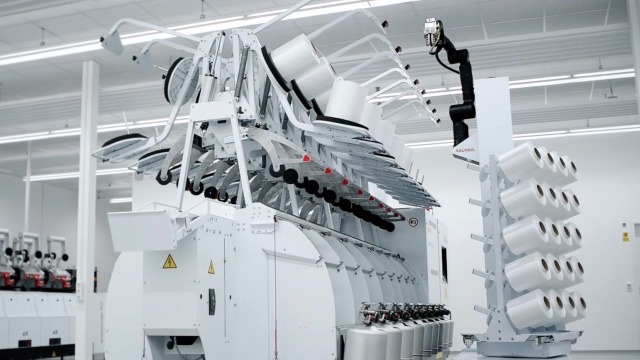
For the restocking of cabling machines with bobbins, Project S&P, system integrator and customer of Kassow Robots, specializing in the optimization of production processes, has worked out an automation solution for the textile industry.
A flexible solution for the restocking of cabling machines with bobbins (image source: Project S&P and Kassow Robots).
To ensure the smooth changeover of yarn packages, Project S&P developed and built a mobile handling solution with a cobot. The automated guided vehicles are equipped with a magazine, a handling system and a KR1018 cobot from Kassow Robots. A linear axis is part of the solution, so that the cobot can load the cabling machines at different heights.
Beyond taking over the workforce’s job of handling very heavy weights, the automation capabilities of the 7-axes KR1018 contributes to smoother yarn package changes. The triple effect of reduced personnel costs, of better quality at the same time due to more gentle package handling and of the ability of material traceability – all this is an achievement of this automation solution. It would not be possible with a conventional 6-axes robot. The success of this has meant that a larger number of cobots are being delivered to the customer.
In addition to distribution, we design and fabricate complete engineered systems, including hydraulic power units, electrical control panels, pneumatic panels & aluminum framing. Our advanced components and system solutions are found in a wide variety of industrial applications such as wind energy, solar energy, process control and more.





 Machine Geeks