Rittal

The Factory of the Future, Today: How IoT-Enabled Climate Control Makes Plants Smarter

Automation is a target that many in the industrial sector are chasing. However, converting existing facilities into smart facilities can be a costly and time-consuming undertaking.

For a company to implement smart manufacturing, its machinery and equipment must be able to communicate with each other and across a network. Many in the industry are beginning to invest in steps toward automation through integrating sensors into their equipment and investing in IoT-ready machines and devices, even if they aren’t ready to put them online yet.

In order to fully integrate with IIoT (the Industrial Internet of Things) and the factory of the future, climate control units must also be brought online for remote monitoring and integration into IoT systems. For this, cooling units must either be replaced or retrofitted.

New Solution for IoT Connected Cooling: Retrofit

For many plant managers, the push towards automation means investing significant amounts of money in new connected devices. However, another option exists for enclosure cooling systems: Retrofit.

The practice of retrofitting your existing cooling systems for IoT connectivity wasn’t previously an option but using newly available adapters certain existing units can be connected. These adapters connect cooling via common plant protocols such as TCP/IP, OPC UA, Modbus an

Taking a retrofit approach allows all of your systems to “talk” to each other so you can ensure they are performing properly. Real-time monitoring of equipment enables alerts to be sent out, allowing you to get systems back online as quickly as possible to minimize costly downtime for your plant. Tracking data from cooling systems allows plant managers to confirm when equipment is running correctly, determine the hours in use and establish regular maintenance and inspections to keep cooling units running at optimal performance. When your climate products are running correctly, the rest of your sensitive equipment and controls can keep your plant smart.

When to Replace Rather than Retrofit

Retrofitting is the most cost-effective way to bring your climate control solutions online with your smart plant’s systems. However, retrofitting may not always be the best option depending on your current equipment. When should you replace cooling units rather than retrofit them?

  • If your equipment is too old. Assess the age of your equipment, if it is more than five to seven years old, consider upgrading to newer, more efficient and IoT-enabled equipment.
  • If your utility provider is offering incentives for installing more efficient equipment. Upgrade incentives vary based on timing and location, so if you’re considering an upgrade, check with your utility providers to see if there is a current or upcoming rebate program.
  • Was your equipment wasn’t specified appropriately in the first place? One of the most common mistakes when specifying climate control units is installing undersized units. If your current units aren’t performing as they should, consider upgrading.
  • If you’ve upgraded your drives and devices inside the enclosure but not your cooling unit. As drives and PLCs get smaller and smaller, plants will sometimes upgrade the contents of the enclosure, but overlook the climate control unit. If you can replace two drives with four or five, they may be more efficient than the older ones and less energy-loss, but the aggregate heat generated may have increased, meaning your climate solution may not be able to keep up.
  • If your equipment has failed. Obviously, if your unit has failed, it should be replaced rather than retrofitted.

The Rittal Solution for Retrofit

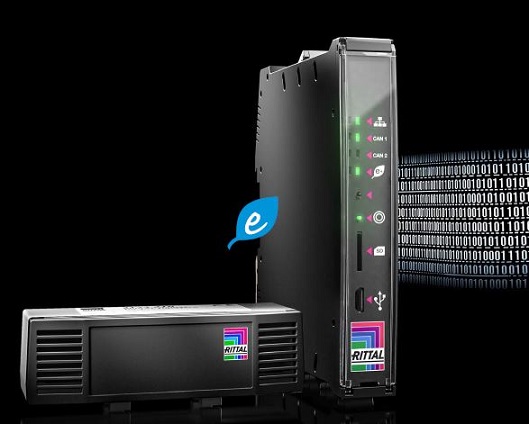
Rittal recently launched an adapter for its Blue e cooling units that, when installed, ensures the units can link up to smart condition monitoring and IoT systems. The adapter can be used to set up condition monitoring for up to ten cooling units in a master/slave arrangement. It is compatible with all wall- and roof-mounted NEMA 12, 3R/4, and 4X rated Blue e units that employ the Comfort Controller. Combining the IoT Interface with the IoT Adapter, Blue e cooling units may be integrated into higher-level systems. The whole system can be configured and commissioned via the web server– quickly, conveniently and without the need for any programming.

Learn more about the adapter for retrofitting your climate solutions for IoT, check out the brochure. To read more on IoT and climate control, visit IoT-enabled Climate Control is Changing the Game.

cropped-cmafh-logo-with-tagline-caps.png

CMA/Flodyne/Hydradyne is an authorized  Rittal distributor in Illinois, Wisconsin, Iowa and Northern Indiana.

In addition to distribution, we design and fabricate complete engineered systems, including hydraulic power units, electrical control panels, pneumatic panels & aluminum framing. Our advanced components and system solutions are found in a wide variety of industrial applications such as wind energy, solar energy, process control and more.


The Enclosure Testers

Guest contributor: Rittal LTD

Rittal’s innovative VX25 enclosure was recently put through its paces by technicians from the Schaper Group. 

Their observations on the new enclosure are notably around improved operational efficiencies and increased productivity. These offer interesting insights for other operators, and indeed anyone who has the final say on enclosure technology.

Sometimes, it’s the smallest things that make all the difference.  For Eugen Franzen, the team leader for mechanical installation at Controller Steuerungstechnik GmbH, part of the Schaper Group, it was an almost nondescript detail that won him over.

fri1820569100 Rittal enclosure testers

“The hole counting on the new frame sections means we can now pinpoint precisely where enclosure mounting parts should go,” he says.

This tiny, time-saving addition means operators can mount support rails or cable clamp rails at identical heights across all their enclosures, easily and with confidence. “Previously, we often had to revisit such details, which always involved extra work that we no longer have to worry about.” says Eugene.

It’s a welcome productivity improvement for Schaper Group teams, who like many in the sector, juggle fit-to-burst order books and high time/cost pressures, with the ever-present lack of specialist workers.

“All in all, we currently have seven vacancies in the manufacturing department alone and could hire trained applicants on the spot,” explains Nils Mentrup, technical manager at Schaper Steuerungstechnik GmbH.   Automated solutions that deliver a higher output with fewer trained staff offer Nils some relief.  But clearly new components and systems that save time during assembly also boost efficiency in manufacturing operations.

At the company’s cutting-edge manufacturing plant in Herford, Germany, everything is state of the art, meticulously planned and perfectly organised.

The facility, which features numbered wiring areas, was built in 2009 more than doubled in size in the last year.  Seventy workers manufacture control and switchgear solutions of various sizes at the site. “Thanks to the facility’s expansion, we now have enough space to produce several large systems 30 to 40 metres in length at once,” explains Nils.

They have just completed their first control systems using Rittal’s new VX25 enclosure.

“Its predecessor, TS 8, was a flawless enclosure,” recalls Nils. “That’s why we were pleasantly surprised that Rittal had evidently put a lot of thought into many different potential improvements when it devised the VX25.”

His attention has been on the reduced number of mounting parts and the positive impact this has had in terms of storage: “You see it straight away because storage is less of an issue now – both in our central warehouse and the parts warehouses for the individual projects that we set up directly at our workstations.”

Greater stability

The stability of the VX25 also meets the team’s approval.

“The enclosure itself is more stable now – that’s one of its major benefits,” say Eugene.

This is particularly apparent in the new gland plates.

When fitters are expanding enclosures they have to repeatedly go inside them. “In the past, the gland plates were often somewhat bent as a result, meaning we had to carry out reworking,” remembers Eugene. This is now a thing of the past, which of course adds to the overall time saving.   Added to which, there is the enclosure flooring’s design: “The frame is now designed so that there is no space between it and the gland plate. Back in the day, we often had problems with a screw falling down the gap,” he explains.

The new hinges allow the team to remove the enclosure doors without levering any hinge pins.  Eugene advises: “Even if we don’t plan to carry out machining on one of our Perforex machining centres, we usually take the enclosure doors off because it makes wiring so much easier.”

This particularly applies to larger switchgear, where wires need to be installed across multiple enclosures. “The time saved in assembly and dismantling can be anything up to one minute or more for each enclosure,” he adds.

“We also no longer have to wonder which rail goes where because with the VX25, the rails fit on both the vertical and horizontal frame parts and can be fitted from the side or the rear.” This means the team can now screw on a rail from the back, even if the mounting plate has already been fitted in the enclosure.

“In the past, if we ever forgot about the rail – which is an absolute must for some switchgear built to UL – we had to take the mounting plate apart or at least tip it forwards.” This is no longer the case, making life a lot easier for the team, and extends to fitting mounting components or side/rear panels.

“During assembly work, we always used to have two cordless screwdrivers that were equipped with the appropriate screw bits – now we only need one,” says Eugene.  The principle of one-person assembly has also won the team leader over.  “I can simply attach the rear panel at the top and it stays securely in position until I’ve tightened the screws.”

For any team, switching to new technology or products can create issues.  “At the start, most people are sceptical whenever things change, but we found the switchover to be quick and seamless,” says a delighted Nils.

This smooth transition is helped by the VX25 conversion assistant – a web-based tool that enables customers to simply convert parts lists from projects planned using the TS 8 into parts lists for the VX25.  Teams simply drag and drop their old parts lists onto the designated site, upload them as Excel files, and download the new parts lists once converted.

Even 3D engineering plans generated by Eplan Pro Panel can be converted without virtually no manual intervention. “Now that the first two large systems with the new enclosure are nearly finished, we have a good handle on how the conversion works,” says Nils.

Fast assembly

There are other time-saving aspects to dealing with Rittal.  For example, the company’s 24-hour delivery service.

“Nowadays, most units that we use in our systems take a relatively long time to deliver – that’s not the case with Rittal enclosures, which are always delivered the day after we place the order.” says Nils.

“We’re going to spread the word among our customers and we’re certain that they’ll soon see the benefits, too.”

cropped-cmafh-logo-with-tagline-caps.png

CMA/Flodyne/Hydradyne is an authorized  Rittal distributor in Illinois, Wisconsin, Iowa and Northern Indiana.

In addition to distribution, we design and fabricate complete engineered systems, including hydraulic power units, electrical control panels, pneumatic panels & aluminum framing. Our advanced components and system solutions are found in a wide variety of industrial applications such as wind energy, solar energy, process control and more.

System Perfection – VX25

Guest contributor: Rittal Ltd.

The VX25 is the first large enclosure system capable of meeting the technical requirements of Industry 4.0 to perfection, while at the same time ensuring faster, more productive assembly. This Rittal innovation is the result of our tireless striving for MORE: more simplicity, more speed, more benefits. More than 25 registered property rights confirm the reputation Rittal has earned as the leading innovator in enclosure technology.

vx25

1. Efficient processes

End-to-end, accurate, validated 3D data ensure a high level of planning confidence from the outset. A plausibility check in the Rittal Configuration System facilitates fast, error-free configuration of products and accessories.

2. Reduced complexity

In the VX25, we have managed to successfully replicate all the functions of the predecessor model TS 8 with far fewer accessory parts, while creating new functions and adding value. A consistent 25 mm pitch pattern across all levels and between enclosures has helped to significantly reduce the number of individual parts – for example, 40 per cent fewer punched sections/rails.

3. Improved access

The VX25 is accessible from all four sides, because components can now also be fitted to the outer mounting level from the outside. This saves 30 minutes compared with conventional assembly.  The same applies to the new option of installing mounting plates from the rear.

4. Simple interior installation

Fast assembly is facilitated by complete symmetry on all vertical and horizontal enclosure sides. The installation depth can also be increased by 20 mm with optional accessories. Multiple mounting plates can also be installed in one enclosure.

5. Tool-free installation

The simple, tool-free assembly of the handle system reduces assembly time by 50 percent. Similarly, doors can also be fitted and removed without the need for tools.

6. More functions

Even enclosure accessories can now be built into the base. For example, baying brackets and cable clamp rails can be installed there, and cables can be simply and efficiently retained and secured via the punched sections. Not only does that save time and money, it also boosts safety.

Learn more: https://www.rittal.com/com_en/vx25/index.php?lng=en


Understanding Edge Computing

Guest Contributor: Rittal

With the growth of Artificial Intelligence or AI machinery that takes in information, learns and makes decisions, Edge computing will become not only necessary, but mandatory. The need to process data at the source to ensure acceptable performance will continue to grow with AI and AI will only be able to grow as fast as data storage capabilities grow. edge_923x340


To ensure acceptable performance of data processing at the source and reduce latency, Edge Computing will become more important. Formerly only used by large corporations, Edge is now being utilized by small to medium businesses that need services such as peer-to-peer networking, mobile signature analysis, mobile data acquisition, and AI. In the case of machinery, this puts Edge Computing outside of a traditional data center environment and the need for small portable data centers with cooling will spread. According to a recent IDC study by 2020, more than 70% of infrastructure-centric partners will become involved in IoT and Edge Deployment.

image-for-edge-of-possibility (1)

Rittal started in the Industrial Market which is geared towards machinery and outside applications including dust/moisture proof NEMA 12 enclosures here in the U.S. in the 1980’s. Rittal continues to lead the world in global enclosure solutions that include all types of environments. From dirty and extreme temperature fluctuations, to typical clean and climate-controlled environments, Rittal has the right solution for you.

Edge Computing Defined

Edge computing houses data processing capability at or near the “edge” of a network. Usually, servers are contained in a micro data center, with as few as one or two enclosures. Data which is mission-critical, such as a system fail, is captured and available in real-time on site. Edge computing is valuable in capturing bandwidth intensive and latency sensitive data for analysis, lowering operating costs and improving energy efficiency. Lower priority data can be sent to the cloud or to a remote data center.

In Edge Computing, client data is processed at the periphery of the network, as close to the source of the originating data as possible. Companies are moving toward edge computing, driven by economics and efficiency. In edge computing architecture, critical data is processed at the point of origin via a server in close proximity to the output, for immediate and easy access. Data which is not as time sensitive is sent to the cloud or a data center for longer term storage, analysis or compliance record keeping.

The practice of edge computing alleviates the load on network resources. By processing data at the source, only the data required for transfer is shifted to a remote data center or cloud. The amount of data transmitted reduces the strain on bandwidth, and by specifying criteria, data can be sorted to provide key analytics at the site and to push non-essential data to the center.

With IoT and the proliferation of smart devices, edge computing becomes particularly valuable when massive data pushes would overload a data center. When monitoring enclosure temperature for example, it is unnecessary to upload data which will only be valuable to the operations manager in real time. If this data has historical value, it can be pushed to a data center at a later time, or when bandwidth is not at a premium. With edge computing, this illustrates one of its major benefits.

Since edge computing reduces response time to milliseconds, adjustments at the site level can be made almost simultaneously. However, the cloud and data centers will not be made obsolete, since the long term storage capacity is still needed.

Although edge reduces latency and improves accessibility, security concerns and configuration architecture must be addressed. With the distributed architecture of an edge security system, points are increased for system attack. Security breaches and infectious malware may be introduced at vulnerable points.

With the configuration of the device, secure default passwords need to be placed on each device, and vigilance applied to the updating of software to avoid infiltration of malware. Even with the potential points of vulnerability, the overwhelming advantage of the decreased latency and the instant data accessibility overwhelming support the use of edge computing to improve efficiency.

Learn more: https://www.rittal.us/contents/category/products/data-center-solutions/


Essential tips for Temperature Management in the Food Industry

Guest contributor:  Karl Lycett, Product Manager for Climate Control, Rittal

Food processing is a sector that demands very high standards of efficiency to meet daily production throughput targets.  Any unexpected breakdown of critical components which stops production lines can have a major impact, not just in terms of loss of output, but also unplanned maintenance.

Electrical componentry is protected by an enclosure which is designed to protect the equipment from the ambient environment and create a secure atmosphere in which the climate is maintained within the required parameters.

As the temperature rises due to the summer months or random heat waves throughout the year, these parameters can be breached. In turn, the overall life of the componentry within the enclosures can reduce and the probability of an unexpected system failure increases drastically.

Care needs to be taken when implementing climate control equipment to ensure it is suitable to handle the rigours of the environment in which it is situated.

Below are some key aspects to consider when reviewing your climate control solutions.

Is your solution right for the environment?

The type of product being processed on-site and/or the location of the equipment within the facility are likely to heavily influence your climate control solution.

  1. If the ambient temperature of your facility remains lower, year-round, than the desired enclosure internal enclosure temperature then fan-and-filter units and air-to-air heat exchangers can be very effective. They use the ambient air to remove heat energy from the enclosure, releasing it back into the environment.If the ambient temperature rises above the desired internal temperature then units with active cooling circuits must be used. Wall/roof-mounted cooling units and air-to-water heat exchangers include a refrigerant to remove the excess heat from enclosures and maintain the desired conditions.

    Already in 2018 we have seen unexpected jumps in average temperatures across the country, and this will only increase as we move into the summer months. These jumps, as I’ve indicated, are what put cooling equipment under the most strain, therefore reviewing existing equipment sooner rather than later can reduce the likelihood of unexpected breakdowns.

  1. Dusty or acidic contamination (e.g. flour or yeast/vinegar extracts) can interfere with switchgear and cause short circuits or a reduction in service life.

HD 2

Applying filter mats to fan and filter units will help, but if the environment is extremely contaminated you might be better off installing a cooling unit to ensure that the internal and external air-paths are exclusive thus ensuring contaminated air isn’t drawn into the enclosure.

Cleaning/Maintenance Regime

Establishing a regular inspection and cleaning of cooling equipment is very good practice.  For example, vacuum cleaning units with filter mats to remove any dust and debris which might choke the fan. The will mean the unit works harder for longer and also reduces its cooling capacity.

Cooling units must also be kept clean to maintain the highest standards of hygiene. Some will be cleaned daily with pressure washers and jet steam cleaners in which case use units which meet the required ingress protection rating desired for your site and purchase additional cowls or covers as needed.

Increasing Energy Efficiency = Reduced Costs

Many food production facilities work around the clock and with energy prices rising globally, it’s vital to get early warning of any potential issue which could impact on productivity or costs.

For example, unlike speed-controlled cooling devices, such as the new Rittal Blue e+ cooling units, conventional units start when the temperature inside the enclosure gets above set point (normally 35°C) and finish when the shutdown temperature of  30°C is achieved (at a typical hysteresis of 5K).  If the device does not reach the shutdown temperature it will continue to operate at full output, using large amounts of energy.  This is one good indicator that the unit is inadequate for the job and that too little cooling air may be getting to electrical components.

The best course of action in all instances is to undertake a survey of your existing cooling equipment utilising the points above.

HD 1

Rittal is happy to offer you a free RiAssure Cooling Inspection in which one of our trained representatives visits your site to provide you with honest, clear advice on your existing equipment and its suitability within the chosen environment/process.

We will then provide you with a short report which includes feedback on the next best steps forward for your installation, whether it is implementing a maintenance contract to prolong the life of existing equipment or the replacement of units that are undersized to improve performance and increase the energy efficiency of your site.

Learn more:  https://www.rittal.com/us-en/content/en/start/

cropped-cmafh-logo-with-tagline-caps.png

CMA/Flodyne/Hydradyne is an authorized  Rittal distributor in Illinois, Wisconsin, Iowa and Northern Indiana.

In addition to distribution, we design and fabricate complete engineered systems, including hydraulic power units, electrical control panels, pneumatic panels & aluminum framing. Our advanced components and system solutions are found in a wide variety of industrial applications such as wind energy, solar energy, process control and more.

Modular Enclosure Accessories Improve Customization and Scalability

Guest Contributor: Rittal Enclosures

5 accessories to enhance TS 8 enclosure functionality  

ts8

With 12 million units sold around the globe, the TS 8 modular enclosure is established as the worldwide-standard. As businesses grow and enclosure needs evolve, many customers are turning to a variety of accessories to scale their solutions. 

These five accessories for lighting, power distribution, viewing and operating, climate control, and assembly are the most popular customizations design engineers and facilities managers are utilizing to maximize their investments. 

1 – For Lighting: LED Compact Lighting System

The Rittal LED Compact Lighting System is a safe, energy-efficient, extra-low-voltage interior lighting solution that delivers full coverage to all corners of the enclosure.  

Enterprise-ready and suitable for voltages ranging from 100–240 V (AC) and 24 V (DC), the LED system can be installed tool-free with clips that connect to a latch-in hook pattern—though optional screw fastening is also available. Magnetic installation is another option, for free positioning within the enclosure. Whichever assembly option you choose, motion detectors or door-operated switches for hands-free illumination are also available.  

2 – For Power Distribution: RiLine Busbar System 

In many regions around the world, busbar systems are the predominant solution for managing power needs now, and in the future. For engineers not familiar with the technology, the RiLine copper busbar system provides reliable power distribution and requires less panel modification, contact points, and wiring work. Busbar systems save space and time for panel builders and offer more contact hazard protection than other cable management options. 

3 – For Viewing Windows and Operating Panels: WKDH Deep Hinged Window Kit 

The Deep-Hinged Window Kit is ideal for installing a viewing window where access to components mounted behind it is required. It is designed to protect HMI displays and components mounted on enclosure panels from wash-downs, rain, snow, sleet, dirt, and dust. The window depth allows for extra-deep pushbuttons (~2”/50mm) and comes with a full-size drill template for easy mounting.  

4 – For Climate Control: TopTherm Filter Fans 

Simply and efficiently manage air flow in your enclosure with filter fans designed for tool-free, snap-in mounting and installation. The TopTherm filter fan’s new diagonal fan technology creates greater pressure stability and constant airflow when installed, even with a contaminated filter mat. This new technology also allows air currents to spread diagonally from the fan, promoting even circulation throughout an enclosure. 

5 – For Base Assembly: Flex-Block Base/Plinth System 

Save assembly time with high-strength plastic corner pieces that clip together base/plinth components. With this system, enclosure transport is uncomplicated, both empty and fully-configured, by removing the base/plinth trim panel. Plus, cable management is straightforward and efficient, saving space for enclosure configuration.

Modular Enclosure Buyers GuideRittal Is Engineered Better 

Whatever your enclosure needs, Rittal has an extensive line of accessories to optimize enclosure functions. Download the Modular Enclosure Buyer’s Guide to see how Rittal products are better than the competition!

cropped-cmafh-logo-with-tagline-caps.png

CMA/Flodyne/Hydradyne is an authorized  Rittal distributor in Illinois, Wisconsin, Iowa and Northern Indiana.

In addition to distribution, we design and fabricate complete engineered systems, including hydraulic power units, electrical control panels, pneumatic panels & aluminum framing. Our advanced components and system solutions are found in a wide variety of industrial applications such as wind energy, solar energy, process control and more.
Balancing the Value of Air-to-Air and Air-to-Water Heat Exchangers

Guest contributor: Eric Corzine, Product Manager Climate Control, Rittal

Heat exchangers provide highly efficient cooling for electrical components. As energy costs increase, they are getting more consideration by system designers. Before making a design decision between air-to-air and air-to-water heat exchangers,  it is important to weigh installation considerations and use-cases. Here, we have provided an overview of each technology to help you determine which can best impact your equipment and your bottom line.

Air-to-Airsirair

Air-to-air heat exchangers are the most common type of exchangers. They work by utilizing the difference between the hotter internal temperature of an enclosure and the cooler, ambient air temperature. Engineers can implement air-to-air exchangers in a variety of industrial environments, including food and beverage, waste and wastewater, and automotive.

Air-to-air exchangers can utilize existing airflow patterns, through convection or forced air, and do not require additional accessories or equipment. The technology can utilize the airflow within an enclosure or can connect to existing ductwork and HVAC systems.

There are some limitations to air-to-air heat exchangers, particularly in the climates they could be installed. For instance, if the difference between indoor and outdoor temperatures is to great then the effectiveness of the exchangers can be significantly reduced. Recent technology upgrades, however, have made air-to-air exchangers functional even in climates that reach temperatures of -13°F.

These factors make air-to-air heat exchangers useful in applications where plumbing for liquid cooling would be difficult to install, and where existing air flow patterns and equipment layout allow for effective cooling. Often, this means situations with moderate thermal loads. HVAC engineers can install them quickly as well, which reduces setup time and costs. However, they are still less efficient compared to air-to-water exchangers because air is not as effective at transferring heat as water.

Air-to-Waterairwaterdownload (6)

Air-to-water heat exchangers use the same principle of temperature differential to provide heating or cooling, however, they alter the temperature of air by forcing it across water coils.

Because of the efficient heat transfer capabilities of water, they can help reduce energy use and utility costs significantly. This is especially useful in situations with large thermal loads, such as IT mainframe applications or an automotive manufacturing environment where water is already available.

One of the drawbacks of air-to-water heat exchangers is the need to pipe water to the unit. The technology requires plumbing and a reliable water supply or recirculation system, which often means pumps, valves, and other accessories.

These plumbing concerns often mean higher installation costs, so engineers need to balance the initial cost with the expected savings over the lifetime of the exchanger. Overall, air-to-water exchangers are useful for high-demand, energy intensive applications.

Making the Right Choice

It is important to consider the right exchanger for your specific climate control situation. The ultimate decision will balance installation and operational costs, target cooling capacity and thermal loads.

Air-to-air exchangers can get up and running quickly and engineers can integrate them into many different kinds of applications easily. Air-to-water exchangers deliver better efficiency and can suit more energy-demanding applications, but they require plumbing and water supplies, which may not always be available. The ultimate choice, then, should consider these factors and engineers should thoroughly research both types of exchangers to understand which one will best suit their application.

Learn more about climate control at Rittal.com 

About Us

cropped-cmafh-logo-with-tagline-caps.png

CMA/Flodyne/Hydradyne is an authorized  Rittal distributor in Illinois, Wisconsin, Iowa and Northern Indiana.

In addition to distribution, we design and fabricate complete engineered systems, including hydraulic power units, electrical control panels, pneumatic panels & aluminum framing. Our advanced components and system solutions are found in a wide variety of industrial applications such as wind energy, solar energy, process control and more.

Industrial Enclosures Protect Components in Harsh Environments

Guest contributor: Steve Sullivan, Rittal Training Manager

Industrial enclosures face harsh conditions. From blazing to frigid temperatures, to dust, oil, dirt, airborne corrosives and liquids. Industrial engineers know that the manufacturing environment poses a multitude of challenges to the integrity of the control panel infrastructure.

 Environmental protection of the control panel infrastructure is never simple. Determining factors in the selection of an industrial enclosure can include the most extreme conditions. The key to selecting the superior enclosure is evaluating the harshest environment possible, and specifying an enclosure that can withstand any setting.

Foreign substances

Environment elements that can affect the performance of the control panel include the picture-2
penetration of foreign substances (water, dust, dirt, oils, etc.). The delicate electronic equipment housed inside the enclosure can fail with even minimal exposure to external substances.

The Rittal TS 8 combats the ingress of these substances with a four-point latching system and a foamed-in-place gasket system. This forms a continuous barrier around the enclosure skin ensuring a gap-free seal. This creates a superior seal and memory retention to block out the challenges of any environment.

Temperature

The control panel infrastructure faces temperature challenges on two fronts. First, internal temperature is affected by the heat generated from the operation of control panel devices. The external or ambient temperature also affects the enclosure and the operating control panels.

Fully compatible with the TS 8 is Rittal’s line of cooling solutions for both enclosure based and room based thermal management. With 30% to 50% of energy costs attributed to cooling systems, Rittal designs maximum cooling efficiency into each solution: CRAC, in line/in row, chillers, pipe installations, water distribution cabinets or water heat exchangers.

The delicate dew point balance between the load temperature and the ambient temperature is maintained, preventing damaging condensation of the control panels.

Washdown

When washdown of enclosures is required, the control panels must be protected. Exposed to harsh chemical cleansers, high pressure and/or heated water and frequent cleaning can break down some sealing systems. Rittal’s impervious seal guards the vital control panel components from the most stringent cleaning procedures.

Corrosive Elements

Whether an enclosure is in an indoor or outdoor environment, corrosion can be a factor in the breakdown of the enclosure’s durability. Outdoor factors such as sun, snow, salt or chemicals can damage the exterior of some enclosures. Acids, solvents, alkalis, oils and industrial chemicals can threaten an enclosure housed on the factory floor.

Rittal engineers designed a three-step painting process to combat any environmental abuse. Similar to the process used in the automotive industry, an electrophoretic dip-coat primer is applied, followed by a two-part primer nano-coat and final powder coat. This provides a finished external barrier on the TS 8 for any climate, interior or exterior.

Enclosure material construction

A variety of materials have been used for industrial enclosures. The stainless steel 316 construction of the Rittal TS 8 has been proven to be impervious to the most corrosive environments and superior to lesser steel or powder coated materials. Stainless steel 316, combined with the three-step finish has proven durability in the most extreme conditions.

The environmental protection offered by the Rittal TS 8 has been field tested in more than 10 million installations, in industries like oil and gas, mining, pulp and paper, food and beverage and life sciences. For more information on the TS 8 and all of Rittal’s flexible industrial solutions, download our Fact Book today to start your change for the better.

About Us

cropped-cmafh-logo-with-tagline-caps.png

CMA/Flodyne/Hydradyne is an authorized  Rittal distributor in Illinois, Wisconsin, Iowa and Northern Indiana.

In addition to distribution, we design and fabricate complete engineered systems, including hydraulic power units, electrical control panels, pneumatic panels & aluminum framing. Our advanced components and system solutions are found in a wide variety of industrial applications such as wind energy, solar energy, process control and more.

Improving Arc Flash Prevention and Safety

Guest contributor: Steve Sullivan, Rittal

Working among the electrical components in an enclosure comes with inherent risks. The power in any one enclosure can range from 2kw up to 200kw depending on the power density. One of the most common and dangerous risk is an arc flash (or flashover).

When an explosive release of energy erupts from a phase-to-phase or phase-to-ground arc fault the results range from devastating to deadly. This air to ground electrical explosion is a critical concern for engineers and managers who are charged with the safety of their employees.

The Destructive Force of an Arc Flash

The dangers from an arc flash are all too well known. Five to 10 of these accidents occur every day in the United States. When metal expands and vaporizes at the fault, it causes extreme heating of the air, upwards of 10,000°C/18,032°F. The concussive pressure wave can knock personnel off their feet, the ultraviolet light flash can cause blindness, the sound blast, deafness and the molten metal and heat can cause second and third degree burns. The specific death toll has been estimated to be up to 1-2 people per day worldwide.

An arc flash can be the result of unsafe work procedures, accidental contact or more systemic problems such as corrosion of components and connections or insulation failure. Arc flash prevention should be incorporated into any application from the beginning of the design process.

Minimizing Arc Flash Exposure

Design and retrofit approaches can limit exposure by using components installed outside the enclosure to permit qualified personnel in personal protective equipment (PPE) to service equipment inside without opening the enclosure door. Interface flaps and window kits permit data retrieval, equipment monitoring or routine maintenance to be performed from outside. Collapsible fold down shelves be raised for use with laptops and monitoring equipment. External data pockets can hold wiring diagrams, operation manuals and other documents.

Rittal and Arc Flash Protection

Sometimes components must be accessed from inside the enclosure. Rittal’s arc flash solution is designed to keep high and low voltage equipment within the confines of their own respective enclosures. Low voltage enclosures house equipment that is used for programming, data acquisition and system adjustment.

High voltage components are isolated within their own disconnect enclosure, while line side power is segregated within the power isolation enclosure. A partition wall acts as a barrier to high voltage line side power. Rittal’s interlocking door system ensures that the high voltage enclosure cannot be opened while the disconnect switch is in “ON” position.

For additional safety, all interlocked doors and master door must be closed in order to re-energize the enclosure. This removes potential for accidental contact with the inline power when the disconnect enclosure is put in a safe power-off position, and locked and tagged out.

Minimizing exposure to line side power can help protect personnel from accidents. A qualified person wearing PPE and following appropriate safe work practices can perform visual inspections and tasks, such as diagnosis, testing, troubleshooting and voltage measurement with the door open even when the main enclosure is energized.

Rittal offers an unlimited choice of low-voltage and high-voltage enclosure combinations. More important than saving down time caused by having to power down the whole system to service, the Rittal arc flash solution helps to decrease the risk personnel being exposed to arc flash-related injuries.

Safety is always your priority, so download Rittal’s Arc Flash and How to Prevent it whitepaper for the first step towards arc flash prevention.

About Us

cropped-cmafh-logo-with-tagline-caps.png

CMA/Flodyne/Hydradyne is an authorized  Rittal distributor in Illinois, Wisconsin, Iowa and Northern Indiana.

In addition to distribution, we design and fabricate complete engineered systems, including hydraulic power units, electrical control panels, pneumatic panels & aluminum framing. Our advanced components and system solutions are found in a wide variety of industrial applications such as wind energy, solar energy, process control and more.
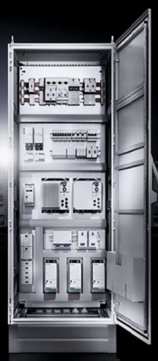
 

Considerations for Industrial Enclosure Cooling

Guest contributor, Eric Corzine, Product Manager – Climate Control, Rittal

Data Centers and server racks run hot. Protecting the technology backbone of your company means managing air flow, temperature, energy consumption and cooling technology.

Rittal, the world’s largest enclosure manufacturer and a leader in thermal management of electrical, electronic and IT equipment, offers some important guidelines to ensure your equipment stays in optimum condition. The following tips are based on decades of practical experience in the use of enclosures climate control solution in industrial environments. By ensuring sufficient planning and maintenance guidelines are in place, control cabinets and electronic enclosures can be last longer and be more energy-efficient.

7 Considerations for More Efficient Enclosures

1. Devices and electrical components must be installed in the enclosure in accordance with the manufacturer instructions. Storage space for necessary documents and circuit diagrams should also be taken into account during the planning phase.

2. When arranging the components in the enclosure, verify that the cooling air flows from top to bottom. You can ensure this in the planning stages by properly routing the air flow away from the electronic components. When roof-mounted units are used, particular attention needs to be paid to the air flow from blowers built into electrical components. The use of air duct systems is advisable in the case of roof-mounted cooling units

Proper Enclosure Heat Dissipation

3. There should be sufficient space for air to flow between the parts and electrical components.

4. Air intake openings of climate control components must not be obstructed by electrical devices equipment or cable ducts. With all climate control solutions, the cold air should always be routed close to drive units. This is where the greatest heat losses occur. This arrangement ensures that the cold supply air from the climate control solution optimally cools the drive units without losses.

Air intake design for cooling enclosures

5. Internal temperatures of the enclosure should always be set to +35◦C. There is no technical justification for setting the temperature any lower. If the temperature inside the enclosure is any lower, condensation will be significantly increased.

6. Institute a systematic cleaning cycle. As most climate control components are used in industrial environments external filters of the climate control must be maintained to ensure long-lasting operation.

7. Ensure the correct filters are used for the industry application.

PU Filter for Industrial Enclosure Cooling

In heavily dust-laden atmospheres, PU filters should be used and replaced on a regular basis. Cooling units with Ri Nano coating typically do not need a dust filter.

Metal Filter for Enclosures

If the air is oil-contaminated, use metal filters. These separate the oil condensate from the air and can be cleaned with appropriate detergents

Textile Enclosure Lint Filter

In the textile industry, the use of lint filters is recommended.

Fiber Mat Filter

Chopped fibre mat filters are not suitable for cooling units.

CMAFH Rittal Resources:

Rittal Wallmount Program

Rittal Enclosure and Process Cooling handbook

Rittal Innovations 2016