When every square inch of factory floor space costs money, why are machine tools still using bulky hydraulic power units that waste half their footprint?
The Installation Space Problem
Machine tool manufacturers face a constant challenge: customers want more capability in less space. As workpieces get smaller and precision requirements increase, every component needs to justify the room it occupies.
Traditional hydraulic power units haven’t kept pace with this miniaturization trend. A standard 4 kW unit typically requires 100 liters of oil capacity, a separate control cabinet, external cooling circuits, and enough clearance for maintenance access. That’s a lot of real estate for what’s essentially a support system.
Four Innovations That Changed Everything
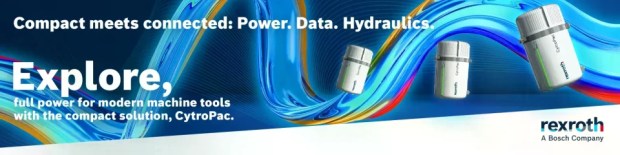
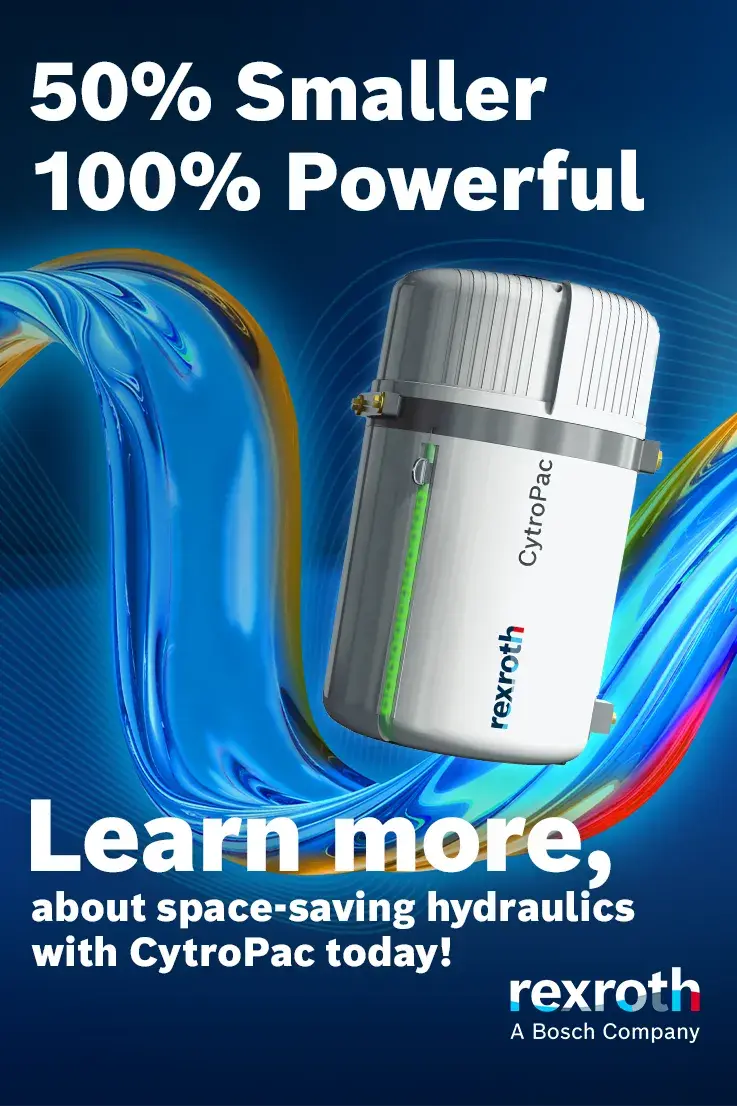
Bosch Rexroth’s CytroPac takes a completely different approach—one that eliminates the traditional “installation space eaters” through intelligent integration:
1. Optimized Tank Design By rethinking how oil degasses, engineers reduced tank volume by 80%—from 100 liters down to just 20 liters. That’s the same hydraulic performance in half the space.
2. Integrated Frequency Converter The fully-wired frequency converter with multi-Ethernet interface lives inside the power unit itself. No separate control cabinet required. For many installations, that eliminates cabinet space entirely.
3. Heatpipe Cooling Technology Instead of bulky cooling circuits, passive heatpipes transfer thermal energy from the motor, converter, and oil to a central cooling water connection. This cuts another layer of complexity and space consumption.
4. Built-in Condition Monitoring Integrated sensors monitor fill level, temperature, pressure, and filter contamination—feeding data directly to Industry 4.0 systems through standard interfaces like Ethernet-IP, EtherCAT, and Profinet.
The Quiet Revolution: Noise Reduction Benefits
Manufacturing environments face increasing pressure to reduce workplace noise levels—both for operator comfort and regulatory compliance. Traditional hydraulic power units contribute significantly to ambient noise through pump operation, cooling fans, and pressure fluctuations during load changes.
CytroPac addresses this through multiple integrated design features. The variable-speed drive eliminates the constant high-RPM operation that characterizes fixed-speed systems—the pump only runs as fast as needed for current demand. Combined with optimized tank design that reduces fluid turbulence and heatpipe cooling that eliminates noisy cooling fans, overall sound emissions drop noticeably. Machine tool builders report quieter operation that improves the working environment without requiring additional sound insulation or enclosures.
Energy Efficiency That Pays Back
Energy costs represent a growing portion of manufacturing overhead, making hydraulic system efficiency more than an environmental consideration—it’s an economic one. Traditional fixed-speed hydraulic systems run at full capacity regardless of actual demand, wasting energy during idle periods and low-load operations.
CytroPac’s integrated frequency converter fundamentally changes this equation. The variable-speed drive adjusts pump speed continuously to match hydraulic demand, consuming energy proportional to actual work performed. This approach complies with EU Eco-Design Directive 2009/125/EC while delivering measurable cost savings. In typical machine tool duty cycles with significant idle time between operations, energy consumption can drop 30-50% compared to conventional fixed-speed units. For manufacturers running multiple machines across shifts, those savings compound quickly—turning energy efficiency from a compliance requirement into a competitive advantage.
What This Means in Practice
The total footprint reduction? Up to 50% compared to conventional designs of equivalent performance.
But space savings aren’t the only benefit. Machine builders also gain:
Faster installation: Connect power, cooling water, data interface, and hydraulic supply—done
Reduced assembly errors: Everything’s pre-wired and tested at the factory
Lower total cost: Smaller footprint means smaller machine frame or larger work envelope
Here’s where integration really pays off. When the frequency converter, sensor technology, and motor are all pre-wired within the power unit, many machine designs can eliminate the hydraulic control cabinet completely.
Even when cabinet space remains necessary for other systems, reducing its footprint by 100% for the hydraulic portion creates flexibility for other components or simply reduces the overall machine size.
A Different Design Philosophy
CytroPac represents a fundamental rethinking of what a hydraulic power unit should be. Rather than optimizing individual components and assembling them, the approach integrates everything from the start—designing for the complete system performance in minimum space.
This matters because machine tool economics increasingly favor compact, flexible designs. When manufacturers can offer the same machining capability in a smaller footprint, they win business. When they can integrate hydraulics without sacrificing valuable working space, they differentiate their products.
Beyond Just Smaller
Miniaturization alone wouldn’t justify redesigning a proven technology. But when you combine space savings with energy efficiency (variable-speed drives only consume what’s needed), simplified installation (plug-and-play connectivity), and Industry 4.0 readiness (integrated condition monitoring), the value proposition becomes compelling.
Machine tool builders working in the 4 kW performance range now have an alternative to the “bigger tank, bigger cabinet, bigger footprint” tradition.
Want to see how much space CytroPac could save in your next machine design? Bosch Rexroth application engineers can evaluate your specific requirements and demonstrate the integration advantages.
In addition to distribution, we design and fabricate complete engineered systems, including hydraulic power units, electrical control panels, pneumatic panels & aluminum framing. Our advanced components and system solutions are found in a wide variety of industrial applications such as wind energy, solar energy, process control and more.
When hydraulic system failures mean production stops, product gets damaged, or worse—people get hurt—you need more than components. You need solutions that work right out of the box.
Your Safety Challenge Just Got Simpler
Machine builders and plant operators face a persistent problem: meeting ISO 13849 functional safety requirements for hydraulic systems often means months of engineering, custom manifold design, complex safety assessments, and expensive validation. One miscalculation, and you’re back to square one.
Problem Solved: Safety Functions That Work From Day One
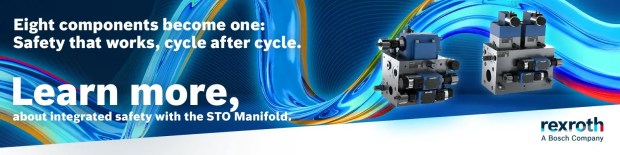
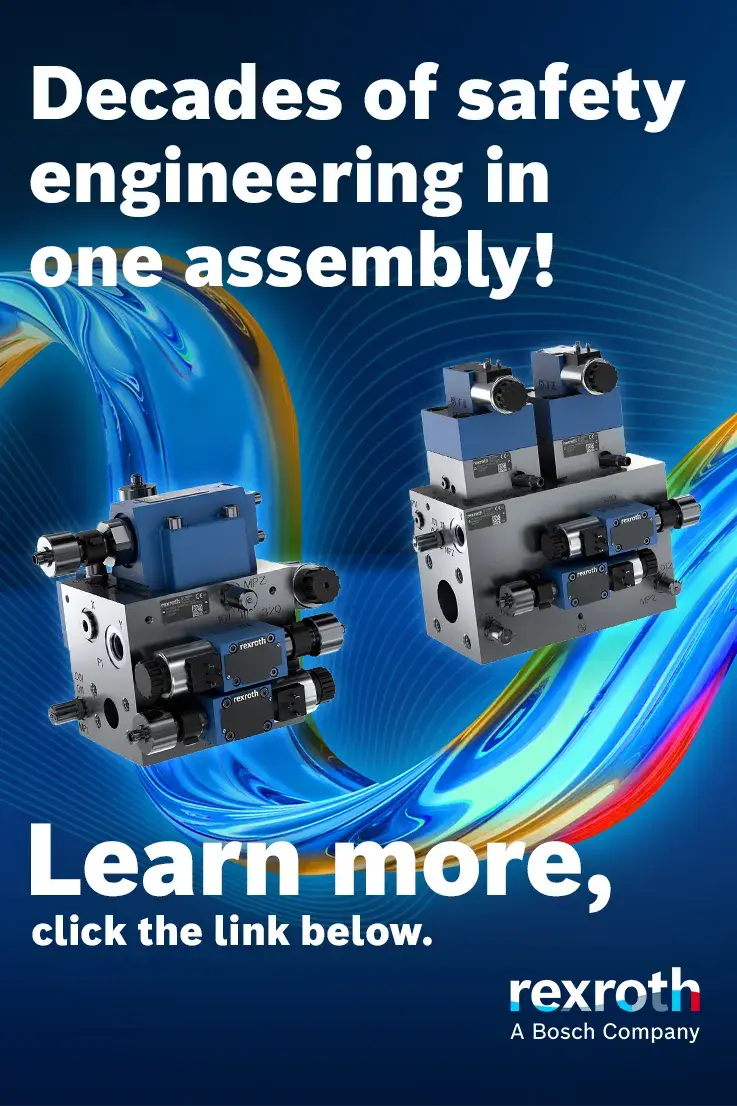
The STOM series delivers pre-engineered, pre-validated safety shutdowns for hydraulic systems up to Category 4 PLe—the highest safety level defined by ISO 13849. Instead of designing your own safety circuits, you select from three standardized configurations based on four simple parameters:
Pressure (up to 315 bar)
Flow rate (up to 1750 l/min)
Required safety level (Cat 3 or Cat 4)
Functions needed (STO, SDE, SLS)
Your hydraulic problems—solved. From design constraints to uptime issues, we identify root causes and deliver effective hydraulic solutions.
Three Safety Functions in One Compact Block
Safe Torque Off (STO): Two-channel, position-monitored blocking from P1 to P2 ensures leak-free shutdown of entire machine areas or systems. When it must work—you call us.
Safe Decompression (SDE): Controlled pressure relief through dual bypass valves with flow-limiting nozzles safely drains downstream pressure in under 300ms in most applications. No sudden movements. No unexpected energy release.
Safe Limited Speed (SLS): Pre-compression through the same bypass circuit minimizes switching shocks, extends component life, and reduces noise—while meeting functional safety requirements for controlled flow.
The Engineering Time You’ll Save
Traditional custom safety manifolds require:
40-80 hours of safety circuit design
Risk assessment documentation
Component selection and validation
Safety logic programming
Final system validation
With STOM, you select a material number from a datasheet. Documentation, validation calculations, and installation instructions are included. Every solution is engineered to simplify your machine lifecycle: Design → Installation → Operation → Maintenance.
Real-World Reliability From Decades of Expertise
The STOM portfolio builds on proven Bosch Rexroth valve technology—pilot-operated check valves (SL) in sizes 20/30, and actively controllable 2-way cartridge valves (LC2A) in sizes 32/40. These aren’t experimental components. They’re field-tested workhorses now configured for functional safety.
Galvanized surface coating provides long-term corrosion protection. Compatibility with mineral oils (HLP) and flame-resistant fluids (HFC, HFDU) means retrofit flexibility. Identical electrical control across all nominal sizes simplifies commissioning and spare parts management.
Heavy-duty presses, metallurgical plants, and test benches face a common challenge: hydraulic area shutdowns that meet safety standards while minimizing production disruption.
A metal forming facility recently integrated STOM-32B4E manifolds for zone isolation. Results:
87% reduction in safety engineering time versus custom design
Closing times under 280ms with 200-bar system pressure
Safe decompression in 1.2 seconds for 12-liter downstream volume
Zero safety-related downtime in first 18 months of operation
When performance bottlenecks impact your output, our specialists solve them with data-driven, high-performance hydraulics.
Your Challenges Just Became Manageable
Whether you face unpredictable downtimes during retrofits, need breakthrough safety compliance for new machine designs, or require reliable area shutdown for high-risk operations—STOM manifolds make your challenges manageable.
We’re not just a hydraulics supplier. We are the problem solvers behind your productivity—reducing downtime, simplifying design, streamlining installation, and optimizing performance.
In addition to distribution, we design and fabricate complete engineered systems, including hydraulic power units, electrical control panels, pneumatic panels & aluminum framing. Our advanced components and system solutions are found in a wide variety of industrial applications such as wind energy, solar energy, process control and more.
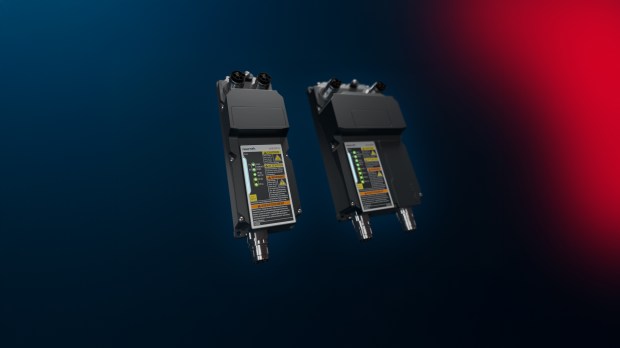
Cabinet-free servo drive technology boasts a number of crucial benefits – simple installation, drastically reduced space requirements, minimum cabling and high flexibility. The ctrlX DRIVE cabinet-free IP65/IP67 system virtually eliminates the control cabinet, thus creating space for modular, lean production systems. Andreas Knops explains the system’s distinguishing features.
ctrlX DRIVE cabinet-free is the latest generation of cabinet-free servo drive technology from Bosch Rexroth. What is different about it?
This solution is the successor to the existing IndraDrive Mi cabinet-free drive system. We develop the entire drive technology portfolio based on the compact and open ctrlX DRIVE technology. Over 20 years of experience in cabinet-free drive technology have gone into ctrlX DRIVE cabinet-free, taking it to a new level.
Key new developments include the expansion of the power increments, the cooling concept and new topology options. We offer the inverters as a single-axis variant in six increments from 6 A to 54 A and as a double-axis variant in five increments from 6 A to 30 A maximum current. With a maximum current of up to 54 A, users are now able to choose whether to realize their machine with a control cabinet, without a control cabinet or with a combination of both variants.
This allows the greatest possible flexibility for both existing and completely new application scenarios.
For which applications is this drive system intended?
ctrlX DRIVE cabinet-free is particularly suitable for machines in which saving space and minimizing cabling are key requirements. It also helps to reduce the machine footprint.
In addition, the drive system supports the realization of modular machine concepts, which pays dividends in both production and later use. In concrete terms, this means that the production of the machine can be modularized more easily and that end users will be able to subsequently expand the machines with additional modules according to their needs.
What specific savings will be achieved?
We calculate the savings made on a case-by-case basis together with our customers. They can be quantified over the entire life cycle based on the machine design, the operating mode and the operating time.
Because the solution almost completely eliminates the control cabinet, the space and cabling required is reduced by up to 90%. This results in a more compact design and provides the option of mounting the device directly, for example on the machine frame. This not only saves time and costs, but also makes assembly, project planning and operation easier.
In addition, the solution enables significant energy savings of up to 70 percent. The decentralized design eliminates energy consumption for control cabinet air-conditioning, which lowers operating costs. In addition, the ctrlX DRIVE cabinet-free version uses silicon carbide semiconductors (SiC technology), which significantly reduce energy losses and thus increase overall energy efficiency. By using SiC semiconductors, power losses can be reduced by up to 60 percent compared to IGBT technology.
Operating the inverters on a common DC link for the purpose of energy exchange also helps increase overall efficiency. Depending on the operating mode of the machine, we also utilize various options – e.g. energy recovery, passive or active energy storage, peak load reduction – to reduce the energy requirement specifically for the respective application.
Why is ctrlX DRIVE cabinet-free designed according to protection class IP65/IP67?
The IP65/IP67 protection rating ensures that the system works reliably even in harsh or extreme conditions – for example, where protection against water jets is required.
Due to its openness, the drive system can be seamlessly integrated into a wide variety of automation architectures. With all its features and benefits, ctrlX DRIVE speeds up cabinet-free development and commissioning processes – and supports consistently flexible, cost-efficient and energy-saving production.
In addition to distribution, we design and fabricate complete engineered systems, including hydraulic power units, electrical control panels, pneumatic panels & aluminum framing. Our advanced components and system solutions are found in a wide variety of industrial applications such as wind energy, solar energy, process control and more.
ctrlX DRIVE cabinet-free reduces space and cabling by up to 90 percent
Modular, flexible, and energy-efficient IP65 system
Bosch Rexroth is a pioneer in cabinet-free drive technology
Modularity, simple installation, and drastically reduced space requirements as well as minimum cabling – these are the key benefits of cabinet-free drive technology. Based on 20 years of development experience in this field, Bosch Rexroth now also offers a cabinet-free solution in protection class IP65 with the ctrlX DRIVE cabinet-free. Bosch Rexroth sees these solutions as the future of servo drive technology, as they ideally meet the increasing requirements for efficiency and adaptability in modern production environments.
Modular, flexible and energy-efficient system: the new ctrlX DRIVE cabinet-free.
“Today, more than ever, mechanical engineering is about saving space, reducing costs, and enabling rapid adaptation to new challenges,” says Steffen Winkler, Senior Vice President Sales Business Unit Automation & Electrification Solutions at Bosch Rexroth.
Bosch Rexroth is a pioneer in cabinet-free drive technology. The company presented its first solutions some 20 years ago and has been implementing numerous projects worldwide ever since. With the new ctrlX DRIVE cabinet-free, Bosch Rexroth presents the next stage of development for this technology, which meets the requirements of modern machine designs.
The servo drive of the future is flexible and saves space and energy
Control cabinets take up space and are expensive to install and service. The ctrlX DRIVE cabinet-free IP65 system almost completely eliminates the control cabinet and reduces the space and cabling requirements by up to 90 percent. This not only saves time and costs, but also makes assembly, project planning, and operation easier.
Furthermore, the cabinet-free solution enables energy savings of up to 70 percent. The decentralized design eliminates energy consumption for control cabinet air-conditioning, which lowers operating costs. In addition, the ctrlX DRIVE cabinet-free uses silicon carbide semiconductors (SiC technology), which significantly reduce energy losses and thus increase overall energy efficiency.
ctrlX DRIVE cabinet-free offers maximum flexibility in application. Mechanical engineers can choose from an extensive product portfolio that includes single and dual-axis inverters with currents from 6 to 54 A. The drives are freely scalable – up to 100 drives can be operated in a line with a total length of up to 200 m. With multi-Ethernet interfaces, freely selectable motors, and modular expansion options, the system offers solutions for a wide range of industries and applications.
The machine can be adapted and expanded easily thanks to the system’s modular design. As a result, machines can be flexibly configured to meet new requirements without having to completely change existing structures.
“Cabinet-free drive technology already pays off during the machine development process. It speeds up time-to-market and project realization. And in practical applications, users benefit from greater flexibility and potential savings, for example in terms of energy. With ctrlX DRIVE cabinet-free, we are driving forward the development of innovative, future-oriented machines,” says Winkler.
In addition to distribution, we design and fabricate complete engineered systems, including hydraulic power units, electrical control panels, pneumatic panels & aluminum framing. Our advanced components and system solutions are found in a wide variety of industrial applications such as wind energy, solar energy, process control and more.
More and more AI-assisted applications are being integrated into automation systems
Sustainable manufacturing becomes a strategic goal
The future lies in ecosystems and collaborative innovations
Economic uncertainties, growing regulatory pressure, and a shortage of skilled workers are holding back the industry’s competitiveness and ability to innovate. Automation is a powerful lever to meet these challenges. Bosch Rexroth sees four key trends shaping automation in 2025: increased security measures through the Cyber Resilience Act (CRA), artificial intelligence as an efficiency booster, more sustainability as a response to stricter environmental requirements, and open ecosystems for more innovation.
Increased security measures, artificial intelligence and more sustainability. These are the automation trends from Bosch Rexroth’s perspective for the year 2025. (Image source: Bosch Rexroth AG, created with the help of AI)
“Automation remains the key to making the industry future-proof and competitive. It enables efficiency gains, new business models, and added value. We are seeing more and more companies relying on automation platforms with ecosystems, as they offer the greatest possible scope for action. This trend will also continue to increase in 2025,” explains Steffen Winkler, Senior Vice President Sales Business Unit Automation & Electrification Solutions at Bosch Rexroth.
Even greater focus on security with the Cyber Resilience Act
The Cyber Resilience Act (CRA), which came into force at the end of 2024, presents manufacturers and operators of industrial automation systems with new security requirements. The European regulation aims to improve security standards for digital products, thus increasing their resilience to cyber attacks. Products should be securely designed and updatable throughout their entire life cycle.
“IT security is more essential than ever for successful digitization strategies and products. The CRA provides clear requirements – this is an important step toward creating a high level of security across the board and strengthening user confidence in digital solutions. We therefore need to make automation solutions fit for these challenges, as we have already done with our operating system ctrlX OS. It is designed to be secure from the ground up and is therefore ideally prepared for the requirements of the CRA,” says Winkler.
For companies in the automation industry, the CRA means an even more intensive focus on security and product integrity. Adherence to the new directives requires a rethink that starts in product development.
AI is a driver of innovation in automation
Artificial intelligence is set to become even more important in 2025 – including in the automation industry. More and more AI-assisted applications are being integrated into automation systems. AI-assisted apps are already available in the partner network ctrlX World.
Artificial intelligence is increasingly embedded in software. AI-assisted software modules, such as neural networks for image processing solutions, are changing the possibilities for automation. AI also provides new operational insights in practice by analyzing data flows in automation devices. And it changes the way we work, for example, in software development. Tools, such as coding co-pilots, speed up programming and enable code to be written faster.
This enables significant efficiency gains both in the development of automation technologies and in their application.
Sustainability as a strategic goal
Sustainability and energy efficiency will continue to challenge industry and therefore also the automation sector. Industry plays a crucial role in achieving the global climate targets. Sustainable manufacturing requires zero emissions, resource efficiency, and cost-effectiveness.
More and more energy-saving functions are therefore being incorporated into automation components. Tools to simulate energy and performance also make an important contribution to optimizing manufacturing processes. There is further potential in the professional reprocessing of automation components: remanufacturing reduces the carbon footprint of used components by more than 50 percent compared to new products and conserves precious resources.
Open ecosystems for collaborative innovations
“The German automation industry is a global leader. To maintain and expand this leading position, it is essential to strengthen Germany as a business location and to boost the industry’s competitiveness even more,” says Winkler, adding: “Simply being at the technological forefront is not enough to remain successful in global competition in the long term.”
The key lies in open platforms and collaborative ecosystems that create real benefits for users. Such ecosystems combine the strengths of different players and thus enable the development of new, innovative approaches. This creates a culture of collaboration in which partners from different areas work together on solutions that go far beyond the capabilities of individual companies. In addition, open cooperation strengthens users’ trust in digital technologies by providing them with more flexible, interoperable, and future-proof solutions.
Bosch Rexroth constantly drives forward openness and co-creation in the automation world with its operating system ctrlX OS and the automation system ctrlX AUTOMATION.
As one of the world’s leading suppliers of drive and control technologies, Bosch Rexroth ensures efficient, powerful and safe movement in machines and systems of any size. The company bundles global application experience in the market segments of Mobile and Industrial Applications as well as Factory Automation. With its intelligent components, customized system solutions, engineering and services, Bosch Rexroth is creating the necessary environment for fully connected applications. Bosch Rexroth offers its customers hydraulics, electric drive and control technology, gear technology and linear motion and assembly technology, including software and interfaces to the Internet of Things. With locations in over 80 countries, around 33,800 associates generated sales revenue of 7.6 billion euros in 2023.
In addition to distribution, we design and fabricate complete engineered systems, including hydraulic power units, electrical control panels, pneumatic panels & aluminum framing. Our advanced components and system solutions are found in a wide variety of industrial applications such as wind energy, solar energy, process control and more.
The factory of the future is characterized by the increasing networking of control technology, IT and IoT. The various systems must be seamlessly interconnected to ensure end-to-end digital processes. At the same time, however, this increases the risk of cyber attacks, as attackers have more and more entry points. In the connected world, attacks can cause more damage than ever before. It is therefore essential that security is consistently implemented at all levels. ctrlX AUTOMATION shows how this works while maintaining radical openness in automation.
More and more devices and machines are being networked and communicate via the Internet of Things (IoT). This creates numerous opportunities, but also risks. The more components are connected, the larger the attack surface. Cyber attacks can paralyze production and lead to financial losses and image damage.
Many systems in factories are outdated and were developed without considering cyber security. This makes them more vulnerable to attacks and difficult or impossible to update. It is therefore necessary to develop more resilient solutions. This must include IT systems as well as control technology and the IoT. This means: radical openness at all levels meets security at all levels.
But secure: from the control system to the apps
With ctrlX AUTOMATION, Bosch Rexroth has launched an end-to-end, open automation solution that has been designed from the ground up to be completely secure. The high security standards apply to all components in the automation toolkit and to every component by which the system grows. The hardware and software products are Secure by Design. This means that security requirements are already taken into account in the development phase. The automation solution, which was developed with a focus on conformity with IEC 62443-4-2, is based on the Linux Ubuntu Core operating system, which is considered to be extremely secure.
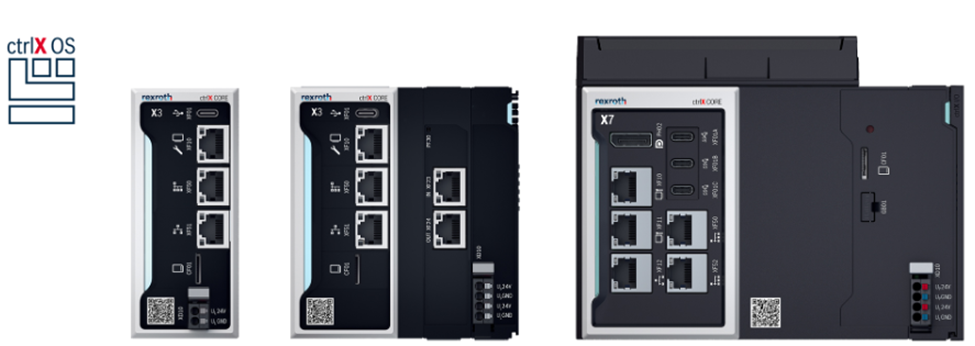
The ctrlX CORE controller is an example of the high level of security in the ctrlX AUTOMATION portfolio. The associated IoT software has fully integrated IT security standards according to IEC 62443-4-2 for access control and remote maintenance. In addition, the controller offers various security features such as Secure Boot, a security chip in accordance with TPM 2.0, and a minimal network footprint when delivered. With the optional firewall and VPN client, the controller can be upgraded to a full-fledged network appliance, which ensures the highest possible availability and security of the connected network components.
Since ctrlX AUTOMATION is not a self-contained system, but rather a place where different players pool their domain knowledge, the security strategy also includes the partner network ctrlX World. For example, each of the partner apps offered is validated by Bosch Rexroth. This rules out the possibility of third-party software introducing malicious code. This and the sandboxing principle further increase the security of the other apps installed on the system.
ctrlX developR design with a view to the future
The holistic and fundamental implementation of security standards and mechanisms in all facets of ctrlX AUTOMATION creates a resilient overall system that can also demonstrate these capabilities. In order to maintain this level, permanent further development is required – also in view of ever new types of attacks and ways of attack.
That is why ctrlX developR always keep their fingers on the pulse and look to the future. The latest security requirements are already taken into account in the planning and development phase. At Bosch Rexroth, “Two steps ahead” also applies when it comes to security.
If you have any questions or require further information regarding ctrlX AUTOMATION, please contact us: sales@cmafh.com
In addition to distribution, we design and fabricate complete engineered systems, including hydraulic power units, electrical control panels, pneumatic panels & aluminum framing. Our advanced components and system solutions are found in a wide variety of industrial applications such as wind energy, solar energy, process control and more.
Exploring the ctrlX Core: Revolutionizing Automation and Control
In the ever-evolving landscape of automation and control technology, the ctrlX CORE has emerged as a game-changer. Developed by Bosch Rexroth, the ctrlX CORE represents a significant leap forward in how we design and implement automation systems. This blog post delves into what makes the ctrlX CORE stand out and how it’s reshaping the future of industrial control.
What is the ctrlX CORE?
At its core, the ctrlX CORE is a highly flexible, scalable, and modular control platform designed to meet the diverse needs of modern industrial automation. It integrates a range of functionalities into a single, compact unit, enabling unprecedented levels of efficiency and adaptability in automation systems.
Key Features and Benefits
Modular Design: The ctrlX CORE’S modular architecture allows users to tailor their automation solutions with various modules and components. This flexibility ensures that the system can be customized to specific application requirements, making it suitable for a wide range of industries and use cases.
Open Architecture: Embracing an open architecture, the ctrlX CORE supports a broad spectrum of standards and protocols. This openness facilitates seamless integration with existing systems and third-party devices, providing users with greater freedom and interoperability.
High Performance: Equipped with advanced processing capabilities, the ctrlX CORE delivers exceptional performance in terms of speed, responsiveness, and data handling. This high-performance backbone is crucial for real-time control and complex automation tasks.
Scalability: One of the standout features of the ctrlX CORE is its scalability. Whether you need a small, simple controller or a more robust system with extensive I/O capabilities, the ctrlX CORE can scale to meet your needs. This scalability helps future-proof investments and allows for easy upgrades as requirements evolve.
Intuitive User Interface: The ctrlX CORE offers an intuitive user interface that simplifies programming, configuration, and monitoring. With tools designed to streamline workflows and reduce complexity, users can quickly set up and manage their automation systems.
Edge Computing Capabilities: Leveraging edge computing, the ctrlX CORE processes data locally, reducing latency and improving response times. This capability is particularly beneficial for applications requiring real-time analytics and decision-making.
Applications Across Industries
The versatility of the ctrlX CORE makes it applicable across a variety of industries:
Manufacturing: In manufacturing, the ctrlX CORE can drive complex production lines, coordinate multiple machines, and ensure high precision and efficiency.
Logistics: For logistics and warehousing, it can manage automated guided vehicles (AGVs), conveyor systems, and sorting equipment, optimizing operations and reducing downtime.
Energy: In the energy sector, it supports the automation of renewable energy systems, power distribution, and monitoring of critical infrastructure.
Automotive: The CtrlX Core is also used in the automotive industry for controlling assembly lines, testing equipment, and other automation processes.
Looking Ahead
As industrial automation continues to advance, the ctrlX CORE stands out as a pivotal innovation. Its combination of modularity, performance, and flexibility makes it a valuable tool for businesses looking to enhance their automation capabilities and stay competitive in a rapidly changing market.
Bosch Rexroth’s ctrlX CORE is more than just a control platform; it’s a step towards a more connected, intelligent, and adaptable future in industrial automation. For businesses seeking to leverage the latest in automation technology, the ctrlX CORE represents a powerful and forward-thinking solution.
Here is a showcase for Node RED, one of the most popular apps for the ctrlX.
Unleashing Creativity and Efficiency with Node-RED
In the rapidly evolving world of technology, staying ahead often means finding new and efficient ways to integrate and automate processes. Enter Node-RED, a powerful tool that’s been making waves in the tech community for its versatility and ease of use. If you haven’t heard of it yet, it’s time to get acquainted.
What is Node-RED?
Node-RED is an open-source flow-based development tool designed for wiring together hardware devices, APIs, and online services. Developed by IBM, Node-RED provides a browser-based flow editor that makes it incredibly easy to create and manage workflows with minimal coding. Think of it as a visual programming environment where you can drag and drop nodes (blocks of code) to build applications or automate tasks.
Why Node-RED?
**1. Ease of Use: Node-RED’s drag-and-drop interface simplifies the process of designing and deploying workflows. You don’t need to be a coding expert to get started; the visual nature of the tool allows you to create complex systems by simply connecting different nodes.
**2. Flexibility: Whether you’re working with IoT devices, APIs, or just need to automate a task, Node-RED has a vast library of pre-built nodes and integrations. This flexibility allows you to connect to almost any service or device with minimal configuration.
**3. Rapid Prototyping: Node-RED is ideal for prototyping and experimentation. Its visual interface allows you to quickly iterate on your design, test different workflows, and see results in real-time.
**4. Community and Ecosystem: Being open-source, Node-RED has a vibrant community that contributes to its ecosystem. There are countless nodes available for various purposes, from integrating with social media platforms to controlling home automation systems.
How Node-RED Works
Node-RED uses a flow-based programming model where you build your application by connecting different nodes in a flow. Each node represents a specific function or task, such as sending an HTTP request, processing data, or interacting with a database.
Nodes: These are the building blocks of your application. Each node performs a specific function, such as a sensor reading, data transformation, or sending a notification.
Flows: Flows are the connections between nodes. They define the path that data takes through your application, specifying how data should be processed and transferred between nodes.
Debugging and Monitoring: Node-RED provides built-in tools for debugging and monitoring your flows. You can see real-time logs, inspect data as it moves through your nodes, and quickly identify issues.
Programming Flow
Practical Applications
**1. IoT and Home Automation: Node-RED is a popular choice for IoT applications and smart home automation. You can easily connect sensors, actuators, and other devices to create custom automation rules and control systems.
**2. API Integration: If you need to integrate multiple APIs or services, Node-RED’s flexible nodes make it straightforward to connect and manage data from various sources. This can be particularly useful for aggregating data or creating custom dashboards.
**3. Data Processing: Node-RED’s ability to process and transform data makes it a powerful tool for data pipelines. You can fetch data from different sources, perform transformations, and output the results to your desired destination.
**4. Rapid Prototyping: Whether you’re building a new application or testing an idea, Node-RED’s ease of use and rapid prototyping capabilities allow you to quickly validate concepts and iterate on your designs.
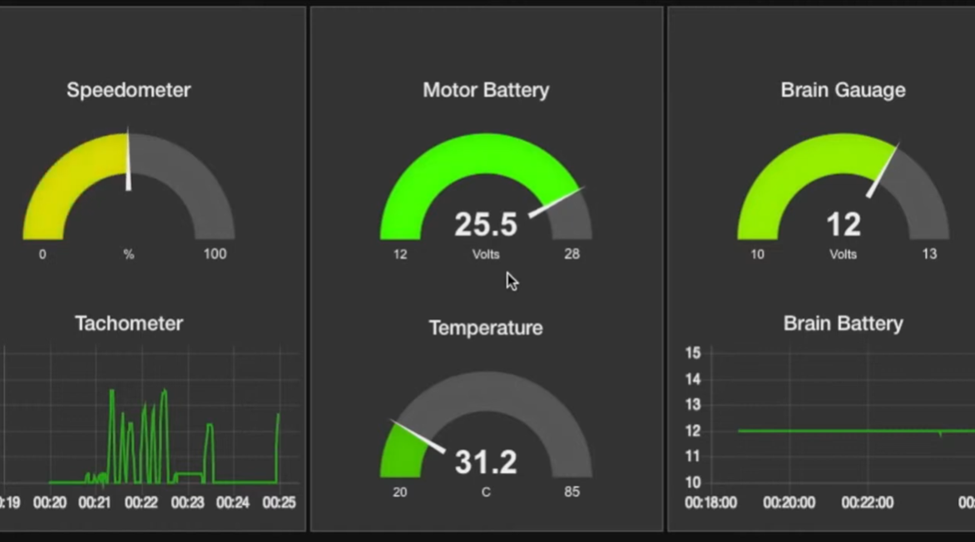
Sample Node Red Dashboard Visualization Credit: Richard Hopkins
Conclusion
Node-RED is transforming how we approach building and integrating applications. Its visual, flow-based programming model simplifies complex tasks and opens up possibilities for both technical and non-technical users. Whether you’re looking to automate your home, integrate APIs, or prototype new ideas, Node-RED offers a powerful and user-friendly platform to bring your projects to life.
So why not give Node-RED a try? Dive into its capabilities and see how it can streamline your workflow and spark your creativity in the world of technology.
In addition to distribution, we design and fabricate complete engineered systems, including hydraulic power units, electrical control panels, pneumatic panels & aluminum framing. Our advanced components and system solutions are found in a wide variety of industrial applications such as wind energy, solar energy, process control and more.
Navigating the complex world of robotics integration can be daunting, especially when faced with the varied costs and technical specifications.
The question, “How much does a robot cost?” is not easily answered as the price is influenced by various factors, such as; technology, application, and design.
In this article, we’ll navigate through the confusing world of robot pricing to provide a clear and detailed breakdown of the costs involved.
By understanding these key elements, you’ll be better equipped to make informed decisions that suit your budget and operational goals.
Stay with us as we discuss the specifics and shed light on how to effectively manage these investments.
Key Takeaways
Cost Influences
Technology Level: Advanced technologies such as AI, machine learning, and real-time data processing greatly increase a robot’s cost.
Design Customization: Custom features tailored to specific tasks or environments can escalate costs due to specialized design and production.
Application Specificity: Robots designed for specific industries or critical tasks often come with a higher price tag due to the specialized capabilities and certifications required.
Types and Costs
Industrial Robots: Essential for tasks like welding and assembly, with prices typically ranging from [$25,000 to $400,000] depending on functionality and sophistication.
Cobots: Designed for safe interaction with humans in shared spaces, generally cost between [$15,000 and $45,000], reflecting their accessibility and technological features.
Cartesian Robots: Ideal for precise linear motions, used in applications such as 3D printing, priced between [$10,000 and $50,000] based on size and precision capabilities.
Humanoids: Advanced robots mimicking human behaviour, significantly more expensive, typically starting at [$100,000 and can exceed $1 million], due to high-level AI and mobility technologies.
Considerations
Application Suitability: Ensure the robot’s capabilities align with the intended tasks and operational demands.
System Compatibility: Assess integration needs with existing systems to avoid additional costs for modifications.
Maintenance Expenses: Consider ongoing maintenance costs, availability of parts, and technical support to ensure sustainable operations.
Training and Integration Costs: Significant resources are needed for training on the proper use and maintenance of new robotics systems to ensure safety and efficiency.
Adaptability and Longevity: Robots that can be easily reprogrammed or upgraded can adapt to changes and extend their useful life, offering better long-term value.
ROI Metrics: It’s crucial to define metrics to assess the return on investment from robotics, considering financial returns as well as quality, efficiency, and customer satisfaction improvements.
What influences the price of a robot
When considering a robot purchase, it’s important to understand the characteristics that contribute to its price.
The cost can be greatly influenced by the robot’s design complexity, materials used, the technology it incorporates, and its intended application.
Factors such as the precision of tasks it performs, the software it requires, and additional features like sensing and vision systems also play a role.
For more detailed insights on a specific robot model, like the 7-axis collaborative robot models from Kassow Robots, each specification adds layers to the cost.
Technology and Software
The sophistication of the technology and software within a robot influences its price. High-end robots incorporate advanced algorithms for pathfinding, autonomous decision-making, and machine learning, which require substantial investment in research and development.
Additionally, user interface software that enhances the usability and functionality of the robot also adds to the cost.
These systems must be continually updated and optimized to handle complex tasks and easily interact with human operators and other automated systems.
The integration of Internet of Things (IoT) connectivity and real-time data processing capabilities further escalates the price, making the robot more adaptable and efficient but also more expensive.
Design and Customization
The level of design and customization involved in a robot’s creation directly impacts its cost.
Robots designed with specific requirements for particular industrial tasks, such as extra limbs, specialized tools, or enhanced mobility features, require unique engineering and design solutions.
Each custom feature needs to be planned and tested, which increases the research and development cost.
Furthermore, specialized designs often necessitate the use of unique components and technologies not typically found in standard robots, driving up manufacturing complexity and costs.
This custom engineering ensures the robot can perform designated tasks efficiently but also results in a higher price tag due to the increased labour and material costs involved in its production.
Material and Build Quality
The choice of materials in robot construction is essential as it affects both the durability and functionality of the robot, which influences its cost.
High-quality materials that can withstand high stress, wear, and environmental conditions are necessary to ensure the longevity and reliability of the robot. These materials often come at a premium, especially when they are lightweight yet strong metals or composites that offer superior performance.
Additionally, the precision required in machining and assembling these high-grade materials increases manufacturing costs.
Robots built with less expensive materials may reduce upfront costs but can lead to higher maintenance expenses and shorter lifespans, which could increase overall costs in the long run.
Application and Industry
Robots are increasingly tailored for specific industries, which can affect their costs. For example, robots designed for the healthcare sector may require precise and gentle handling capabilities, sophisticated diagnostic tools, and compliance with strict regulatory standards.
Similarly, robots used in manufacturing might need to handle heavy loads, perform at high speeds, and operate continuously. These specialized capabilities need advanced technology and strong construction, which increases the costs.
Additionally, the critical nature of tasks performed by these robots often requires extensive safety features and redundancy systems, further increasing their price.
Image Source: Alexander Burkle / Kassow Robots
Production Volume and Economies of Scale
The production volume of robots can also influence their cost. Limited production runs are more expensive on a per-unit basis because they cannot capitalize on the economies of scale enjoyed by mass-produced models.
Custom or low-volume robots often require specialized assembly processes and parts, which are more expensive than those used in high-volume manufacturing.
Conversely, when robots are produced in large quantities, the cost per unit decreases due to more streamlined manufacturing processes and bulk purchasing of materials. Therefore, companies looking to use robots extensively might find it more cost-effective to invest in models that are produced on a larger scale.
Research and Development Costs
The investment in research and development (R&D) impacts the cost of robots. Developing clever robotic technologies often requires time and resources in R&D to create, test, and refine advanced systems.
This includes the costs associated with prototyping, simulation, and field testing to ensure that the robots meet specific performance criteria and safety standards.
Regulatory Compliance and Certification
Robots must often meet various regulatory and safety standards, which can vary widely depending on the industry and the region in which they are sold.
Compliance with these regulations can involve additional costs related to certification processes, modifications to meet specific legal requirements and ongoing compliance monitoring.
For example, robots used in pharmaceutical or food production environments must adhere to especially strict standards, adding to their overall cost.
Training and Support Services
The complexity of modern robots often requires training for end-users. The cost of providing training programs, user manuals, and technical support can be considerable.
Additionally, ongoing support services, including maintenance and updates to software and hardware, also contribute to the total cost of ownership of a robot.
Supply Chain and Logistics
The cost of parts and the complexity of the supply chain logistics involved in sourcing and assembling robot parts can affect the final price of the robot.
Fluctuations in material costs, tariffs, and transportation fees, as well as the efficiency of the supply chain, can all impact costs.
Robust supply chains are essential for timely and cost-effective production but can be expensive to establish and maintain.
Brand and Market Positioning
The brand reputation and market positioning of the robot manufacturer can also play a role in pricing.
Established brands with a proven track record of reliability and excellent service might charge a premium for their robots.
Additionally, pricing strategies may vary based on market positioning, with some brands positioning themselves as providers of cost-effective solutions while others target the luxury or high-performance segment of the market
Types of robots and their price tags
Industrial robots
Industrial robots are essential in modern manufacturing, capable of performing a variety of tasks including welding, painting, and assembly with incredible precision and efficiency.
The cost of these robots is determined by factors such as payload capacity, reach, speed, and the level of customization required.
Basic models start at lower prices, which typically include a controller and basic software. More advanced models with comprehensive customization options, higher payload capacities, and enhanced capabilities will have a higher price tag.
Such price variations reflect the various needs of different industries, from automotive to electronics, where the demands on robotic systems differ widely.
The substantial range in prices ([$25,000 – $400,000]) accommodates businesses of all sizes, from small manufacturers to large enterprises with heavy-duty requirements.
Unlike traditional industrial robots, cobots are equipped with advanced sensors and safety features to ensure safe operation without the need for protective barriers.
The cost of cobots varies depending on their design, payload, and the complexity of the tasks they are programmed to perform.
Prices for simpler models that perform light duties have a smaller price tag when compared with more advanced models equipped with high-tech features such as vision systems and enhanced learning capabilities.
This price range [$10,000 – $50,000] reflects the growing market for robots that are accessible to small and medium-sized enterprises and not just large manufacturing facilities.
Cartesian robots are characterized by their three principal axes of movement — X, Y, and Z — which makes them ideal for precise linear applications such as 3D printing, CNC machining, and assembly operations where high accuracy is required.
The simplicity of their design generally makes them more affordable than more complex robotic systems.
Prices for Cartesian robots can range from about [$10,000 – $50,000] with the more basic models costing a lot less than models with better reach and load capacity, precision capabilities, and customized control systems.
This cost range supports industries that require precise, repetitive movements in a controlled environment.
Humanoids
Humanoid robots are among the most technologically advanced types of robots, designed to replicate human motion and interaction.
They use sophisticated AI, machine learning algorithms, and sensory systems to navigate complex conditions and perform varied tasks.
Due to their sophistication and the technology required, humanoid robots are typically the most expensive.
Prices range from roughly [$100,000 – $1 million] with the more advanced models, equipped with the most advanced features and capabilities, having the highest prices
These robots are mainly used in research, healthcare, and service industries where human-like interaction and adaptability are crucial.
This price bracket highlights the cutting-edge nature of humanoid robotics and the investment required for their development and deployment.
What to consider before buying a robot
Before purchasing a robot, it’s essential to define your needs and consider factors like compatibility with existing systems, long-term costs, and potential operational enhancements.
We are here to help you select a robot that aligns with your operational goals, ensuring efficiency, compliance, and a solid return on investment.
Let’s take a deeper look.
Define the Purpose and Requirements
Before investing in a robot, clearly define what you need the robot to achieve. Consider the tasks it will perform — whether it’s assembly, packaging, inspection, palletizing,labelling, or quality control.
This will help determine the type of robot you need, such as industrial, collaborative, or service robots.
Different tasks require different levels of precision, speed, and payload capacity. Aligning your business needs with the robot’s application capabilities ensures that you select a robot that can meet your operational goals without overspending on unnecessary features.
Compatibility With Existing Systems
Evaluate the compatibility of the new robot with your current machinery and software systems.
It’s important to make sure that the robot can integrate into existing production lines or work environments. Check if additional equipment or software is needed for integration and whether the robot supports the communication protocols used in your facility.
Incompatibility can lead to additional costs for modifications or updates to your systems, so prior confirmation will save time and resources in the long run.
Scalability and Flexibility
Consider the scalability of the robotic system. As your business grows, your robotic needs might change, requiring different functionalities or additional units.
Choose robots that are known for their flexibility in handling various tasks or those that can be easily upgraded with new capabilities.
Investing in scalable and flexible systems can prevent future bottlenecks and reduce the need for complete overhauls as your operation expands.
Maintenance and Support
Understanding the maintenance needs and the support available for a robot is essential. Ask about the maintenance schedule, availability of spare parts, and the technical support provided by the manufacturer.
Robots with high maintenance costs can affect the total cost of ownership. Also, consider the availability of local service technicians who can perform repairs and regular maintenance to minimize downtime.
Total Cost of Ownership
Beyond the initial purchase price, assess the total cost of ownership, which includes installation, maintenance, training, and potential downtime costs.
Estimate energy requirements, consumables, and whether the robot will need regular software updates. A cost analysis will help in making an informed decision by comparing the long-term financial impacts of different robotic systems on your operations.
Regulatory Compliance and Safety Standards
Before investing in a robot, ensure it meets all relevant regulatory and safety standards for your industry and region. Compliance is vital in sectors such as healthcare, food processing, and automotive manufacturing, where safety and precision are important.
Non-compliance can lead to legal issues, fines, or operational halts, which can be costly. Understanding the certifications that the robot has, such as ISO standards or specific industry compliance, is needed to protect your operations and ensure worker safety.
Environmental Considerations
Environmental factors such as temperature, humidity, dust, and exposure to chemicals can impact a robot’s performance and lifespan. Choose a robot designed to withstand the specific conditions of its working environment.
For example, robots in heavy industrial settings may require strong construction and protective measures against heat and particulates, whereas cleanroom robots need specific designs to prevent contamination.
Staff Training and Adaptation
Evaluate the level of training your staff will need to operate and maintain the new robotic system.
Assess whether you have the right skills available internally or if you will need to hire new staff or provide training to existing employees.
The ease of use of the robotic system and the availability of vendor training programs can also be a decisive factor. Ensuring your team is well-prepared can improve productivity and reduce downtime due to operational errors.
Future-Proofing Technology
Invest in technology that can adapt to future advancements. This includes considering whether the robotic system is equipped with abilities such as machine learning, adaptability to new software updates, and compatibility with newer technologies.
Choosing a robot that is suitable for upgrades can extend its useful life and protect your investment.
Return on Investment (ROI)
Calculate the expected return on investment (ROI) for the robotic system. This includes analyzing productivity gains, cost savings from labour reductions, and improvements in quality and consistency.
A clear understanding of the financial impact and payback period will help justify the investment and ensure that the robot meets your business objectives.
Financial planning is key to ensuring that the robot contributes positively to your bottom line.
How much in approximative costs can you expect to save on an assembly line with the help of cobots?
Integrating cobots (collaborative robots) on an assembly line can lead to cost savings of approximately 20-30% by enhancing operational efficiency and reducing labour costs. These savings are achieved through the automation of repetitive tasks and allowing human workers to focus on more complex operations.
What is the average price tag of a robot?
The cost of robots varies widely, from a few thousand dollars for basic models to several hundred thousand or more for advanced, specialized machinery.
How long does it typically take to see a return on investment from a robot purchase?
The time it takes to see a return on investment (ROI) from a robot can vary based on the type of robot and its application. However, for industrial and manufacturing settings, companies often report seeing an ROI within two to three years, especially when robots are used in high-volume or high-labor-cost tasks.
Can robots be leased or rented instead of purchased outright?
Yes, robots can be leased or rented, providing a more flexible financial option for businesses that need robotic technology but may not be ready to commit to a full purchase. Leasing or renting can also offer the advantage of keeping the technology up-to-date, as companies can upgrade to newer models at the end of the lease term.
What are the ongoing costs associated with operating a robot?
Beyond the initial purchase, the ongoing costs of operating a robot include maintenance, repairs, software updates, and possibly energy consumption. Training for personnel on how to operate and maintain the robot also adds to the costs.
Final Thoughts
Understanding the cost of robots involves considering their technological complexity, design, materials, and intended application.
This guide provides a foundational understanding to help you navigate the initial investment and long-term benefits of robotic integration.
Equipped with this knowledge, businesses can make informed decisions on their investments in robotics, ensuring they meet their operational needs and maximize return on investment.
With careful planning and consideration, integrating robotics can be a transformative investment for any enterprise.
In addition to distribution, we design and fabricate complete engineered systems, including hydraulic power units, electrical control panels, pneumatic panels & aluminum framing. Our advanced components and system solutions are found in a wide variety of industrial applications such as wind energy, solar energy, process control and more.
Author: Jürgen Fischer Position: Product Manager Linear Motion Technology, Bosch Rexroth AG
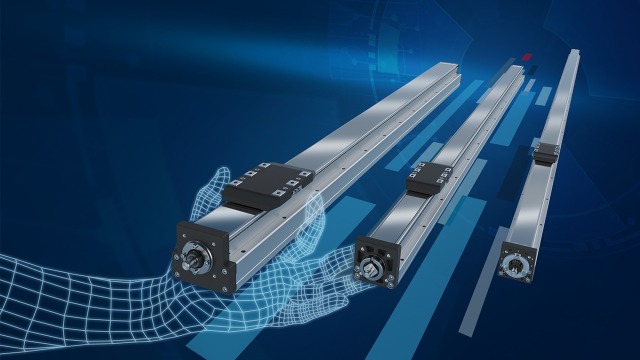
Whether it be consumer goods, medical technology or 3D printing: Countless small parts need to be moved precisely and cost-effectively. This is now much easier.
When you hear “SMS”, you don’t immediately think of linear modules. But you should remember the term in this context as well. After all, these three letters refer to a cutting-edge, particularly cost-effective solution for handling the small parts found in a wide range of sectors. They include the consumer goods and packaging industry, semiconductor and battery production, 3D printing, the automotive sector, medical technology and mechanical engineering.
Exact positioning, compact and low maintenance requirements
Many of these applications require a high repeatability of up to ± 0.005 mm with low to medium dynamics. And if the design is compact, robust and requires little maintenance – all the better! The new SMS linear modules from Bosch Rexroth meet exactly these requirements and help to reduce system and life cycle costs. They also welcome an alternative to pneumatically driven axes and provide a good opportunity for electrification with all of the associated benefits.
Robust linear modules with ball screw assembly
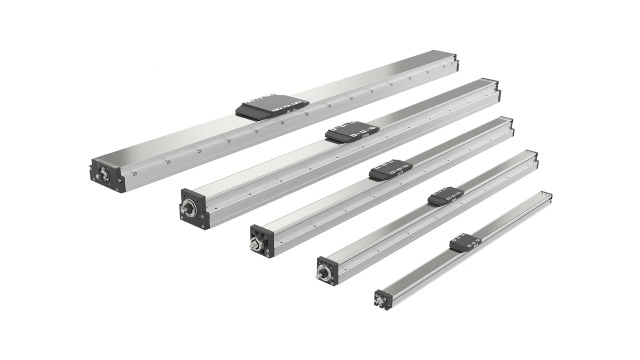
The compact SMS modules with ball screw assembly (Small Modules Screw driven) are manufactured to the usual Rexroth quality standards and impress with their flat aluminum profile offering integrated, precise guidance. In addition, a magnetically fixed steel cover strip protects the components inside.
Quick selection, available from stock
To ensure the shortest possible delivery times, the SMS linear modules can be ordered from stock. The five tailored sizes range from 30 to 120 mm and are suitable for travel ranges of up to 1,200 mm. They can be selected and ordered easily from the Rexroth online shop with the help of a product selector. Optional attachment sets for popular servo motors are available – either as a belt side drive or a flange coupling. Naturally, a choice of motors and drive controllers from Bosch Rexroth is available too.
Conclusion: Expanded portfolio saves time and money
The SMS linear modules expand the range of linear axes, adding an ultra-compact series with a particularly flat design offering excellent value for money. Simple positioning and delivery tasks can thus be carried out economically – and at short notice. This opens up an attractive electrification path for greater precision, flexibility and energy efficiency in production – two key qualities in the Factory of the Future.
In addition to distribution, we design and fabricate complete engineered systems, including hydraulic power units, electrical control panels, pneumatic panels & aluminum framing. Our advanced components and system solutions are found in a wide variety of industrial applications such as wind energy, solar energy, process control and more.
Cobots (collaborative robots) are becoming a vital way to help manufacturers improve their productivity. Strong, fast and simple to use, they can make production processes more efficient and business more competitive. We look at what cobots do, how they support production and how Kassow Robots has been growing since the majority stake acquisition by Bosch Rexroth.
A lot has happened in the year and a half since the Danish cobot manufacturer became part of Bosch Rexroth: With the move to a new location, it was possible to expand the production capacity in a highly professional manner and to increase revenue significantly. The team has grown: in Copenhagen, where the company was founded, at the subsidiary in Prague, and within the sales team based in Ulm. Kassow Robots has greatly expanded its global sales activities by participating in trade fairs in various countries and in events within Bosch Rexroth. The dynamic development has one constant: CEO and founder Kristian Kassow as an intensive driving force.
Cobot market continues to expand
Cobots are an important part of intelligent manufacturing and an effective measure to reduce the pressure on costs while securing production in times of workforce lack. They are increasingly used in industry to automate processes which are done in the same working space as human colleagues. Cobots enable small and medium-sized enterprises to automate with their own staff – because collaborative robots can be easily programmed and operated by almost anybody. There is already a high demand for them, and the market is set to continue expanding*.
They can perform a range of jobs easily and offer plenty of flexible automation options with significant benefits:
They can be integrated easily into the production process with minimal changes to the rest of the line – providing a cost-effective entry-point to robotic automation, which can be expanded over time.
They are fast and accurate, which improves production efficiency and helps lower overall operating costs.
They work safely alongside people.
Cobots take on laborious or repetitive tasks, enabling the human workforce to focus on more value adding tasks – which helps address skill shortages.
Seven axes and powerful flexibility
At Bosch Rexroth, we see cobots as an important and versatile part of future proof solutions for factory automation – which is why we’ve expanded our product range with the collaborative robots of Kassow Robots.
The company develops, produces and sells unique and efficient 7-axes lightweight collaborative robots for industrial applications. Their cobots are extremely user-friendly, giving companies great flexibility and enabling small and medium-sized enterprises without in-house robotics specialists to achieve complex automation and programming cost-effectively and independently.
Kassow Robots has designed its cobots to work in the tightest of production spaces. Equipped with seven axes, they can reach around corners like a human arm, and can lift a payload of up to 18 kg. Currently the product family comprises five collaborative robot models, with reaches of 850 to 1800 millimeters, and joint speeds of up to 225 degrees per second.
New products are continually in development. At this year’s Automatica, Kassow Robots presented the Edge Series: a prototype of a controller integrated into the cobot base, delivery of which will start in the beginning of 2024. With no extra controller cabinet to be placed near the cobot, the 7-axes cobots can then be used in even more flexible and space-saving ways, which is very important for mobile applications like AMRs (Autonomous Mobile Robots).
Setting business up for further growth
Thanks to the majority shareholding of Bosch Rexroth, Kassow Robots is now expanding its production and its sales activities worldwide. With CEO and co-owner Kristian Kassow leading the company, the team is primed to introduce their cobots on the world stage, through trade show participation and internal events as well as developing the sales partners network. It currently includes more than 60 partners worldwide, and it continues to grow.
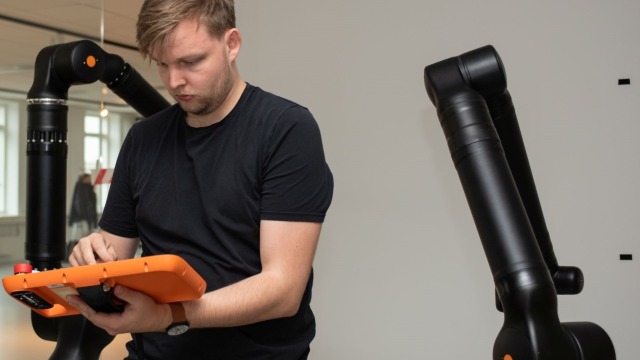
Electronics engineer Nikolaj Thorup Frederiksen working on the new KR Edge Series (image source: Kassow Robots).
To facilitate this growth, Kassow Robots moved to a new location one year ago. The modern building in Kastrup near Copenhagen offers sufficient space not only for increasing production capacity, but also for development activities and offices. Higher production capacity also means more square meters for testing – the Kassow Robot cobots run through an automated test program after assembly, before being packed for delivery.
In the last almost 18 months we have gone through an exciting and challenging period of scaling up, which we mastered successfully thanks to our highly motivated team. Naturally our primary efforts have been to deliver cutting edge technology in high quality according to the market requirements.
Kristian Kassow, CEO of Kassow Robots
How do cobots work with Bosch Rexroth products?
All five Kassow Robots lightweight cobots communicate seamlessly with the control platform ctrlX CORE. Additionally, an ecosystem of drivers for easy configuration of peripheral devices, communicating with robots, like grippers and cameras, is being further expanded. So the number of compatible end-of-arm-tools and devices is steadily growing, enlarging the scope of application day by day.
The cobots can also be equipped with the Smart Flex Effector from Bosch Rexroth, which facilitates joining processes, complicated assembly movements, or difficult handling tasks that were previously impossible to master mechanically. Through the unique combination of a sensor system, with kinematics operating independently in six degrees of freedom, this compensation module gives industrial robots a sense of touch similar to the human hand.
Convincing benefits: a major order for cobots from Project Service & Production
For the restocking of cabling machines with bobbins, Project S&P, system integrator and customer of Kassow Robots, specializing in the optimization of production processes, has worked out an automation solution for the textile industry.
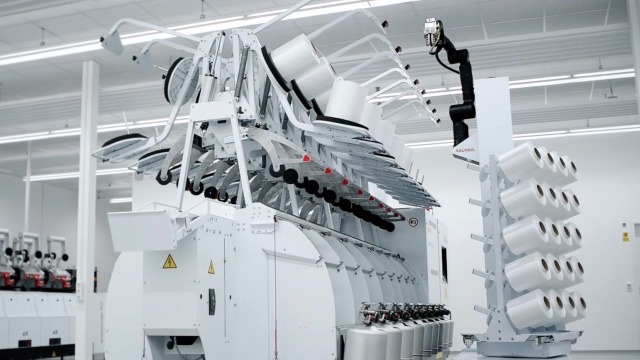
A flexible solution for the restocking of cabling machines with bobbins (image source: Project S&P and Kassow Robots).
To ensure the smooth changeover of yarn packages, Project S&P developed and built a mobile handling solution with a cobot. The automated guided vehicles are equipped with a magazine, a handling system and a KR1018 cobot from Kassow Robots. A linear axis is part of the solution, so that the cobot can load the cabling machines at different heights.
Beyond taking over the workforce’s job of handling very heavy weights, the automation capabilities of the 7-axes KR1018 contributes to smoother yarn package changes. The triple effect of reduced personnel costs, of better quality at the same time due to more gentle package handling and of the ability of material traceability – all this is an achievement of this automation solution. It would not be possible with a conventional 6-axes robot. The success of this has meant that a larger number of cobots are being delivered to the customer.
In addition to distribution, we design and fabricate complete engineered systems, including hydraulic power units, electrical control panels, pneumatic panels & aluminum framing. Our advanced components and system solutions are found in a wide variety of industrial applications such as wind energy, solar energy, process control and more.









 Machine Geeks