hydraulic valves

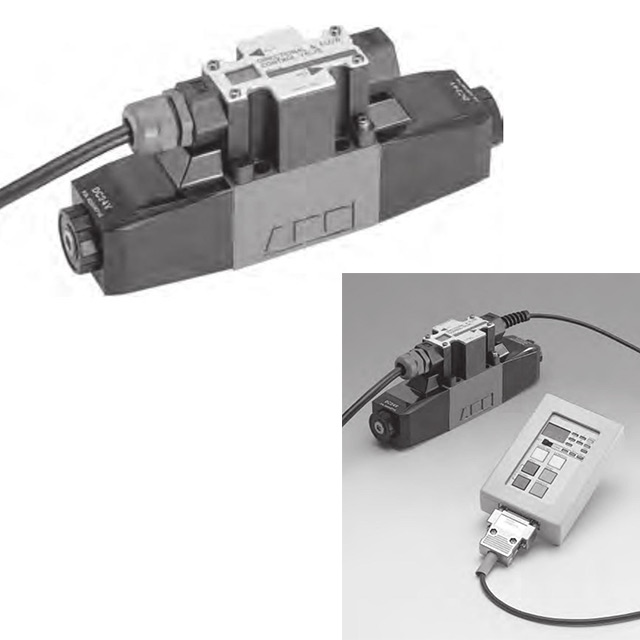
Comnica Directional Control Valve “Soft Bang-Bang Valve”

Do you need the high speed of a bang-bang valve with less wear on your components? Maybe a Comnica directional control valve from Tokyo Keiki will be the solution to your problems.

Tokyo Keiki has come out with a line of directional and flow control valves called “Comnica.” This line of valves is a smart bang-bang valve with many adjustable settings. There are three modes for the valve, analog, channel and shockless. This new design offers independent settings for acceleration and deceleration. These valves have an onboard microprocessor that allows setting of parameters. Programming can be done per valve with the touch buttons or across many valves with a handheld setting device, ideal for multiple valves or mounted valves. Comnica has a compact space saving design with the same configuration as a solenoid valve. Can be connected to general purpose relays, PLCs, and much more. Quantity discounts available and a lead time of 11-23 weeks. Can run with either petroleum based hydraulic oil or water/glycol based hydraulic oil.

Analog setting needs a separate power supply of -10 to 10 volts. The polarity can be reversed and controls the operation with absolute values specified for flow. The change time is set to reduce the shock when inputting an analog command voltage in a stepwise manner. Ramp up and ramp down time can be set into the valve separately in each direction to ensure a smoother transition.

Channel Setting (CH) can use various switches to control speed, can turn them on in chronological order and it will take the command of the last switch. Good for slowing down and ramping up speed. 3 channels for each side with ramp up/ramp down times built in to commands. Ramp time can be between 0 and 9.9 seconds. This setting is good for connecting to a PLC, general-purpose relays, proximity switches, etc. to manage shockless operation, flow control and position.

Shockless setting (SH) only has two settings per direction, no 3A and 3B. Switch to turn on (high speed), then switch off for second setting (low speed). 1st time setting controls the ramp up time, 2nd time setting reduces close speed of valve for soft close. Halt signal used to obtain position control. Low speeds with only wiring 1A and 1B, making this a good option for PLCs with less available outputs. Ramp time of 0 to 9.9 seconds.

In addition to the valve parameters previously mentioned, the COMNICA software includes an adjustable dither frequency, current gain, and current offset value under the “Extension Settings” Tab.

Dither frequency is important in applications where the static friction of the valve is high enough to cause irregular operation of the valve spool. There is also hysteresis in the valve shifting, meaning that for a given input signal you would get a difference response. The dither frequency ensures that the valve response is consistent by constantly breaking the static friction through small vibrations. Current Gain and Current % gives the user more control over the response of the valve. All of the parameters can be saved to and read from a .txt file.

Please contact us if you would like to learn more about this product!

Contributors:


Victoria O’Neill, Application Engineer at CMAFH email
Robert Fetcho, Application Engineer at CMAFH email


CMA/Flodyne/Hydradyne is an authorized Tokyo Keiki distributor in Illinois, Wisconsin, Iowa and Northern Indiana.

In addition to distribution, we design and fabricate complete engineered systems, including hydraulic power units, electrical control panels, pneumatic panels & aluminum framing. Our advanced components and system solutions are found in a wide variety of industrial applications such as wind energy, solar energy, process control and more.

5 HYDRAULICS MYTHS

Guest Contributor: Dr. Steffen Haack, Bosch Rexroth

br_hydrolicmyths_hero_dec19.jpgNo drive technology is more efficient, compact and robust than hydraulics when dealing with forces in excess of 600 kN. So why is it that the importance of hydraulics is often overlooked in the training and development of our young engineers?

In the modern manufacturing setting, movement is everything along with the resulting data. Little thought is given to hydraulic technology, that is until drive physics comes into play. This is when hydraulic technology comes into its own in managing large forces and delivering robust performance.

Here’s a connected hydraulics ‘Myth Buster’ that demonstrates how the latest smart hydraulics are more versatile and cost-effective than you ever imagined.

THE MYTH: Installation is complex

BUSTED: Designers are no longer required to develop an in-depth knowledge of fluid mechanics and technology and increasingly look for plug & produce modules. These ready-to-install modules simply need an electrical current and a connection to the control communication.

THE MYTH: Commissioning takes time

BUSTED: Our smart, connected hydraulics are now commissioned with the same engineering tools as electric drives and control systems. Functions previously carried out hydromechanically are handled by the latest drive software. There are even software assistants available to guide technicians through the commissioning process and suggest suitable parameters.

THE MYTH: Hydraulics waste energy

BUSTED: There’s a preconception that hydraulics are more energy-intensive than other technologies, but things have changed dramatically. Variable-speed pump drives generate the flow in line with demand and reduce speeds accordingly under partial load conditions. Compared to constantly driven pumps, they reduce power consumption by up to 80 percent – a level consistent with that of electric drives of the same size.

THE MYTH: Hydraulics aren’t IoT ready

BUSTED: Smart hydraulics are a well-established part of IoT in production. Analog valves can be made digitally visible cost-effectively thanks to IO-Link and exchange data available through the control system. Smart valves, with their own control electronics and state of the art field bus connection, are as convenient to use as electric drives.

THE MYTH: Hydraulics are high maintenance

BUSTED: Hydraulics offer a distinct advantage when monitoring operating states and deducing possible wear and expected life cycle. With a few pieces of sensor data, such as pressure differential, oil temperature, optically measured contamination or pressure increase over time, software can assess the health of the system.

This myth busting technology is included in our latest generation of hydraulic power units, allowing young designers and businesses to benefit from all the advantages of our modern, connected innovations.


CMA/Flodyne/Hydradyne is an authorized Bosch Rexroth distributor in Illinois, Wisconsin, Iowa and Northern Indiana.

In addition to distribution, we design and fabricate complete engineered systems, including hydraulic power units, electrical control panels, pneumatic panels & aluminum framing. Our advanced components and system solutions are found in a wide variety of industrial applications such as wind energy, solar energy, process control and more.

Hydraulic Valves Will Benefit From Connectivity

Guest contributor, Jeroen Brands, Bosch Rexroth

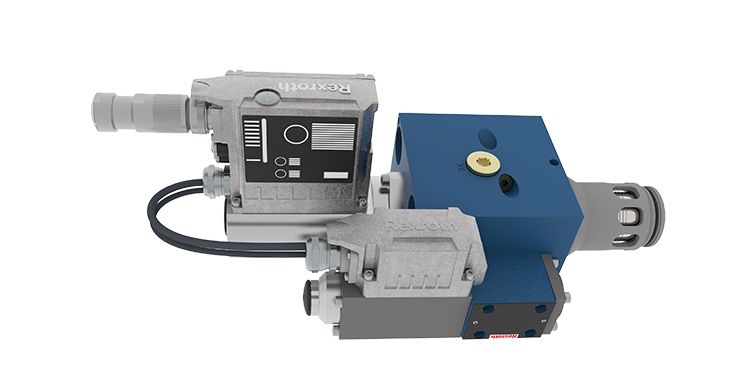
Hydraulic valves: Directional valve with integrated digital axis controller

Hydraulic valves: Directional valve with integrated digital axis controller

What are the current market requirements for hydraulic valves?

We are currently experiencing a transition from classic, analogous hydraulics to connectable digital fluid technology. European machine manufacturers in particular are increasingly digitizing their machine designs and expect that hydraulics can be seamlessly embedded into these connected environments. This means that regarding the level of automation, hydraulics are on a par with electromechanical drives. One of the decisive features in this respect is the seamless integration of intelligent hydraulic valves into different automation topologies via open standards such as multiple Ethernet interfaces.

Which new technical possibilities are available to meet these requirements?

Smart single-axis controllers are already remotely regulating hydraulic motions in a closed control loop. In addition, a powerful motion control is integrated into the on-board electronics of the valve. It performs the target-actual comparison on site and regulates accurately to a few micrometers. The control quality of the system is exclusively determined by the resolution of the measurement systems. These motion controls without control cabinet are increasingly used in saw lines, paper mills and machine tools. In addition, there are smart variable speed pump drives and smart pump controls. They provide completely new possibilities of replacing the throttle controls, which were predominantly used up to now, by more energy-efficient displacement controls. In this way, functions which were previously executed by valves are relocated to the software.

What about the integration of sensor technology into hydraulic valves?

The mass production of sensors for the automotive or the consumer products industry has significantly reduced the costs. Now, sensors are increasingly used in hydraulics. In our opinion, the integration of sensor technology of this kind into existing valve housings is the next step. Regarding condition monitoring, sensors could collect information on fluid quality, temperature, vibrations and performed switching cycles. Via deep learning algorithms, users can then detect wear before it causes malfunction.

Which other possibilities of mechanization does a valve provide?

The degree of freedom regarding connection geometries is already limited by standard requirements. The hydraulics industry discussed the topic of digital hydraulics in great depth some time ago. The idea was and is to control flows in a “stepped” or “clocked” way using single- or multi-bit strategies. In certain applications, this can constitute an advantage compared to continuously variable technology.

Which other innovations in hydraulic valves are relevant in your company?

It is no longer a question whether hydraulic valve technology will benefit from connectivity or not. The only question is when. The current discussions around Industry 4.0 clearly show how important it is to define all required functions and functionalities. Only if mechanisms and sensor technology are standardized across different manufacturers will active connectivity and communication be possible. Even in the future, not every hydraulic-mechanical pressure valve will have digital electronics on board or be connected to a control system or other valves. An imprinted QR code with information on the manufacturer’s settings, functional descriptions or information on replacement seals are a first step towards connectivity. In the area of new materials and production technologies, Rexroth has many innovations in the pipeline. 3D printing of cores for cast housings or direct printing considerably lowers energy consumption during the operation of valves. While the divisibility of the core mold had to be taken into account in the design of the core, this is no longer necessary today thanks to core printing. This means that we can use other channel designs which allow for lower pressure losses and improve energy consumption. For a valve with a flow of 10,000 l/min, the reduction of flow resistance by 10 to 20 percent significantly reduces the operating expenses.

Pressure transducer for hydraulic applications

How do these trends affect your products?

With the IAC (integrated axis controller) valves, Bosch Rexroth offers motion control without control cabinet which is completely integrated into valve electronics. It can be fully connected via open interfaces. The same applies to servo-hydraulic axes with their own fluid circuit. In these ready-to-mount axes, pump, valves and cylinders form an assembly to which the machine manufacturer only has to connect power supply and control communication. They use the same commissioning tools and user interfaces which means that all drive technologies provide the same look and feel. Classic servo valves, however, can also be improved further. New plug-in amplifiers with pulse width modulation for on/off valves by Rexroth reduce the surface temperature of the connectors by more than 80 degrees to only 50 degrees. This is particularly interesting for saw lines where easily inflammable sawdust constitutes an explosion hazard.

Outlook: How will valve technology change in the next 10 years?

In 10 years, valves will allow for easier project planning, more comfortable commissioning and more efficient operation and will provide more information before a service case. If service is required, the valve may already have ordered its spare parts.


cropped-cmafh-logo-with-tagline-caps.pngCMA/Flodyne/Hydradyne is an authorized Bosch Rexroth distributor in Illinois, Wisconsin, Iowa and Northern Indiana.

In addition to distribution, we design and fabricate complete engineered systems, including hydraulic power units, electrical control panels, pneumatic panels & aluminum framing. Our advanced components and system solutions are found in a wide variety of industrial applications such as wind energy, solar energy, process control and more.

THE LARGEST FLOW ON THE MARKET

Guest contributor: Dr. Till Deubel, Head of Development, Cartridge Valves, Bosch Rexroth

When it comes to valves, maintaining performance with an increased flow rate can be extremely good news for manufacturers. It allows them to meet the same requirements with a smaller machine size or maximize manufacturing performance with a minimized footprint. 

Our brand-new WRC-4X directional high-response cartridge valves not only meet high dynamics and flow requirements, they can also be integrated into networked environments.

As they feature integrated electronics with a multi-Ethernet interface and OCI for Drives, WRC-4X valves can be integrated into networked environments even with an analog signal input.

inpage.jpg

Next generation thinking

Once again, we’re pleased to be moving technology forward – increasing performance and communication for hydraulic actuators with our next generation of WRC-4X directional high-response cartridge valves. These valves are more dynamic and consistently achieve flows that could previously only be met by using the next highest available size. In fact, they provide the largest flow on the market.

Integrated electronics (OBE) allow the new valve series to be networked via open interfaces with higher-level control units and Industry 4.0 environments, even when used with an analog signal input. This means that the valves are ready be integrated right away into even the most cutting edge automation concepts and can benefit from predictive maintenance.

Flexing to future challenges

Our new cartridge valve blocks are ideal for applications with high flow and dynamics requirements, such as:

  • Presses
  • Die-casting
  • Injection molding machines

Using sophisticated co-simulations with flow analyses and strength calculations, our developers have optimized channel geometries and enabled different sized valves to achieve significantly higher flow levels. This means they can consistently achieve values that would previously have only been possible by using valves the next size up.

The valves can be operated via digital and analog control signal input. In both cases, the integrated electronics (OBE) enable the valves to be seamlessly integrated into digitally networked automation environments and Industry 4.0 applications. WRC-4X valves also feature an open interface that enables communication with a range of programs. So machine manufacturers and operators can incorporate the valves into condition monitoring systems and benefit from predictive maintenance.

Learn more:  https://www.boschrexroth.com/en/xc/products/product-groups/industrial-hydraulics/index

cropped-cmafh-logo-with-tagline-caps.pngCMA/Flodyne/Hydradyne is an authorized Bosch Rexroth distributor in Illinois, Wisconsin, Iowa and Northern Indiana.

In addition to distribution, we design and fabricate complete engineered systems, including hydraulic power units, electrical control panels, pneumatic panels & aluminum framing. Our advanced components and system solutions are found in a wide variety of industrial applications such as wind energy, solar energy, process control and more.