What is the first thing that comes to mind if someone says “proximity sensor?” My guess is the inductive sensor, and justly so because it is the most used sensor in automation today. There are other technologies that use the term proximity in describing the sensing mode, including diffuse or proximity photoelectric sensors that use the reflectivity of the object to change states and proximity mode of ultrasonic sensors that use high-frequency sound waves to detect objects. All these sensors detect objects that are in close proximity to the sensor without making physical contact. One of the most overlooked or forgotten proximity sensors on the market today is the capacitive sensor.
Capacitive sensors are suitable for solving numerous applications. These sensors can be used to detect objects, such as glass, wood, paper, plastic, or ceramic, regardless of material color, texture, or finish. The list goes on and on. Since capacitive sensors can detect virtually anything, they can detect levels of liquids including water, oil, glue, and so forth, and they can detect levels of solids like plastic granules, soap powder, sand, and just about anything else. Levels can be detected either directly, when the sensor touches the medium, or indirectly when it senses the medium through a non-metallic container wall.
Capacitive sensors overview
Like any other sensor, there are certain considerations to account for when applying capacitive, multipurpose sensors, including:
1 – Target
Capacitive sensors can detect virtually any material.
The target material’s dielectric constant determines the reduction factor of the sensor. Metal / Water > Wood > Plastic > Paper.
The target size must be equal to or larger than the sensor face.
2 – Sensing distance
The rated sensing distance, or what you see in a catalog, is based on a mild steel target that is the same size as the sensor face.
The effective sensing distance considers mounting, supply voltage, and temperature. It is adjusted by the integral potentiometer or other means.
Additional influences that affect the sensing distance are the sensor housing shape, sensor face size, and the mounting style of the sensor (flush, non-flush).
3 – Environment
Temperatures from 160 to 180°F require special considerations. The high-temperature version sensors should be used in applications above this value.
Wet or very humid applications can cause false positives if the dielectric strength of the target is low.
In most instances, dust or material buildup can be tuned out if the target dielectric is higher than the dust contamination.
4 – Mounting
Installing capacitive sensors is very similar to installing inductive sensors. Flush sensors can be installed flush to the surrounding material. The distance between the sensors is two times the diameter of the sensing distance.
Non-flush sensors must have a free area around the sensor at least one diameter of the sensor or the sensing distance.
5 – Connector
Quick disconnect – M8 or M12.
Potted cable.
6 – Sensor
The sensor sensing area or face must be smaller or equal to the target material.
Maximum sensing distance is measured on metal – reduction factor will influence all sensing distances.
Use flush versions to reduce the effects of the surrounding material. Some plastic sensors will have a reduced sensing range when embedded in metal. Use a flush stainless-steel body to get the full sensing range.
These are just a few things to keep in mind when applying capacitive sensors. There is not “a” capacitive sensor application – but there are many which can be solved cost-effectively and reliably with these sensors.
In addition to distribution, we design and fabricate complete engineered systems, including hydraulic power units, electrical control panels, pneumatic panels & aluminum framing. Our advanced components and system solutions are found in a wide variety of industrial applications such as wind energy, solar energy, process control and more.
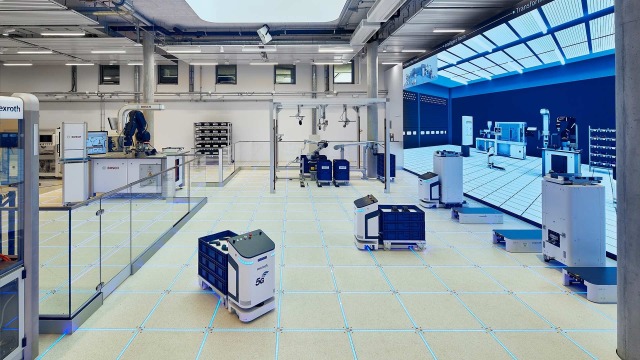
Whether in relation to components, machinery or complete production processes, these days digital twins play an important role in product lifecycles. As digital replicas of products or processes, they depict their properties, status and behavior and hence connect the real world with a virtual one. As such, they ensure reliable processes throughout the development stage, commissioning and operations and can be used for optimization purposes and to improve quality and increase efficiency. The potential that digital twins possess can also be leveraged for ctrlX AUTOMATION.
Digital twins usually depict various different aspects, e.g. they often combine simulation models with data. Firstly, they can be used to provide a virtual mock-up of products, machinery or plants for simulation purposes. Secondly, they can be used to clearly visualize real-life procedures and processes and hence better understand them as well as test and optimize them virtually and automatically – without having to intervene in reality.
Digital twins can not only improve development and production processes thanks to prognoses but can also improve understanding, contribute to transparency and enhance the performance of the real-life operations of systems or plants. Digital twins make product development simpler, more reliable and more efficient. In addition to the optimization of product features by means of simulation processes, the interplay between hardware and software can, for example, also be tested virtually early on and any errors can be identified and rectified prior to commissioning with zero risks involved. Engineering or production processes can therefore be made more efficient – benefiting not only component and machine manufacturers but end users too.
The so-called asset administration shell (AAS) is becoming the standard for the implementation of digital twins in Industry 4.0 systems and has been standardized in IEC63278. Accordingly, each I4.0 component is represented by an AAS, which forms an information shell for an asset or a hierarchy of assets. It describes all contained sub-models, which depict aspects such as sensor data or positioning mode, as well as available functions. In production, the AAS is used to ensure interoperability and IT security in manufacturing and IT systems by means of a set of standardized interfaces, such as OPC UA, TSN, DetNet, REST, JSON and XML, etc. Bosch Rexroth also aligns itself with this industry standard for the implementation of digital twins, thus continuing the pursuit of its strategy of openness.
Replicating and testing Bosch Rexroth products virtually
ctrlX AUTOMATION provides users with various different ways of using digital twins. Firstly, all sorts of different virtual replicas of Bosch Rexroth’s automation products can be created. Secondly, corresponding partner apps from the ctrlX World can be used for various digital twin applications.
One or more virtual controls can be created on a PC with the software and engineering toolbox ctrlX WORKS and operated via a web-based interface. ctrlX COREvirtual is the virtual version of the real-life control and is based on identical software. The virtual replica can be used to conduct tests and carry out commissioning without any control hardware – with full functionality. The simulation model is, for example, used to test PLC and motion programs. It is also used for communications tests between a control and the I/O level of a system.
Digital twins can also be used to virtually commission, parameterize and optimize products from Bosch Rexroth’s drive and motor range, including as part of considerations concerning mechatronic systems or complete machines. This also applies for the most compact drive system on the market, ctrlX DRIVE. Drive models are available to users for different application scenarios and various simulation systems available on the market, for example for MATLAB/Simulink, Modelica-based systems and ISG Virtuos.
Scalable simulation solutions for different use cases
In addition to the digital twins of ctrlX AUTOMATION products, the openness and expandability of the system offer a wealth of further possibilities. As such, IoT functionalities can, for example, be implemented for acquiring data and thus for generating digital twins of complete production processes. Users can use Bosch Rexroth’s IoT apps or those of partners from the ctrlX World for this. They can even develop their own apps with the Software Development Kit.
Bosch Rexroth offers scalable simulation solutions to suit any requirements through which simulations can be carried out for peripherals, kinematics, dynamics and physics in various topologies. The solutions thus enable an extremely broad range of applications, from kinematic simulation with 3D geometries right through to the connection of high-level simulation systems.
Digital twins are much more than visual reproductions of reality and accompany products as digital shadows all the way through to operations and service. Digital twins are, for example, ideal in mechanical and plant engineering for the real-time monitoring and predictive maintenance of machinery and plants. Digital information can be seamlessly orchestrated in real time.
The possible applications are therefore practically endless. Bosch Rexroth customers therefore have numerous options for easily optimizing processes, improving the quality of their products and achieving safety through transparency – right from the development stage all the way through to ongoing operations.
In addition to distribution, we design and fabricate complete engineered systems, including hydraulic power units, electrical control panels, pneumatic panels & aluminum framing. Our advanced components and system solutions are found in a wide variety of industrial applications such as wind energy, solar energy, process control and more.
Six practical steps to greater productivity for manufacturers.
Bosch Rexroth
Finding ways to increase productivity has always been an important part of manufacturing. But against the current backdrop of demand volatility, inflation, a shortage of skilled workers and the requirement for smaller batch sizes, increasing productivity is now essential to a business’s competitiveness. Discover our six practical steps to greater productivity and find out about a new initiative that’s helping to boost productivity in factories.
Connecting machines by building an edge platform
Edge devices are important in the factory of the future because the connection of machines to the internet or the cloud dramatically increases the range of functions and the performance of machines.
The solution: An edge device can take over the activities around the machine. It receives orders from the MES, for example, and controls the machine via an integrated PLC, or it can be linked to the existing control system. By linking the MES and ERP system, edge devices can also enable the commissioning of maintenance and procurement of spare parts.
The result: Productivity is increased by 10 percent. Because edge devices enable data to be captured and processed closer to the source, rather than sending it to servers, the data can be gathered and analyzed on the factory floor in real time. This has enormous benefits in terms of predictive maintenance, improving product quality and increasing throughput.
Implementing a digital twin
A digital twin is a virtual model designed to accurately reflect a physical object. There are various types, and the biggest difference between these is in the area of application. This ranges from a basic component to assets to a complete system or unit. Process twins reveal how systems work together to create an entire production facility.
The solution: Our digital twin solution is a virtual representation or model of physical assets in a real factory. We use harmonized and standardized information models and interfaces (APIs) to create an interoperable environment of interconnected components. It provides a solution set to model and execute production processes. In Industry 4.0 systems, each I4.0 component is represented by a standardized AAS (asset administration shell), which forms an information shell for an asset or hierarchy of assets. So, our digital twin solution offers a ready-to-use implementation of a smart manufacturing platform based on AASs. Once installed, it provides complete transparency and shows how the different components in a production process work together. This enables you to validate concepts and test processes and procedures before implementing them – resulting in fast adoption and integration of applications.
The result: Our digital twin solution makes the integration and commissioning process at least 35 percent faster. Complex simulation, analysis and monitoring of systems can be carried out in real time, and problems can be detected and dealt with before they occur. New products and processes can be tested and perfected virtually first, saving time and effort.
Resource optimization through targeted energy management
Energy management plays a major role for companies that want to save money. However, it’s important to get reliable, tangible data from the process when making decisions about reducing energy usage.
The solution: One option is to implement an electrical energy management system, which gives you transparency in your energy consumption and enables you to avoid peak loads, shut down plant components or put devices into sleep mode. Reactive power has an additional cost, because unusable reactive power that exceeds the threshold is often charged to the manufacturing company.
The result: Up to a 20 percent reduction in electrical energy costs can be achieved from using our solutions. There are also environmental benefits from the associated reduction in CO₂ emissions. By implementing management systems that help you monitor and reduce energy usage across these areas, considerable cost saving can be made.
Detecting and evaluating faults in processes and plants
Downtime, particularly unplanned downtime, can result in huge revenue losses and disappointed customers, not to mention the inconvenience and man-hours required to fix the problem.
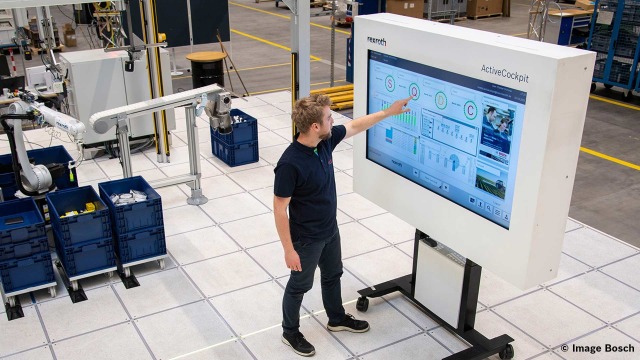
The solution: By connecting and monitoring your machinery in real-time and having the data in a format that’s clear and transparent, production processes can be continually improved, and technical errors can be diagnosed and resolved before they lead to a breakdown. Our ActiveCockpit provides real-time information and enables the exchange of information between people, machines and the production process on the shop floor.
The result: This leads to an improvement in the overall equipment effectiveness (OEE) – in some cases of at least 8 percent. By identifying technical errors and malfunctions before they happen, you can minimize downtime and disruption, while also improving the quality of your products and service.
Automatic order confirmation and recording of delivered components
Global networks are steadily replacing self-contained value chains, as manufacturers try to maximize efficiency throughout the entire production and distribution process by means of seamless data transparency.
The solution: RFID technology enables logistics processes to be sped-up and recording processes to be automated. The state of the art option is a camera-based system that automatically captures the DMC, QR code or barcode, so no scanners are needed. The image is then processed and digitally recorded.
The result: These solutions reduce manual work steps by up to 25 percent, saving time in production and logistics. The process becomes more transparent, with parts being tracked and processes confirmed as they happen. Data and malfunctions can be visualized, even on mobile devices. Supply chain management can be expanded, for example, to include traceability of components, material availability and inventory transparency.
Controlled supply, mixing and process monitoring of liquids
Whether you’re mixing gases or liquids, eliminating irregularities and reducing manual effort are essential to more effective and cost-efficient production.
The solution: Productivity can be maximized with an inline measuring method that determines the volume flow, and a system for measuring the current mixing ratio. Actuators and a smart control unit can be implemented. We provide software solutions and can also install a user interface, so you can view and monitor information.
The result: We’ve found that costs can be cut by up to 12 percent by reducing manual effort and saving resources with these solutions. Manual work steps are reduced and the re-ordering process can be automated. The process becomes more reliable, while more efficient use of raw materials and less waste means lower recycling costs and greater sustainability.
The Productivity Boosters
We’re working on an initiative to help boost customers’ productivity. We spoke to Juliane Hess, a member of The Productivity Boosters team, to find out about this European initiative.
Can you tell us about this initiative?
Our Productivity Boosters initiative is a brownfield, shop floor-oriented approach, which addresses the pain points of our manufacturing customers. We combine our smart products with add-ons, services, and, where suitable, partnering. It’s scalable and can be tailored to the customer’s individual needs, type of production and conditions – for example, their existing IT infrastructure.
By bundling our manufacturing and digitalization expertise – on the shop floor and the edge – along with our experienced production and IT specialists, we can harness our customers’ full productivity potential and improve their production figures. It’s this added value approach that makes our offering stand out.
What made you decide to set up this initiative?
Industrial Internet of Things (IIoT) platforms are beginning to replace MES functions and related applications, including production, maintenance, quality, and inventory management, which are a mix of information technology (IT) and operational technology (OT).
Process-oriented digitalization with the right data is essential in today’s factories because digital technology can collect data, identify trends and help make better business decisions. A lot of the data and information that’s collected still isn’t used productively. Professionals who are skilled in control engineering and OT-IT – two areas where there’s currently a shortage of experts – are needed. This is what the Productivity Boosters provide.
What type of business is it suitable for?
Manufacturing companies with heterogeneous production equipment and IT infrastructure or systems, that want to improve productivity and reduce costs.
We’ve already put this method into practice in several projects in Europe. Despite them being across diverse industry sectors, we see clear parallels in the solutions they need, but with different parameters and data. So, we scale the solution according to the customer.
What are the most important findings from your work?
Manufacturers want solutions to solve their production problems. So, increasingly, they’re looking for experienced manufacturing technology partners for the long-term. They want solutions rather than individual components.
We’ve also found that customers go to OEMs and integrators with their requirements for solutions and products. We’re feeding back these requirements to our development departments to improve our products.
Are you working on any partner projects in this area?
We’re working with SAP on a plug and play solution to implement intelligent device onboarding. This will enable machines to be more easily connected to IT via an edge device and interfaced with the IoT maintenance services of SAP. This solution will give customers the health score of a product, energy optimization, predictive maintenance and OEE improvement.
What advice would you give to SMEs that want to improve their productivity, but don’t have big budgets?
Our customers are end customers and SME’s driven by their economic environment that want to make use of new technologies, but without heavy and binding investment. Even the smallest improvements can make all the difference. Together with our customers, we use our analysis to define the main measures to work on – the ones that will bring about the most improvement in productivity.
That’s why we also provide small and cost-effective solutions that suit the prerequisites of the customer. Sometimes it’s advantageous to start small and still think big.
Juliane Hess
If you’d like to know more about our solutions that boost productivity, visit your local Bosch Rexroth site or speak to your local Bosch Rexroth support team.
In addition to distribution, we design and fabricate complete engineered systems, including hydraulic power units, electrical control panels, pneumatic panels & aluminum framing. Our advanced components and system solutions are found in a wide variety of industrial applications such as wind energy, solar energy, process control and more.
Both M18s and flatpacks are inductive or proximity sensors that are widely used in mechanical engineering and industrial automation applications. Generally, they are similar in that they produce an electromagnetic field that reacts to a metal target when it approaches the sensor head. And the coil in both sensors is roughly the same size, so they have the same sensing range – between 5 to 8 millimeters. They also both work well in harsh environments, such as welding.
There are, however, some specific differences between the M18 and flatpack sensors that are worth consideration when setting up production.
M18
One benefit of the M18 sensor is that it’s adjustable. It has threads around it that allow you to adjust it up or down one millimeter every time you turn it 360 degrees. The M18 can take up a lot of space in a fixture, however. It has a standard length of around two inches long and, when you add a connector, it can be a problem when space is an issue.
Flatpack
A flatpack, on the other hand, has a more compact style and format while offering the same sensing range. The mounting of the flatpack provides a fixed distance so it offers less adjustability of the M18, but its small size delivers flexibility in installation and allows use in much tighter fixes and positions.
The flatpack also comes with a ceramic face and a welding cable, especially suited for harsh and demanding applications. You can also get it with a special glass composite protective face, a stainless-steel face, or a steel face with special coatings on it.
Each housing has its place, based on your detection application, of course. But having them both in your portfolio can expand your ability to solve your applications with sensor specificity.
In addition to distribution, we design and fabricate complete engineered systems, including hydraulic power units, electrical control panels, pneumatic panels & aluminum framing. Our advanced components and system solutions are found in a wide variety of industrial applications such as wind energy, solar energy, process control and more.
Well, it’s that time of year again were we all start to forget the current year (maybe that’s ok) and start thinking of plans for the coming year. Strategy and budget season! 2022 is only a few weeks away! …maybe it’s just me that’s doing planning for the new year already! I thought I’d share 5 insights I’ve had about 2022 that you might benefit from as you start thinking of the new year.
1️⃣ Electric Vehicles. The Electric Vehicles manufacturing market is receiving major investments, machine builders are building up expertise and consumers are trending towards more electric vehicles according to PEW research, 7% of US adults say they currently own a hybrid or electric but 39% say the next time they purchase a vehicle they are at least somewhat likely to seriously consider electric. Traditional automotive won’t go away any time soon, but I see this as a growth generator. (https://www.pewresearch.org/fact-tank…)
2️⃣ Automation in Ag & Food. Automation in the Agriculture, Food, Beverage & Packaging markets is also growing strong with more demand for packaged goods and more SKUs than ever before. Urbanization combined with shortages in agriculture labor markets are driving investments in automation technologies in manufacturing and on the farm. Robotic agriculture startups seem to be growing faster than weeds and are providing real value for those who are struggling to get product from the field to the factory.
3️⃣ Supply Chain Disruption. I’ve seen several economists say the chip shortage will be with us well into 2023 and now I hear rumors of plastics or other materials having disruptions. Disruption might be the new normal for the short to mid-term. I flew out of LAX a few weeks ago and there were dozens of container ships parked outside the port. We are also seeing a major breakdown of our “over-land” logistics infrastructure. Investment in automation and labor for this market will be vital to a strong recovery. Plan for these things and be willing to have open and honest discussions with your vendors and your customers. Untruths might get you by in the short term but could permanently damage your business relationships for years.
4️⃣ Real not Marketing Sustainability. With the increase of Generation Z (18-24year old) workers in our economy, they are pushing us to truly work towards sustainability much more than Millennials did before them. What this means is other markets that I see as growth opportunities are ones where we can have big impact on this like: mining, waste/recycling and agriculture.
5️⃣ Technology as an HR tool. All manufacturers will be impacted by the skills-gap and labor shortage if you aren’t already. Part of your strategy for 2022 must include automation and robotics as part of your labor strategy. How can we use automation and robotics to do our dull, dirty, dangerous jobs or How can we use automation and robotics to extend the careers of our long-term experienced workers? What disruptive technology should you be investing in? 3D printing, machine vision, AR/VR, exoskeletons, drones, virtual twin, AI, Predictive Maintenance, Condition Monitoring, Smart Sensors. Pick something you will do different, you have to. What do you see for 2022 that will have a major impact on our businesses?
In addition to distribution, we design and fabricate complete engineered systems, including hydraulic power units, electrical control panels, pneumatic panels & aluminum framing. Our advanced components and system solutions are found in a wide variety of industrial applications such as wind energy, solar energy, process control and more.
IIOT (Industrial internet of things) has gained much traction and attraction in past years. With industries getting their assets online for monitoring purposes and new IO-Link sensors providing a ton of information on a single package, monitoring machines has become economically feasible.
Vibration is one of the most critical metrics regarding the health of machines, providing early detection of potential faults – before they cause damage or equipment failure. But since this is a relatively new field and use case, there is not much information about it. Most customers are confused about where to start. They want a baseline to begin monitoring machines and then finetune them to their use case.
“Vibration is one of the most critical metrics regarding the health of machines…”
One approach to solve this is to hire a vibration expert to determine the baseline and the best location to mount the vibration measuring sensor. Proper setup increases the threshold of getting into condition monitoring as a new user figures out the feasibility of such systems.
I direct my customers to this standardized baseline chart from ISO, so they can determine their own baselines and the best mounting positions for their sensors. The table shows the different standards for severity for different machine classes. These standards detail the baseline vibration and show the best place to mount the sensor based on the machine type.
Click here for more information on the benefits of condition monitoring.
In addition to distribution, we design and fabricate complete engineered systems, including hydraulic power units, electrical control panels, pneumatic panels & aluminum framing. Our advanced components and system solutions are found in a wide variety of industrial applications such as wind energy, solar energy, process control and more.
Hydraulic drives move high loads and ensure safety-relevant functions. Their failure can result in tremendous downtime costs. It is therefore important to maintain the interaction between material, surface quality and fluid as coordinated by the manufacturer. With spare parts and repairs according to original specifications, operators can secure original performance over a long period of time.
Every year, millions of euros are invested in the development of new hydraulic components. Each new generation of solutions is even more powerful, energy efficient and reliable than the one before. The underlying field of research is called tribology – the science of friction, lubrication and wear.
Ensuring smooth performance
Tribology investigates all frictional processes that occur between two surfaces moving in relation to each other and considers the type of material, surface quality and the lubricant (fluid) as the main influencing variables. If hydraulic components are developed according to tribological principles, important savings can be made both in energy and material consumption and in production and maintenance. How can operators secure the advantages of the latest product generation for as long as possible?
Figure 1: Material, surface and lubrication: The scientific field of tribology investigates the friction between two bodies and seeks optimal conditions for minimal wear.
Change a perfect system? Better not!
Hydraulic components in which materials, surfaces and fluid are matched to each other in such a way that they achieve optimum efficiency with minimum wear are called a “tribological system”. This perfect interaction stands and falls with maintenance. If only a single parameter is changed, the system loses its balance, i.e. the optimum efficiency is no longer achieved, energy consumption and electricity costs increase and the service life is negatively affected. This happens, for example, if spare parts made of a different material or with a lower surface quality are used, if components are improperly repaired or a fluid is used that does not match the material.
Figure 2: Fluid-related damage to various components of an axial piston pump.
Play it safe: Spare parts from the manufacturer
To prevent operators from suffering functional losses and damage, Bosch Rexroth subjects the evaluation of fluids to strict requirements that go far beyond the recommended standard. The manufacturer also sets the same high-quality standards for its own spare part production as for the original. Replicas, on the other hand, offer neither the same material composition nor the same surface quality. The consequences are unplanned outages, significantly higher life cycle costs and premature new investments. Choosing original spare part is already worthwhile with the smallest parts. For example, Bosch Rexroth provides completely ready-to-install seal kits in original equipment quality – including parts list and exploded drawing. Thanks to the precise instructions, the average time required for dismantling, cleaning and reassembling a pump is reduced from a good two hours to less than 60 minutes.
Figure 3: Surface comparison: In contrast to the original from Bosch Rexroth (left), the plagiarism (right) shows large scores. The unfavorable flow conditions decrease efficiency. Leakage and cavitation are increased, especially under high pressure.
Figure 4: Serious quality differences in material and processing: The plagiarism (right) cannot withstand high pressure and “breaks”. The result: premature wear and tear and damage due to liquid contamination.
Original repair receives manufacturer specification
Repairs that are not commissioned at the manufacturer or certified partners often also result in unforeseen expenses. This is because without access to current data and parts lists, without in-depth know-how and without the right test benches, other suppliers cannot restore the original specification including functional reliability. In the worst case, there is even a risk of liability.
What ultimately distinguishes an original repair from an uncertified one? Here’s an example: When a Bosch Rexroth axial piston pump is inspected and repaired by trained service personnel in a specially equipped, ISO 9001-certified service center, it undergoes qualified testing and repair according to standard guidelines and processes. All failure-critical components are replaced and the original manufacturer’s specification is tested and confirmed on the test bench.
Replacement is better than rework
Non-certified suppliers frequently rework components, thereby destroying the original surface quality of highly stressed components such as pistons with slide shoe, control plates or sliding disks. Control valves on pumps are usually only cleaned and reinstalled. This short-sighted repair practice leads to increased leakage and consequently to a strong vibration tendency. Both accelerate wear, reduce efficiency and shorten the service life. By repairing with original Rexroth spare parts from the manufacturer, however, operators can ensure the original performance and availability for the next few years, including a twelve-month warranty on new parts. In addition, fixed-price repairs and agreed throughput times ensure cost security. This way, operators are protected from surprises and can plan ahead.
Figure 5: Rework vs. replacement: Leakage oil measurements on a remanufactured pump controller (A4VSO) show significantly higher values than when the original component is replaced: Vibrations, increased wear and early failures can be the result.
Avoiding liability risks
In some countries, improper repairs can also result in liability risks for the operator. In Germany, for example, the manufacturer is not liable under § 1 Sections 2 and 3 ProdHaftG (German Product Liability Act ) for defects that occur after the product has been placed on the market. Instead, the operator is responsible for the consequences of improper repairs. If the operational safety according to the CE mark is no longer given, the insurance company might not pay for damages.
Our conclusion: Sometimes saving money doesn’t pay off – preserve values instead
Those who want to save costs in the short term – by using counterfeit products and non-original repairs – pay extra in the long term. To benefit permanently from the original performance and a long service life, it pays off to include the manufacturer’s expertise in terms of technology, industry and application in maintenance, too. Only with proven manufacturer specifications can the original performance data and resulting function, productivity and efficiency be guaranteed.
Close cooperation with Bosch Rexroth is also worthwhile for other reasons: for example for engineering support, for professional instruction and training of operating and maintenance personnel, or to update the cost-effectiveness, energy efficiency and safety of existing systems. This way, a supplier relationship becomes a profitable partnership for a perfectly smooth operation.
In addition to distribution, we design and fabricate complete engineered systems, including hydraulic power units, electrical control panels, pneumatic panels & aluminum framing. Our advanced components and system solutions are found in a wide variety of industrial applications such as wind energy, solar energy, process control and more.
Liquid cooling of IT equipment, now at the row level instead of for an entire white space, is gaining momentum in the distributed data center world, where the demand for efficiency in cooling higher density racks is making IT professionals rethink their reliance on traditional methods. Various liquid cooling technologies – direct-to-chip, immersion, direct expansion and others – are winning favor in the different IT spaces. Why? Because they bring heat removal closer to the equipment, require little if any changes to infrastructure, and are easy to scale as demand grows; when you need to add more racks, additional cooling capacity is achieved with the cooling systems supporting increased IT enclosures.
But we’ve seen that “comfort cooling,” which is the job of a facility’s HVAC system, isn’t adequate for server rack cooling and the demands of heat-generating IT equipment. Those demands are non-negotiable: precise temperature and humidity control, and proper airflow to get the heat away from the equipment.
Focusing on just a few different market sectors can illustrate the demands of the new IT environment. Hospital & healthcare, schools, factory floor, distribution centers are all examples of the types of organizations and facilities often forced to utilize spaces never intended to support the climate control needs of IT equipment: unused offices, janitors’ closets, corners of basements, etc. And because all rely on data to run their businesses, they’re all at risk of system failure because they aren’t addressing the critical climate needs of their IT investments.
Enclosure Climate Control in Hospitals
Data is critical in ensuring quality patient care and the smooth, efficient performance of even the smallest healthcare facilities. Hospitals, clinics and physician practice groups rely on IT equipment to store and transfer data among departments, achieve operational efficiency and maintain compliance using enterprise resource planning (ERP) systems. Without proper temperature, humidity and airflow control, the IT equipment that processes and stores necessary data could fail, and the cost of downtime and potential lost data is immeasurable. There is also extremely limited space to place these systems; after all, the main business of a hospital is patient care, not IT. Especially today in the midst of a global pandemic, healthcare facilities must maximize space for their patients, not their IT appliances.
Data Center Cooling in Education/School Campuses
What happens when a school’s “comfort cooling” system can’t keep up with all the heat being generated by the server room’s IT equipment (if they are lucky enough to even have such a space)? These systems are intended to keep humans comfortable, not maintain the precision and optimal air flow needed to remove heat generated by the IT equipment. Schools rely on IT equipment to help maintain productivity, organize data, and reduce time and effort of work that would otherwise be manual. Servers and processors enable insights that help administrators allocate the right resources to the right areas at the right time, connect campuses and departments, and speed communication between students, teachers, administrators and parents. And as with the healthcare sector, COVID-19 has placed enormous demands on bandwidth and compute capability as school systems have become virtual classrooms supporting remote learning applications and programs. This means more equipment, more heat, and less available installation space.
Server Rack Cooling in Manufacturing
Manufacturing facilities represent some of the most uncontrolled environments in which to place IT equipment. Wide temperature ranges, dust, debris, moisture and corrosive elements are all enemies of smooth factory floor operations, and because there is often no dedicated IT room (or at least one designed for IT), the risk of equipment degradation and failure is very real. Manufacturing organizations rely heavily on manufacturing execution systems (MES) and ERP systems for visibility into all aspects of the supply chain and production, and for seamless integration between the shop floor and Billing, Sales, Operations, HR and other departments.
Climate Control Units in Distribution
Distribution warehouses are notorious for having subpar climate control: they’re often either too hot or too cold; when air conditioning is running, cold air is “dumped” to the floor and doesn’t mix with warmer air near the ceiling (and the opposite situation when the heat is running); air flow throughout the building is almost impossible to control; and air leaks from the inside to outside and vice versa are common. Imagine, then, the effect of a poorly controlled climate in a small room where heat is being generated.
Like manufacturing, warehousing and distribution rely on up-to-date information about inventory, customers (through a CRM tool), fleet management, marketing, shipping and more. When equipment is compromised by temperatures that are too high (and in some cases too cold), all the data that’s used to ensure optimum facility and system performance is at risk for failure.
The best solution for cooling racks for these types of organizations is one that’s similar to a building’s own AC – one that uses direct expansion (DX). Heat removal is achieved with a compressor / condenser refrigeration cycle to reach and maintain a setpoint temperature and humidity level but that is designed to work at the cabinet (sometimes called enclosure) level.
Rittal’s DX-based solution (part of the Liquid Cooling [LCP] family of products) is ideal for businesses, like those above, that have “mission-critical” data needs but less-than-ideal data room options. The close coupled LCP DX 20kW provides a single or multiple IT enclosures with up to 20kW heat removal capacity, available in both closed loop rack and open loop inline options. Some of the benefits of this solution include:
A small footprint, making it appropriate for nearly any location within the building
Precise temperature and humidity control that responds to varying equipment heat loads
Local climate control – airflow is provided to one or more cabinets in a closed system, or cooling to the entire space in an open airflow configuration
Simple maintenance – tool-less fan replacement, easy-to-access electrical connections and remote notification of all operational parameters
Redundancy – up to 8 units can be interconnected, with coordinated air flow, alarms, and time-of-day operation
Reduce the need for a dedicated room to support IT equipment. With proper planning and physical security, it is possible to place these systems out on the floor or shared space. The costs to build and maintain a dedicated IT room are eliminated
Today, every organization, no matter the size or industry, relies on optimum IT equipment performance in order to meet its ongoing operational demands. If yours is putting rack cooling needs at the mercy of your building’s HVAC system, the risk of system downtime is very real, and the potential cost to operations significant. The best protection against system failure is to utilize IT cabinets with liquid cooling capabilities that offer precise control of temperature, humidity and airflow – all critical factors when it comes to ensuring that your organization’s work is never disrupted.
In addition to distribution, we design and fabricate complete engineered systems, including hydraulic power units, electrical control panels, pneumatic panels & aluminum framing. Our advanced components and system solutions are found in a wide variety of industrial applications such as wind energy, solar energy, process control and more.
IT Managers working in small and mid-sized businesses often find themselves searching their buildings for unused space to house the company’s IT enclosures. Mail rooms, empty offices, janitors’ closets…all have been repurposed into data closets holding one to a few racks. This approach may be the right choice in terms of square footage needed, but when it comes to proper climate conditions for sensitive IT equipment, it could not be more wrong! At best, these spaces are cooled using only the building’s AC system. At worst? An open window.
A building’s existing air conditioning system (or combined heat and air conditioning system) is designed to create comfortable environments for employees – the reason they’re sometimes referred to as “comfort systems.” When IT racks need to be placed somewhere on site, it’s thought that “any old room” will do because AC ductwork usually terminates in these spaces. But the reality is that even if you were to add ducts to supplement the building’s AC, relying on a system designed for humans is not a good solution for IT equipment.
Server rooms need more targeted cooling to keep the temperature within a specific range and prevent the servers from overheating. According to ASHRAE (the American Society of Heating, Refrigerating and Air-Conditioning Engineers), the appropriate temperature range for server rooms is between 64.4 and 80.6 Fahrenheit. This requires a discrete cooling solution capable of monitoring and managing the temperature of both the equipment and the room. The same cooling system must also be capable of regulating humidity within the precise margins required by sensitive equipment. Finally, building HVAC will not provide sufficient air flow volume for heat removal from installed appliances; the CFM requirements for comfort cooling are significantly lower than airflow required to remove heat from the IT devices.
Five Enclosure Climate Control Challenges
Still think your building AC is up to the task? Here are some of the hidden risks you will be vulnerable to:
Contaminants. A repurposed space can be exposed to airborne dust, gasses and moisture that seep into the room and compromise the quality of the air and the performance of the equipment; these may not be adequately removed from the room using only the existing AC.
Reliability/redundancy. Even a short interruption in power supply to computer equipment can lead to loss of data, and the same is true for interruptions in cooling. Most buildings do not have redundant cooling in place and often an AC system breakdown can last hours – a costly risk for IT equipment.
Comfort systems cycle on and off. The temperature in the closet will decrease when the cooling system is on and increase when it is off, resulting in temperature swings throughout the day that can stress the equipment more than a consistent higher temperature.
And the issue isn’t only related to daily temperature swings, but more sustained periods that put the equipment outside the zone. Comfort cooling systems are often programmed for higher temperature setpoints on weeknights and weekends to conserve energy. The average temperature within a server closet will generally increase by the amount the temperature set point is increased.
Combined heating and cooling HVAC systems deliver heat in winter. The same ductwork that supplies cool air to the IT closet in warmer months will deliver heated air in colder months. This almost guarantees overheating of the equipment and increases the risk of equipment failure.
Inability to scale. Every kilowatt of power used by the IT equipment creates a kilowatt of heat that must be removed. If you were to add an additional rack and more equipment, the existing HVAC system would be even less capable of maintaining the ideal temperature.
The Solution for Your Climate Control Unit Needs
So, what is the best option for supporting mid-size installations and 10-30kW thermal loads in a small space? A liquid cooling solution is one of the most effective options for data closets, IT rooms and other confined spaces that would otherwise rely on a building’s HVAC system. One of the best is Rittal’s LCP DX 20kW – an enclosure cooling solution adaptable to a variety of applications and locations. The LCP DX provides 20kW of cooling capacity and is available in closed loop Rack and open loop Inline options. The closed loop configuration maintains rack temperatures completely independent of room conditions; the open loop option maintains a constant room temperature, cooling the rack equipment as well as other equipment that may be in the room.
The LCP DX 20kW is a server rack cooling solution with the features that make it ideal for repurposed spaces – and limited staff:
A small footprint
Easy to maintain (tool-less fan replacement; easy access electrical connections)
Precise climate control (set point temperature is maintained as heat loads vary)
Ongoing monitoring (remote notification)
Variable capacity (follow heat load variations from 5 to 20kW)
Learn more about your data center cooling options by reading our white paper, “Data Center Cooling: 4 Effective Types of Liquid Cooling.” In it you’ll find valuable information about why liquid cooling is becoming the go-to choice for data centers of all sizes, and 4 of the best options for different scenarios.
In addition to distribution, we design and fabricate complete engineered systems, including hydraulic power units, electrical control panels, pneumatic panels & aluminum framing. Our advanced components and system solutions are found in a wide variety of industrial applications such as wind energy, solar energy, process control and more.
In any facility that processes food, beverages or pharmaceuticals, cleanliness is the absolute top priority. To avoid product contamination and bacteria growth, these facilities have strict cleaning requirements that include the use of aggressive cleaning agents and high-power spray wash downs. In order to protect the critical components for these processing lines, enclosures, accessories and equipment must be specified properly and meet facility requirements including IP69K,
Because of the variations in processes and practices in each section of these facilities, the cleaning and equipment requirements will vary by each hygienic zone. The infographic below defines the Basic, Medium and High Hygiene zones as well as outlines what specific considerations you should keep in mind for specifying systems and enclosures.
Hygienic Zones
When specifying equipment for hygienic zones, look specifically for hygienic designs. For more information on selecting control panels and HMIs in these facilities, check out our article in Machine Design Magazine. Additional design guidance for food and beverage facilities can be found by downloading the Food and Beverage Handbook.
In addition to distribution, we design and fabricate complete engineered systems, including hydraulic power units, electrical control panels, pneumatic panels & aluminum framing. Our advanced components and system solutions are found in a wide variety of industrial applications such as wind energy, solar energy, process control and more.