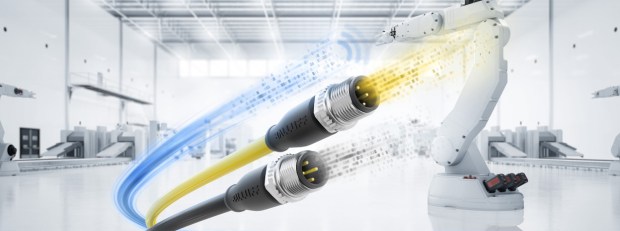
IO-Link

IO-Link advantages

Efficient and cost-saving – the IO-Link advantage
IO-Link advantages

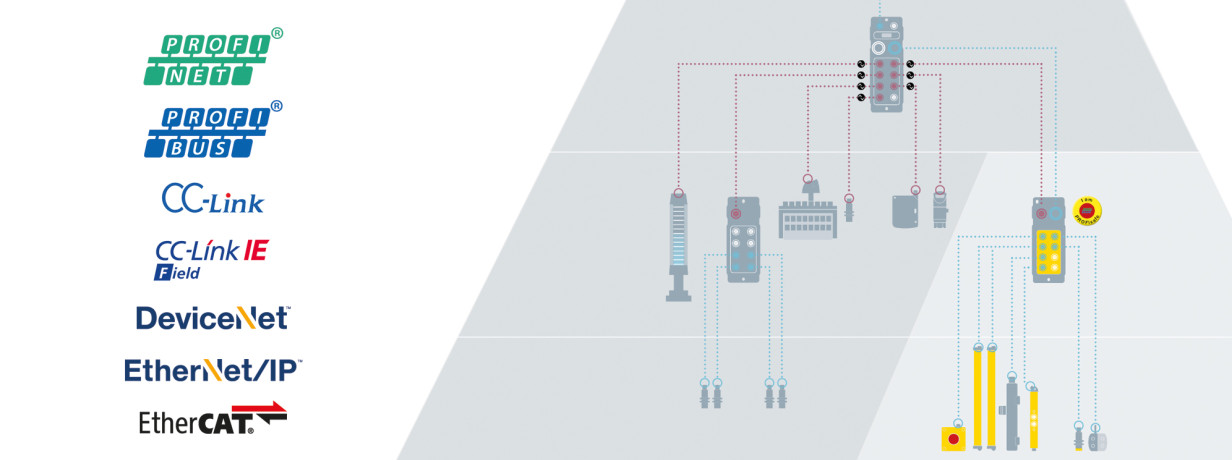
The IO-Link communication interface offers tangible benefits: quick and cost-saving installation, continuous diagnostics and quick sensor replacement, because these can be configured from a central location. All in all, this provides more flexibility and increases the efficiency of automation.

Easy installation

For IO-Link all you need is an industry-standard three- or four-conductor cable. The uniform standard interface can be quickly integrated into the fieldbus world. Even complex devices can be easily integrated. What is particularly interesting is that even without expensive, shielded cabling, the digital communication ensures noise immunity. Analog signals are digitized with no conversion losses.

IO-Link increases machine availability

IO-Link enables quick and error-free exchange of sensors and shortens the time needed to start system operation. Downtime can be significantly reduced, since the IO-Link master or the controller automatically writes the parameters of a replaced IO-Link sensor onto the new sensor. Commissioning processes, format changes or recipe changes are handled centrally via the controller’s function modules. This saves time and minimizes the potential for mistakes. Additional advantages for you: IO-Link devices cannot be confused with each other as they are automatically identifiable via IO-Link.

IO-Link enables need-oriented maintenance

Continuous diagnostic data for the entire process extends your service intervals, since automatic readjustment via IO-Link means you need to perform maintenance much less frequently on equipment and machines. Now, predictive error detection is even possible because complete process parameters are consistently displayed in the controller.

IO-Link makes operation more efficient

IO-Link sensors can be positioned in the machine directly at the location of operation because the sensor’s accessibility no longer plays a role. That is optimal in terms of technical aspects of the process. Process monitoring, configuration and error analysis of the IO-Link sensors take place in the controller. Machine processes are now time-optimized. Additionally, signal delays and distortions are reliably eliminated because the digital transmission of data also ensures high signal quality. A wide range of application requirements can be easily met with IO-Link due to standard binary and analog devices being used at the same time as IO-Link sensors and actuators.

IO-Link offers a high-performance, consistent network

Control concepts using IO-Link provide you with simple and universal solutions for a high-performance, consistent network, meaning you benefit from lower costs and are more flexibility than ever.

We Speak IO-Link

The advantages of IO-Link are obvious: easy installation, high machine availability, need-oriented maintenance, efficient operation and a high-performance, consistent network. As an engaged partner for industrial automation, Balluff offers not only an enormously wide spectrum of products and services with devices such as our IO-Link master, IO-Link hubs and IO-Link sensors, but together with you also develops solutions for industrial automation that are precisely suited to your needs and are globally applicable.

Examples

Migrate fieldbuses

Automate Robots

Expand decentralization

Track Data

Measure, Control and Regulate

Signaling

Handling and Assembly

CMA/Flodyne/Hydradyne is an authorized  Balluff distributor in Illinois, Wisconsin, Iowa and Northern Indiana.

In addition to distribution, we design and fabricate complete engineered systems, including hydraulic power units, electrical control panels, pneumatic panels & aluminum framing. Our advanced components and system solutions are found in a wide variety of industrial applications such as wind energy, solar energy, process control and more.
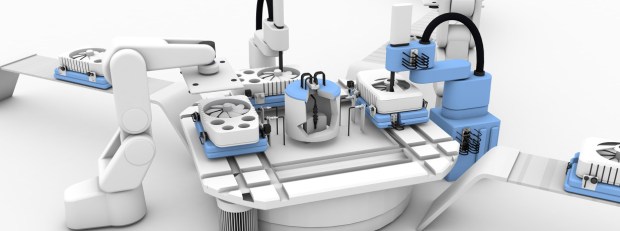
Simple (and) Good: New Generation of IO-Link Sensor/Actuator Hubs

An Entry to IO-Link Technology

Easy entry into efficient and proven IO-Link technology is made possible by the new generation of our I/O modules. Flexibly adapted to meet your needs, you can use up to 16 digital inputs or 8 digital inputs and outputs depending on the application.  

This allows for flexible exchange and easy expansion of your application. The next generation sensor/actuator hubs provide eight standardized M12 ports, four of which can be configured variably.  

The added value to existing Balluff IO-Link sensor/actuator hubs is primarily in the optimized housing concept and the deliberate simplicity of the new generation.  

Less is more − you gain simple handling and support of basic I/O functions without complex add-on functions. Our new sustainable housing concept uses recyclable materials without potting materials in an environmentally friendly way, while still meeting all the requirements for industrial use in the usual Balluff quality. 


Improved process quality with IO-Link

IO-Link brings users more flexibility and increases efficiency in automation. Our new gen IO-Link sensor/actuator hub offers you an easy entry into IO-Link technology for support of basic I/O functions. You can simply realize efficient topologies, because communication and power supply run over a single line. Our I/O modules enable the integration of standard sensors and actuators in IO-Link topologies. Sensor/actuator hubs also offer you a high savings potential, because they reduce the number of fieldbus modules and enable efficient scaling of the application. In a nutshell, our new gen version is an ideal solution for getting started with the IO-Link standard or for completing versatile applications in a cost-effective manner.

 IO-Link advantages

Features

  • Efficient and effective − perfectly suited for low power signal processing
  • Flexible and from a single source − our new generation I/O modules are available in NPN and PNP variants
  • Compact, lightweight and sustainable − optimized for use in moving applications and with Balluff’s high quality
  • Fast, effective signal transmission and reduced signal runtimes due to COM3 transmission standard
  • Individually adapted to your needs, four of the digital ports can be flexibly configured

CMA/Flodyne/Hydradyne is an authorized  Balluff distributor in Illinois, Wisconsin, Iowa and Northern Indiana.

In addition to distribution, we design and fabricate complete engineered systems, including hydraulic power units, electrical control panels, pneumatic panels & aluminum framing. Our advanced components and system solutions are found in a wide variety of industrial applications such as wind energy, solar energy, process control and more.
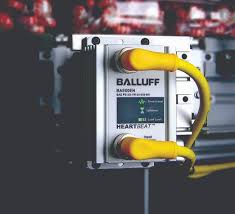
Heartbeat® power supply units with IO-Link interface

Optimum power supply for the sophisticated automation solution with IO-Link communication interface

In the world of automation, ensuring a reliable and efficient power supply is crucial for the seamless operation of sensors, actuators, controllers, and HMIs. Balluff Heartbeat® power supply units with IO-Link interfaces stand out as an optimal solution for sophisticated automation systems, designed to meet the high demands of quality, longevity, and diagnostic capabilities.

Why Choose Balluff Heartbeat® Power Supply Units?

Balluff Heartbeat® power supplies are engineered with precision, incorporating high-quality components that guarantee an extended service life. These units are particularly well-suited for critical applications where reliability is non-negotiable. The built-in monitoring system is a standout feature, offering real-time insights into the power supply’s performance.

One of the most valuable aspects of these power supplies is the Heartbeat® status indicator LED. This feature provides a local, three-color indication of the current load situation, the device’s wear level, and the remaining service life. This visual feedback allows for immediate assessment of the system’s health. Additionally, the power supply’s digital outputs convey alarm, stress level, and lifetime information, enabling preemptive maintenance and avoiding unexpected downtime.

Enhanced Diagnostics with IO-Link Interface

The integration of IO-Link communication adds another layer of sophistication to the Balluff Heartbeat® power supplies. Through IO-Link, users can access detailed diagnostic and status information about the device, including operating parameters and historical data. This capability not only enhances transparency but also facilitates informed decision-making in maintenance and operation.

The extra narrow design of these power supply units makes them ideal for resource-optimized control cabinet configurations (IP20 housing). For decentralized structures, IP67 variants are available, offering robust power supply solutions in direct proximity to the consumer.

Key Features That Set Balluff Heartbeat® Power Supplies Apart

The Balluff Heartbeat® power supplies are packed with features designed to meet the diverse needs of modern automation systems:

  • 24 V, Single Phase: Available in various power ratings (91, 120, 240, and 480 W), ensuring compatibility with a wide range of applications.
  • Short-Circuit Proof with PowerBoost 150%: Delivers extra power when needed, ensuring the system’s resilience during peak loads.
  • Regulatable Output Voltage: Provides flexibility in maintaining optimal performance.
  • Low Residual Ripple: Ensures a stable output voltage, crucial for sensitive electronic components.
  • Preventative Maintenance and Condition-Based Maintenance: Supports Industry 4.0 initiatives, allowing for predictive and condition-based maintenance strategies.
  • Galvanic Isolation: Ensures that IO-Link communication and power supply units are electrically separated, enhancing safety and performance.

Tailored Solutions for Control Cabinets and Field Applications

  • Control Cabinet Power Supplies: Available in single-phase or three-phase configurations, these units range from 75 to 960 W and can be connected in parallel to provide up to 2.8 kW. They offer features such as regulatable output voltage, alarm LED-output digital, and the ability to operate in parallel or series configurations for flexible application adaptation.
  • Field Power Supplies with IO-Link Interface: These units come in compact IP67 housings without potting, offering over 95% efficiency. They are available in 1- or 3-phase configurations with 7/8″ or M12 connectors, providing up to 12 A continuous power per channel. The field power supplies also include 2 outputs with 4 fused channels, allowing for separate monitoring and remote parameterization via IO-Link.

Conclusion

The Balluff Heartbeat® power supply units with IO-Link interfaces are more than just power sources—they are integral components of a sophisticated automation ecosystem. Their advanced diagnostic capabilities, high-quality construction, and flexible configurations make them an ideal choice for industries that demand the highest levels of reliability and efficiency. By integrating these power supplies into your automation solution, you are not just powering your systems; you are future-proofing your operations with a robust, intelligent power supply solution.

CMA/Flodyne/Hydradyne is an authorized  Balluff distributor in Illinois, Wisconsin, Iowa and Northern Indiana.

In addition to distribution, we design and fabricate complete engineered systems, including hydraulic power units, electrical control panels, pneumatic panels & aluminum framing. Our advanced components and system solutions are found in a wide variety of industrial applications such as wind energy, solar energy, process control and more.

4 Reasons Why Machine Builders Use IO-Link

Corey Shepherd, CMAFH Brain Products Team

So, why might a machine builder use IO-Link? Here are a few reasons:

1.      Flexibility

IO-Link provides a flexible and easy-to-use interface that allows for the seamless integration of sensors and actuators from different manufacturers. This makes it easier to customize and upgrade automation systems as needed.

Machine builders can use IO-Link to connect a wide range of sensors and actuators, such as pressure sensors, temperature sensors, flow meters, solenoid valves, and even motors.

2.      Cost savings

IO-Link can help reduce installation and maintenance costs by simplifying wiring and reducing the need for specialized cabling.

With IO-Link, machine builders can use standard unshielded three-conductor cables for all connections, reducing the number of cables required and simplifying the wiring process. Instead of individually wiring devices back to a terminal strip or IO modules, IO Link allows machine builders to land devices to IP67 or IP69K machine mount M12 IO Link masters or hubs.  

3.      Increased functionality

Additionally, IO-Link sensors and actuators can provide diagnostic information that can help reduce downtime and increase overall system efficiency.

IO-Link can provide advanced features such as parameterization, identification, and diagnostic capabilities. With parameterization, machine builders can configure and adjust sensor and actuator settings, such as sensing range and output type, to meet specific application requirements. Identification enables automatic identification and configuration of IO-Link devices when they are connected to the system. And with diagnostic capabilities, machine builders can monitor and diagnose issues with sensors and actuators in real-time, helping to reduce downtime and increase system efficiency.

4.      Simplifying Safety

It is also possible to integrate safety devices with a PLE/SIL 3 rating in to your IO Link system if the correct hardware is used. Safety IO Link enables communication between safety devices, such as light curtains, E-Stop buttons, safety door switches, and a safety PLC.

Safety IO Link allows for more effective monitoring and control in industrial applications because each safety device can communicate its status and diagnostic information to the safety controller. This allows for simple and quick identification of safety fault issues. This is all accomplished with quick M12 connections between safety devices and a Safety IO Link module.

About Us

CMA/Flodyne/Hydradyne is a leader in the IO Link space by helping customers with full machine layouts using Balluff IO Link Masters, hubs, and devices. We would love an opportunity to show you how we can help optimize the right IO Link system for your machine!

Corey Shepherd.
CMA/Flodyne/Hydradyne Brain Products Team

Contact me at:
Office: 630-563-3710
Mobile: 847-899-2390
email: coreyshepherd@cmafh.com

cmafh.com

Building Blocks of the Smart Factory Now More Economical, Accessible

Guest Contributor: Balluff

A smart factory is one of the essential components in Industry 4.0. Data visibility is a critical component to ultimately achieve real-time production visualization within a smart factory. With the advent of IIoT and big-data technologies, manufacturers are finally gaining the same real-time visibility into their enterprise performance that corporate functions like finance and sales have enjoyed for years.

The ultimate feature-rich smart factory can be defined as a flexible system that self-optimizes its performance over a network and self-adapts to learn and react to new conditions in real-time. This seems like a farfetched goal, but we already have the technology and knowhow from advances developed in different fields of computer science such as machine learning and artificial intelligence. These technologies are already successfully being used in other industries like self-driving cars or cryptocurrencies.

1
Fig: Smart factory characteristics (Source: Deloitte University Press)

Until recently, the implementation or even the idea of a smart factory was elusive due to the prohibitive costs of computing and storage. Today, advancements in the fields of machine learning and AI and easy accessibility to cloud solutions for analytics, such as IBM Watson or similar companies, has made getting started in this field relatively easy.

One of the significant contributors in smart factory data visualization has been the growing number of IO-Link sensors in the market. These sensors not only produce the standard sensor data but also provide a wealth of diagnostic data and monitoring while being sold at a similar price point as non-IO-Link sensors. The data produced can be fed into these smart factory systems for condition monitoring and preventive maintenance. As they begin to produce self-monitoring data, they become the lifeblood of the smart factory.

Components

The tools that have been used in the IT industry for decades for visualizing and monitoring server load and performance can be easily integrated into the existing plant floor to get seamless data visibility and dashboards. There are two significant components of this system: Edge gateway and Applications.

2
Fig: An IIoT system

Edge Gateway

The edge gateway is the middleware that connects the operation technology and Information technology. It can be a piece of software or hardware and software solutions that act as a universal protocol translator.

As shown in the figure, the edge gateway can be as simple as something that dumps the data in a database or connects to cloud providers for analytics or third-party solutions.

Applications

One of the most popular stacks is Influxdb to store the data, Telegraf as the collector, and Grafana as a frontend dashboard.

These tools are open source and give customers the opportunity to dive into the IIoT and get data visibility without prohibitive costs. These can be easily deployed into a small local PC in the network with minimal investment.

The applications discussed in the post:

Grafana

Telegraf

Influxdb

Node-red Tutorial

CMA/Flodyne/Hydradyne is an authorized  Balluff distributor in Illinois, Wisconsin, Iowa and Northern Indiana.

In addition to distribution, we design and fabricate complete engineered systems, including hydraulic power units, electrical control panels, pneumatic panels & aluminum framing. Our advanced components and system solutions are found in a wide variety of industrial applications such as wind energy, solar energy, process control and more.


How Cameras Keep Tire Manufacturers From Spinning Their Wheels

Guest contributor: John Tackacs, BalluffTires being transported between the curing presses and the staging area before their final inspection often become clustered together. This jam up can cause imperfections to the tires and damage to the conveyors. To alleviate this problem, some tire manufacturers have installed vision systems on their conveyors to provide visual feedback to their production and quality teams, and alert them when the tires start to get too close together.

A vision system can show you alerts back in your HMI by using inputs and outputs built into the camera or use an IO-Link port on the camera to attach a visual display, for example a SmartLight with audible and flashing alerts enabled. Once you see these alerts, the PLC can easily fix the issue from the program or a maintenance worker or engineer can quickly respond to the alert.

Widespread use of smart vision cameras with various pixel options has become a trend in tire manufacturing. In additional to giving an early alert to bunching problems, vision systems can also capture pictures and data to verify that tires were cleared all the way into final inspection. Although tire machine builders are being asked to incorporate vision systems into their machines during the integration process, it is more likely for systems to be added in plants at the application level.

Vision systems can improve production throughput, quality issues and record production data about the process for analytics and analysis down the road. Remember a tire plant usually consists of these processes in their own large section of the plant and involves many machines in each section:

  • Mixing
  • Tire Prep
  • Tire Build
  • Curing
  • Final Inspection

Each one of these process areas in a plant can benefit from the addition of vision systems. Here are a few examples:

  • Mixing areas can use cameras as they mill rubber and detect when rubber sheets are off the rollers and to look for engraved information embedded in the rubber material for logistics and material flow to the proper processes.
  • Tire Prep can use cameras to ensure all the different strand colors of steel cords are embedded or painted on the rubber plies before going to tire build process.
  • Tire Build can use vision to detect the side-wall beads are facing the right direction and reading the embedded position arrows on the beads before tire plies are wrapped around them.
  • Curing area can use vision to monitor tire clusters on conveyors and make sure they are not too close to each other by using the measuring tool in the camera software.
  • Final Inspection can use vision to read barcodes, QR codes, detect colors of embossed or engraved serial numbers, detect different color markings and shape of the markings on the tire.

The use of machine vision systems can decrease quality issues by pinpointing errors before they make it through the entire production process without detection.

cropped-cmafh-logo-with-tagline-caps.png

CMA/Flodyne/Hydradyne is an authorized  Balluff distributor in Illinois, Wisconsin, Iowa and Northern Indiana.

In addition to distribution, we design and fabricate complete engineered systems, including hydraulic power units, electrical control panels, pneumatic panels & aluminum framing. Our advanced components and system solutions are found in a wide variety of industrial applications such as wind energy, solar energy, process control and more.
Adding a higher level of visibility to older automation machines

It’s never too late to add more visibility to an automation machine.

In the past, when it came to IO-Link opportunities, if the PLC on the machine was a SLC 500, a PLC-5, or worse yet, a controller older than I, there wasn’t much to talk about. In most of these cases, the PLC could not handle another network communication card, or the PLC memory was maxed, or it used a older network like DeviceNet, Profibus or ASi that was maxed. Or it was just so worn out that it was already being held together with hope and prayer. But, today we can utilize IIoT and Industry 4.0 concepts to add more visibility to older machines.

IIOT and Industry 4.0 have created a volume of products that can be utilized locally at a machine, rather than the typical image of Big Data. There are three main features we can utilize to add a level of visibility: Devices to generate data, low cost controllers to collect and analyze the data, and visualization of the data.

Data Generating Devices

In today’s world, we have many devices that can generate data outside of direct communication to the PLC.  For example, in an Ethernet/IP environment, we can put intelligent devices directly on the EtherNet/IP network, or we can add devices indirectly by using technologies like IO-Link, which can be more cost effective and provide the same level of data. These devices can add monitoring of temperature, flow, pressure, and positioning data that can reduce downtime and scrap. With these devices connected to an Ethernet-based protocol, data can be extracted from them without the old PLC’s involvement.  Utilizing JSON, OPC UA, MQTT, UDP and TCP/IP, the data can be made available to a secondary controller.

Linux-Based Controllers

An inexpensive Raspberry Pi could be used as the secondary controller, but Linux-based open controllers with industrial specifications for temperature, vibration, etc. are available on the market. These lower cost controllers can then be utilized to collect and analyze the data on the Ethernet protocol. With a Linux based “sandbox” system, many programming software packages could be loaded, i.e. Node-Red, Codesys, Python, etc., to create the needed logic.

Visualization of Data

Now that the data is being produced, collected and analyzed, the next step is to view the information to add the extra layer of visibility to the process of an older machine. Some of the programming software that can be loaded into the Linux-based systems, which have a form a visualization, like a dashboard (Node-Red) or an HMI feel (Codesys). This can be displayed on a low-cost monitor on the floor near the machine.

By utilizing the products used in the “big” concepts of IIOT and Industry 4.0, you can add a layer of diagnostic visualization to older machines, that allows for easier maintenance, reduced scrap, and predictive maintenance.

cropped-cmafh-logo-with-tagline-caps.png

CMA/Flodyne/Hydradyne is an authorized  Balluff distributor in Illinois, Wisconsin, Iowa and Northern Indiana.

In addition to distribution, we design and fabricate complete engineered systems, including hydraulic power units, electrical control panels, pneumatic panels & aluminum framing. Our advanced components and system solutions are found in a wide variety of industrial applications such as wind energy, solar energy, process control and more.

5 HYDRAULICS MYTHS

Guest Contributor: Dr. Steffen Haack, Bosch Rexroth

br_hydrolicmyths_hero_dec19.jpgNo drive technology is more efficient, compact and robust than hydraulics when dealing with forces in excess of 600 kN. So why is it that the importance of hydraulics is often overlooked in the training and development of our young engineers?

In the modern manufacturing setting, movement is everything along with the resulting data. Little thought is given to hydraulic technology, that is until drive physics comes into play. This is when hydraulic technology comes into its own in managing large forces and delivering robust performance.

Here’s a connected hydraulics ‘Myth Buster’ that demonstrates how the latest smart hydraulics are more versatile and cost-effective than you ever imagined.

THE MYTH: Installation is complex

BUSTED: Designers are no longer required to develop an in-depth knowledge of fluid mechanics and technology and increasingly look for plug & produce modules. These ready-to-install modules simply need an electrical current and a connection to the control communication.

THE MYTH: Commissioning takes time

BUSTED: Our smart, connected hydraulics are now commissioned with the same engineering tools as electric drives and control systems. Functions previously carried out hydromechanically are handled by the latest drive software. There are even software assistants available to guide technicians through the commissioning process and suggest suitable parameters.

THE MYTH: Hydraulics waste energy

BUSTED: There’s a preconception that hydraulics are more energy-intensive than other technologies, but things have changed dramatically. Variable-speed pump drives generate the flow in line with demand and reduce speeds accordingly under partial load conditions. Compared to constantly driven pumps, they reduce power consumption by up to 80 percent – a level consistent with that of electric drives of the same size.

THE MYTH: Hydraulics aren’t IoT ready

BUSTED: Smart hydraulics are a well-established part of IoT in production. Analog valves can be made digitally visible cost-effectively thanks to IO-Link and exchange data available through the control system. Smart valves, with their own control electronics and state of the art field bus connection, are as convenient to use as electric drives.

THE MYTH: Hydraulics are high maintenance

BUSTED: Hydraulics offer a distinct advantage when monitoring operating states and deducing possible wear and expected life cycle. With a few pieces of sensor data, such as pressure differential, oil temperature, optically measured contamination or pressure increase over time, software can assess the health of the system.

This myth busting technology is included in our latest generation of hydraulic power units, allowing young designers and businesses to benefit from all the advantages of our modern, connected innovations.


CMA/Flodyne/Hydradyne is an authorized Bosch Rexroth distributor in Illinois, Wisconsin, Iowa and Northern Indiana.

In addition to distribution, we design and fabricate complete engineered systems, including hydraulic power units, electrical control panels, pneumatic panels & aluminum framing. Our advanced components and system solutions are found in a wide variety of industrial applications such as wind energy, solar energy, process control and more.

Boost Connectivity with Non-Contact Couplings

Guest contributor, Shishir Rege, Balluff

In press shops or stamping plants, downtime can easily cost thousands of dollars in productivity. This is especially true in the progressive stamping process where the cost of downtime is a lot higher as the entire automated stamping line is brought to a halt.

BIC presse detail 231013

Many strides have been made in modern stamping plants over the years to improve productivity and reduce the downtime. This has been led by implementing lean philosophies and adding error proofing systems to the processes. In-die-sensing is a great example, where a few inductive or photo-eye sensors are added to the die or mold to ensure parts are seated well and that the right die is in the right place and in the right press. In-die sensing almost eliminated common mistakes that caused die or mold damages or press damages by stamping on multiple parts or wrong parts.

In almost all of these cases, when the die or mold is replaced, the operator must connect the on-board sensors, typically with a multi-pin Harting connector or something similar to have the quick-connect ability. Unfortunately, often when the die or mold is pulled out of the press, operators forget to disconnect the connector. The shear force excreted by the movement of removing the die rips off the connector housing. This leads to an unplanned downtime and could take roughly 3-5 hours to get back to running the system.

image

Another challenge with the multi-conductor connectors is that over-time, due to repeated changeouts, the pins in the connectors may break causing intermittent false trips or wrong die identification. This can lead to serious damages to the system.

Both challenges can be solved easily with the use of a non-contact coupling solution. The non-contact coupling, also known as an inductive coupling solution, is where one side of the connectors called “Base” and the other side called “Remote” exchange power and signals across an air-gap. The technology has been around for a long time and has been applied in the industrial automation space for more than a decade primarily in tool changing applications or indexing tables as a replacement for slip-rings. For more information on inductive coupling here are a few blogs (1) Inductive Coupling – Simple Concept for Complex Automation Part 1,  (2) Inductive Coupling – Simple Concept for Complex Automation Part 2

For press automation, the “Base” side can be affixed to the press and the “Remote” side can be mounted on a die or mold, in such a way that when the die is placed properly, the two sides of the coupler can be in the close proximity to each other (within 2-5mm). This solution can power the sensors in the die and can help transfer up to 12 signals. Or, with IO-Link based inductive coupling, more flexibility and smarts can be added to the die. We will discuss IO-Link based inductive coupling for press automation in an upcoming blog.

Some advantages of inductive coupling over the connectorized solution:

  • Since there are no pins or mechanical parts, inductive coupling is a practically maintenance-free solution
  • Additional LEDs on the couplers to indicate in-zone and power status help with quick troubleshooting, compared to figuring out which pins are bad or what is wrong with the sensors.
  • Inductive couplers are typically IP67 rated, so water ingress, dust, oil, or any other environmental factor does not affect the function of the couplers
  • Alignment of the couplers does not have to be perfect if the base and remote are in close proximity. If the press area experiences drastic changes in humidity or temperature, that would not affect the couplers.
  • There are multiple form factors to fit the need of the application.

In short, press automation can gain a productivity boost, by simply changing out the connectors to non-contact ones.


cropped-cmafh-logo-with-tagline-caps.png

CMA/Flodyne/Hydradyne is an authorized  Balluff distributor in Illinois, Wisconsin, Iowa and Northern Indiana.

In addition to distribution, we design and fabricate complete engineered systems, including hydraulic power units, electrical control panels, pneumatic panels & aluminum framing. Our advanced components and system solutions are found in a wide variety of industrial applications such as wind energy, solar energy, process control and more.

Improve Your Feeder Bowl System (and Other Standard Equipment) with IO-Link

Guest contributor: Tom Rosenberg, Balluff

One of the most common devices used in manufacturing is the tried and true feeder bowl system. Used for decades, feeder bowls take bulk parts, orient them correctly and then feed them to the next operation, usually a pick-and-place robot. It can be an effective device, but far too often, the feeder bowl can be a source of cycle-time slowdowns. Alerts are commonly used to signal when a feed problem is occurring but lack the exact cause of the slow down.

feeder bowl

A feed system’s feed rate can be reduced my many factors. Some of these include:

  • Operators slow to add parts to the bowl or hopper
  • Hopper slow to feed the bowl
  • Speeds set incorrectly on hopper, bowl or feed track
  • Part tolerance drift or feeder tooling out of adjustment

With today’s Smart IO-Link sensors incorporating counting and timing functions, most of the slow-down factors can be easily seen through an IIoT connection. Sensors can now time how long critical functions take. As the times drift from ideal, this information can be collected and communicated upstream.

A common example of a feed system slow-down is a slow hopper feed to the bowl. When using Smart IO-Link sensors, operators can see specifically that the hopper feed time is too long. The sensor indicates a problem with the hopper but not the bowl or feed tracks. Without IO-Link, operators would simply be told the overall feed system is slow and not see the real problem. This example is also true for the hopper in-feed (potential operator problem), feed track speed and overall performance. All critical operations are now visible and known to all.

For examples of Balluff’s smart IO-Link sensors, check out our ADCAP sensor.


cropped-cmafh-logo-with-tagline-caps.pngCMA/Flodyne/Hydradyne is an authorized  Balluff distributor in Illinois, Wisconsin, Iowa and Northern Indiana.

In addition to distribution, we design and fabricate complete engineered systems, including hydraulic power units, electrical control panels, pneumatic panels & aluminum framing. Our advanced components and system solutions are found in a wide variety of industrial applications such as wind energy, solar energy, process control and more.