Demystifying Class A and Class B Type IO-Link Ports

Since the inception of the Class (or Type) A and Class (or Type) B ports in the IO-Link specifications, there have been several new IO-Link devices and IO-Link masters introduced to the market. This has caused a lot of confusion about when and where to use Class A and Class B IO-Link masters and devices.

Before getting into the details of Class A vs. Class B, I would like to address one question that I get asked quite often: are Class B master ports safety-rated? The answer is no. Just like any other network I/O modules (with the exception of the Safety I/O modules), any type of IO-Link master (whether it is Class A, Class B or mixed) is not safety rated. If the block is safety-rated, I am certain that the manufacturers of these blocks will kindly let you know. So, we just busted the first myth about Class B ports. Side note: the IO-Link Consortium just released a specification for IO-Link Safety. At the time of this posting (Oct. 2017), there are no IO-Link masters on the market that are safety rated, even when the IO-Link master ports exist alongside Safety I/O parts on the same block.

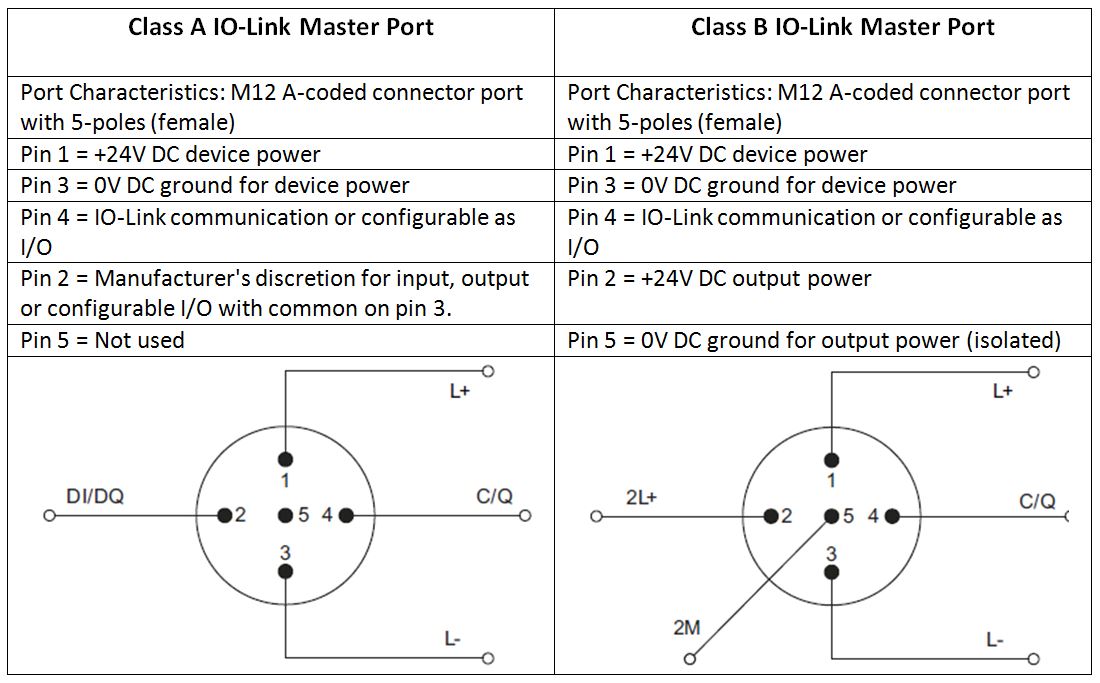
Capture.JPG

For IO-Link communication, only pins 1, 3 and 4 have significance. The implementations of pin 2 and 5 is where Class A and Class B ports differ and with that, the advantages and disadvantages of the uses for these ports.

Clearly, with the wiring diagrams above, a Class A port offers more flexibility in terms of additional I/O count and in some cases high-amperage outputs to drive high-current devices such as valves.  We will discuss the detailed power routing and application flexibility of Class A ports in a later blog.

With Class B ports, Pin 2 and Pin 5 are tied to a separate power source and cannot really be used as I/O.  Pin 5, the ground for output power, is separated from pin 3, the ground for device power. Actuation devices, such as valve banks, that are now offered on IO-Link could utilize separate output power that can be turned off through safety relays. Technically, this separation of power is possible with Class A ports as well, but it is inherent with Class B ports.

A word of caution when implementing I/O architectures with Class B masters: since the commons for device power and output power are isolated at the master, the power fed to this device should be isolated at the source as well to keep the isolation intact. That means, the power supplies feeding the power to these devices should be isolated.

Another question that I get asked frequently reveals another myth about Class B master ports: do Class B master ports offer any extra power than Class A ports? Again the answer is no. Class B does not mean extra power or the ability to provide more power. It simply means output power with isolated commons. What leads to that thinking is that on several IO-Link masters in the market, the outputs available on pin 2 of Type A ports have lower amperage ratings, because in most cases the output power is shared or drawn from the same source that feeds device power.  There will be more discussion about this in my next blog!

A third interesting question is, can you plug Class A IO-Link devices into Class B master ports? In most cases there is no problem doing this as a true IO-Link Class A device is only a 3 pin device using pins 1,3, and 4 shown above. So as long as pin 2 of the device does not exist or is not being used for any purpose, it is possible to use Class A devices with Class B ports. Caution: several manufacturers make sensors that can be used in IO-Link mode as well as analog or digital mode and the implementation may have more than 3 pins. In these circumstances, you will need to use a 3-pole cable to keep the device unharmed or the pin 2 of the type B port that always has +24V going through may damage or disrupt the sensor.

Meanwhile, I hope this blog helped provide some clarity on Class A and Class B ports.

cropped-cmafh-logo-with-tagline-caps.pngCMA/Flodyne/Hydradyne is an authorized  Balluff distributor in Illinois, Wisconsin, Iowa and Northern Indiana.

In addition to distribution, we design and fabricate complete engineered systems, including hydraulic power units, electrical control panels, pneumatic panels & aluminum framing. Our advanced components and system solutions are found in a wide variety of industrial applications such as wind energy, solar energy, process control and more.
5 Ways Flexible Manufacturing has Never Been Easier

Guest Contributor: Tom Rosenberg, Balluff

Flexible manufacturing has never been easier or more cost effective to implement, even down to lot-size-one, now that IO-Link has become an accepted standard. Fixed control and buried information is no longer acceptable. Driven by the needs of IIoT and Industry 4.0, IO-Link provides the additional data that unlocks the flexibility in modern automation equipment, and it’s here now!  As evidence, here are the top five examples of IO-Link enabled flexibility:

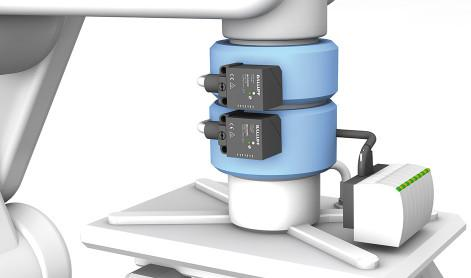
#5. Quick Change Tooling: The technology of inductive coupling connects standard IO-Link devices through an airgap. Change parts and End of Arm (EOA) tooling can quickly and reliably be changed and verified while maintaining connection with sensors and pneumatic valves. This is really cool technology…power through the air!

Image1


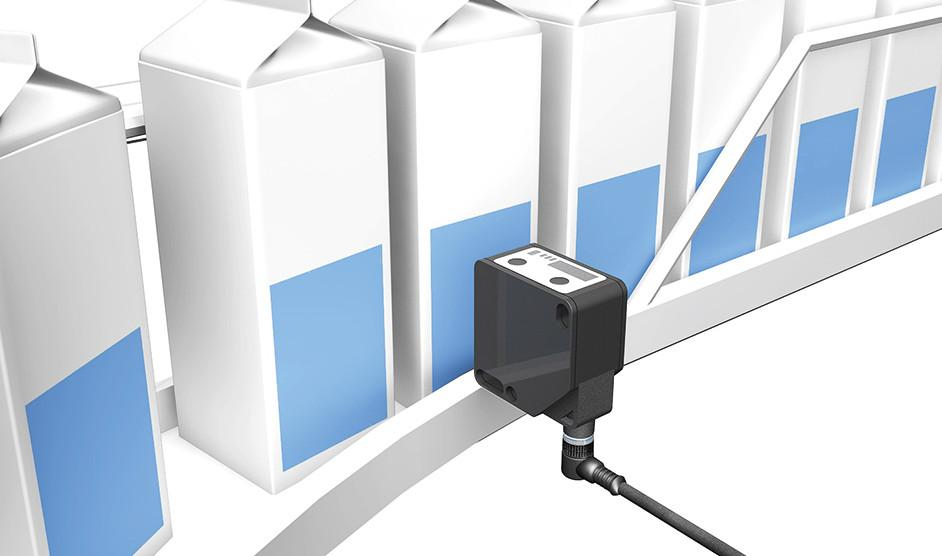
#4. On-the-fly Sensors Programming: Many sensor applications require new settings when the target changes, and the targets seem to always change. IO-Link enables this at minimal cost and very little time investment. It’s just built in.

Image 2


#3. Flexible Indicator Lights: Detailed communication with the operators no long requires a traditional HMI. In our flexible world, information such as variable process data, timing indication, machine status, run states and change over verification can be displayed at the point of use. This represents endless creativity possibilities.

Powertrain visualisieren


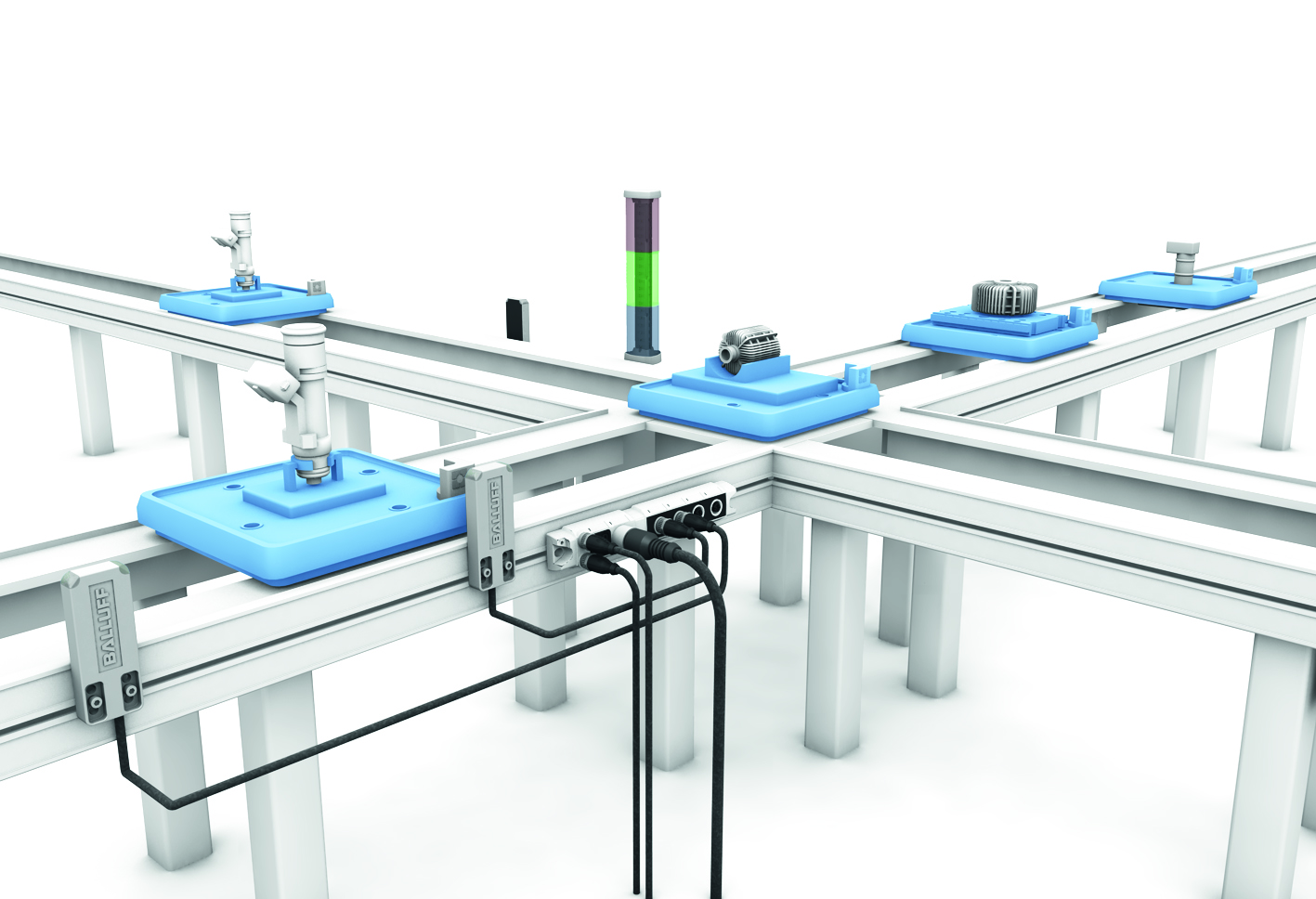
#2. Low cost RFID: Radio Frequency Identification (RFID) has been around for a while. But with the cost point of IO-Link, the applications have been rapidly climbing. From traditional manufacturing pallets to change-part tracking, the ease and cost effectiveness of RFID is at a record level. If you have ever thought about RFID, now is the time.

7_1_Produktionsdaten_Dokumentieren


#1. Move Away from Discrete to Continuously Variable Sensors: Moving from discrete, on-off sensors to continuously variable sensors (like analog but better) opens up tremendous flexibility. This eliminates multiple discrete sensors or re-positioning of sensors. One sensor can handle multiple types and sizes of products with no cost penalty. IO-Link makes this more economical than traditional analog with much more information available. This could be the best technology shift since the move to Ethernet based I/O networks.

8_1_induktiver_Abstand

So #1 was the move to Continuously Variable sensors using IO-Link. But the term, “Continuously Variable” doesn’t just roll off the tongue. We have discrete and analog sensors, but what should we call these sensors? Let me know your thoughts!

To learn more about RFID and IO-Link technology, visit www.balluff.com.

cropped-cmafh-logo-with-tagline-caps.pngCMA/Flodyne/Hydradyne is an authorized  Balluff distributor in Illinois, Wisconsin, Iowa and Northern Indiana.

In addition to distribution, we design and fabricate complete engineered systems, including hydraulic power units, electrical control panels, pneumatic panels & aluminum framing. Our advanced components and system solutions are found in a wide variety of industrial applications such as wind energy, solar energy, process control and more.
RFID in the Manufacturing Process: A Must-Have for Continuous Improvement

Guest Contributor:  Wolfgang Kratenzenberg, Balluff

There is quite an abundance of continuous improvement methodologies implemented in manufacturing processes around the globe. Whether it’s Lean, Six Sigma, Kaizen, etc., there is one thing that all of these methodologies have in common, they all require actionable data in order to make an improvement.  So, the question becomes: How do I get my hands on actionable data?

All data begins its life as raw data, which has to be manipulated to produce actionable data. Fortunately, there are devices that help automate this process. Automatic data collection (ADC), which includes barcode and RFID technology, provides visibility into the process. RFID has evolved to become the more advanced method of data collection because it doesn’t require a centralized database to store the data like barcode technology. RFID stores the data directly on the product or pallet in the process, which allows for much more in-depth data collection.

rfid

RFID’s greatest impact on the process tends to be improving overall quality and efficiency. For example, Company X is creating widgets and there are thirty-five work cells required to make a widget. Between every work cell there is a quality check with a vision system that looks for imperfections created in the prior station. When a quality issue is identified, it is automatically written to the tag.  In the following work cell the RFID tag is read as soon as it enters the station. This is where the raw data becomes actionable data. As soon as a quality issue has been identified, someone or something will need to take action. At this point the data becomes actionable because it has a detailed story to tell. While the error code written to the tag might just be a “10”, the real story is: Between cells five and six the system found a widget was non-conforming. The action that can be taken now is much more focused. The process at cell five can be studied and fixed immediately, opposed to waiting until an entire batch of widgets are manufactured with a quality issue.

Ultimately, flawless execution is what brings success to organizations.  However, in order to execute with efficiency and precision the company must first have access to not only data, but actionable data. Actionable data is derived from the raw data that RFID systems automatically collect.

Learn more about RFID technology at www.balluff.com.

cropped-cmafh-logo-with-tagline-caps.pngCMA/Flodyne/Hydradyne is an authorized  Balluff distributor in Illinois, Wisconsin, Iowa and Northern Indiana.

In addition to distribution, we design and fabricate complete engineered systems, including hydraulic power units, electrical control panels, pneumatic panels & aluminum framing. Our advanced components and system solutions are found in a wide variety of industrial applications such as wind energy, solar energy, process control and more.

Hydraulic Valves – Customize your Feedback

Guest contributor: Chris Heberlein, Balluff

Hydraulic actuators can be used to open and close a valve’s position.  In automation architectures, a linear position sensor is used within the hydraulic actuator to provide continuous position feedback.

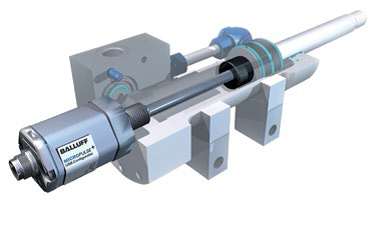
The linear position sensor is installed into the back end of the cylinder.  The sensing element resides in a cavity that has been gun-drilled through the piston and cylinder rod, Image1extending the full length of the mechanical stroke. A magnet ring is used as a position marker and mounted on the face of the piston.  As the piston (and the position marker) move, the linear position sensor provides a continuous absolute position by way of an analog or digital signal.

In some applications, a cylinder’s position may only be moving across a small portion of the overall stroke or a specific portion of the stroke.  The end user could benefit from altering the transducer’s signal based on the application’s specific stroke requirements instead of the entire cylinder’s stroke, thereby maximizing available position resolution.  When this situation arises, most transducer manufacturers offer the ability to customize or “teach” a modified output of the stroke via push buttons or from wiring inputs.  When this is done, the process does require the cylinder (and position marker) to move to these defined locations for a “teach”.

Image2

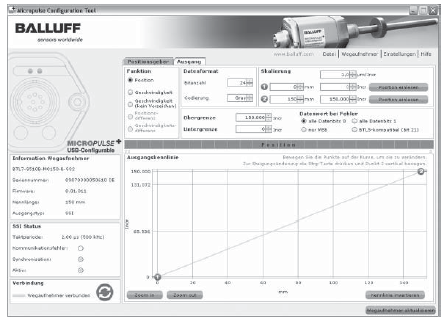
A more user-friendly and repeatable approach for customized stroke lengths with linear position sensors is to use a graphical software package. The software can be connected
from a PC via USB to a compatible linear position sensor. Starting and ending stroke values can be precisely entered into the software and a graphical representation of the output curve is created.  For a more straightforward approach, you can also drag and drop these stroke points by a click of a cursor. The file can be saved on a PC and downloaded to the transducer. In either case, the cylinder’s piston doesn’t need to be actuated.

Image3

In projects where multiple, identical actuators and linear position sensors need to be customized, the setup would only need to be done once, the file saved, and simply uploaded to all the sensors for the project.  A great time-saver over manually teaching each and every sensor.

Another benefit to using software with linear position sensors is to be able to upload programs for replacement units in a safe user environment (e.g. lab station or office) and shipping them to various job sites.  These different locations (or locales) can be in harsh environmental conditions (extreme cold or heat) or areas that contain ignitable or explosive gases or dusts which may be difficult to work in.

Image4

Other software features include inverting the output curves, offering position or velocity outputs, and more.

For more information on Balluff’s Magnetostrictive Linear Position Sensors, visit www.balluff.com.

cropped-cmafh-logo-with-tagline-caps.pngCMA/Flodyne/Hydradyne is an authorized  Balluff distributor in Illinois, Wisconsin, Iowa and Northern Indiana.

In addition to distribution, we design and fabricate complete engineered systems, including hydraulic power units, electrical control panels, pneumatic panels & aluminum framing. Our advanced components and system solutions are found in a wide variety of industrial applications such as wind energy, solar energy, process control and more.
New Design for Hydraulic Power Units

Guest contributor:  Andreas Günder, Bosch Rexoth

Optimum power, less installation space: Thanks to new intellectual and design approaches, compact hydraulic power units increase the economic efficiency of machine tools.

Powerful force in a very confined space

In the production world, hydraulics are firmly established. Machine tool manufacturers appreciate hydraulics for their high power density, toughness and modular design. In the lower performance range up to 4 kW, however, there are also some challenges. Since the installation space is often limited, designers and technical purchasers are constantly looking for increasingly compact solutions.

Installation space is valuable

The demand for compact hydraulic drives is not only due to the structurally limited flexibility regarding extensions, modernization measures and refittings but also due to the requirements regarding acquisition costs and assembly times or structural extensions of the working space with given machine dimensions. In addition to the level of integration of the functions, energy efficiency often plays an important role as well. Last but not least, many manufacturers are following the miniaturization trend. If workpieces become increasingly smaller, the moved mass of the machine tool has to be decreased accordingly.

“Installation space eaters” hydraulic power units

To reduce the installation space, solution manufacturers can start mainly with the following components: hydraulic power unit and control cabinet. When considering this split, it becomes evident that compact power units which are also easy to integrate require completely new design approaches to eliminate all features which waste unnecessary space in the performance spectrum up to 4 kW and to ensure that the units are still compatible with many different machine designs.

Highly integrated design approaches

The features of such innovative design concepts according to the EU Eco-Design Directive 2009/125/EC for example include a tank which is optimized for efficient degassing and reduces the oil volume by up to 80 percent. A much more decisive factor for gaining space is, however, that all functions can actually be integrated in one small power unit – from an economic variable-speed drive for demand-based power output to sensor technology with filling level, temperature, pressure and filter contamination sensors to a completely wired frequency converter.

Bosch_Infografik_EN-1200x849 (1)

Compact and ready for Industry 4.0

For the future viability of this approach with regard to Industry 4.0, a data interface is essential as well. Only with permanent condition monitoring can the operating conditions be optimized comfortably and relevant faults be detected early on. With this equipment, the user only has to connect the electric power, the data interface and the hydraulic supply during installation and the hydraulic power unit is ready for operation

New cooling with heatpipe

So-called heatpipes are considered to be a space-saving innovation regarding the cooling of hydraulic power units. Their high-performance passive thermal conduction allows for a further reduction of the frame size. The heatpipes absorb the thermal energy of frequency converter, motor and hydraulic oil and efficiently transfer it to a central heat sink such as e. g. cooling water…
This ensures an intelligently optimized thermal management within the hydraulic power unit and optimally utilizes the cooling power of the cooling water. There is no need for a separate hydraulic circuit for oil cooling. This reduces installation space, noise emissions, energy consumption and possibilities for leakage.

Heatpipe – Functional principle

Basically, a heatpipe consists of air-tightly sealed copper pipes with underpressure. Inside, there is a medium which transfers thermal energy. In the temperature range of hydraulic power units, the medium may be e.g. distilled water. The boiling temperature of the water is significantly reduced by the low pressure within the heatpipe, which means that a boiling or condensation process can already take place at low temperatures.

Functionality: If you dip the heatpipe for example in hot hydraulic oil, the thermal energy at the lower immersed part of the heatpipe is transferred to the water. The water exceeds the boiling point, evaporates and absorbs a large amount of thermal energy with low temperature difference (latent heat). The water steam rises to the upper part of the heat pipe which is cooled by e. g. a cooling element. Here, the water steam condensates and gives off the thermal energy to the cooling water. Thanks to the latent heatabsorption and dissipation, the thermal conductivity of heatpipes can be up to 1000 times higher than the thermal conductivity of copper pipes. Due to the high elasticity of the copper pipes, the heat pipe can be easily shaped. In this way, ideal heat paths can be formed inside the hydraulic power unit and the installation space can be considerably optimized. Similar application ranges with equal optimization potential can be found in computer technology. Here, the thermal energy in laptops caused by heat sources such as the CPU are transferred to the central cooling elements using heatpipes.

Grafik_Heatpipe_EN.jpg

Plug & Play: no control cabinet

The frequency converter has a high potential for gaining installation space as well. If it has already been equipped with Multi-Ethernet interface for Sercos, Profinet and other standards by the manufacturer, machine and plant manufacturers are able to reduce the control cabinet requirement for the hydraulic unit by up to 100 percent. As a precondition, however, the sensor technology and the motor in the power unit have to be wired to the frequency converter in such a way that the frequency converter can control the hydraulic pressure autonomously. This means that the control cabinet can not only be designed with smaller dimensions. Sometimes it can even be completely omitted together with the corresponding installation effort and related sources of error.

Conclusion

Fully integrated small power units based on a completely innovative design approach for the performance range up to 4 kW provide machine and plant manufacturers with the advantages of hydraulic drives with very little space requirements. As an alternative to purely electrical solutions, the required energy can be converted into a linear movement in a precise and costeffective manner directly at the working area using a simple hydraulic cylinder. If sensor technology, frequency converter and data interface are integrated as well, users not only benefit from comprehensive condition monitoring but also from a significantly reduced control cabinet footprint or even from a design without control cabinet.
More information fully integrated power units: www.boschrexroth.com/cytropac

Operating principle: https://www.youtube.com/watch?v=sSPemS94G2I

cropped-cmafh-logo-with-tagline-caps.png

CMA/Flodyne/Hydradyne is an authorized Bosch Rexroth distributor in Illinois, Wisconsin, Iowa and Northern Indiana.

In addition to distribution, we design and fabricate complete engineered systems, including hydraulic power units, electrical control panels, pneumatic panels & aluminum framing. Our advanced components and system solutions are found in a wide variety of industrial applications such as wind energy, solar energy, process control and more.

Avoiding a mental breakdown when choosing circuit breakers

Guest contributor: Jessica Yeh, Phoenix Contact USA

Sizing circuit breakers is confusing because there are so many factors to take into consideration. Of course, there are the typical concerns: price, size, and delivery time. But what about everything else?

What trip mechanism should be used? What ampere rating? Dual rated or regular voltage ratings? Why do I need a lockout/tagout? Does a shunt do the same thing as an auxiliary? What does bidirectional mean? What approvals do I need to take into consideration? Do I need NEC Class 2? NEMA? CSA? UL? IEC or IEEE certifications?

These are just a few of the things to consider when choosing a circuit breaker for a specific application.

Stop the ride, I want to get off!

Here’s the thing. Selecting breakers is a complex task, but the following list will give you a few basic ideas to get started in the right direction. This is by no means everything you should consider, but it’s a nice breakdown.

(The good kind, not the mental kind.)

What type of protection are you looking for?

Breakers are activated by various factors including PCB components in the case of electronic breakers, heat in terms of thermal breakers, magnetism for both thermal-magnetic and hydraulic-magnetic breakers, and more. Each trigger has a different reaction time. Depending on how critical the equipment you’re protecting is, you may want to use this basic guide.

Size matters (Use the 80 percent rule)

It’s common practice to choose a breaker with an ampere rating at around 80 percent of the nominal rating of your application. This ensures that you have a nice little buffer in case the current spike is particularly strong. The breaker will be able to trip well before the current level can get too high and cause damage.

Embrace the trip curves  

When someone says “trip curve,” you either have one of two reactions.

A) Cringe and gulp down the nauseating feeling at the thought of having to squint over all those lines and numbers, or

B) Pass the information along to someone else so that they can exhibit reaction A.

While many companies add their own custom trip curves, the most common include B, C, and D curves, which are considered industry standard.

What you want to keep in mind when it comes to trip curves is that it’s not about all the little calculations, but the overall picture. Besides thinking “how fast does this thing need to trip?” also consider it in terms of your equipment.  Sensitive devices should be protected by a breaker that reacts quickly. On the opposite end, equipment with higher startup currents like motors would probably be best protected by a breaker with a delayed trip curve.

Need for approvals

You may have heard the term “Listed” or “Recognized.” You may have also heard the terms “supplemental” and “branch” protection. Depending on your requirements and the type of breaker you’re using, you might need to select a specifically approved breaker. In most cases, these are the four basic types you’ll often see.

Supplementary protectors (UL Recognized) interrupt an electrical distribution circuit and are intended to protect equipment.

Branch circuit protectors (UL Listed) open a circuit during overload and short circuit and are intended to protect the circuit conductors.

Completing the outfit

When choosing an outfit, you always want to get the basics down first, before you start accessorizing. Outfitting a cabinet is no different. Once you’ve chosen your breaker, you can add additional bells and whistles to give you a little something extra. Here are just a few options.

To reset or activate/deactivate the breaker remotely, you would use its remote reset/control. Combined with remote status indication, you can easily service and maintain breakers without going to a job site.

But if you’re already on site, the local status indication feature uses color codes that allow you to easily service and maintain breakers.

Busbars reduce wiring by connecting a series of breakers to a common a power source.

And finally, lockout/tagout keeps things safe by attaching to the trip mechanism and preventing unwanted tampering during testing or maintenance.

As you get further into the process, you’ll still have to consider some of the more advanced questions raised above, but this list gives you some of the basic break(er)down that you need to know to get started! To learn more about circuit breakers and overcurrent protection options, visit www.phoenixcontact.com/cbpluggable

cropped-cmafh-logo-with-tagline-caps.png

CMA/Flodyne/Hydradyne is an authorized Phoenix Contact distributor in Illinois, Wisconsin, Iowa and Northern Indiana.

In addition to distribution, we design and fabricate complete engineered systems, including hydraulic power units, electrical control panels, pneumatic panels & aluminum framing. Our advanced components and system solutions are found in a wide variety of industrial applications such as wind energy, solar energy, process control and more.

Differential Measurement with Ultrasonic Sensors

Guest Contributor: Shawn Day, Balluff

When reviewing or approaching an application we all know that the correct sensor technology plays a key role in reliable detection of production parts or even machine positioning. In many cases, application engineers gravitate to photoelectric sensor Image1offerings as a go-to as they seem more common. Photoelectric sensors are solid performers, however they can run into limitations in certain applications. In these circumstances, considering an ultrasonic sensor could provide a solid solution.

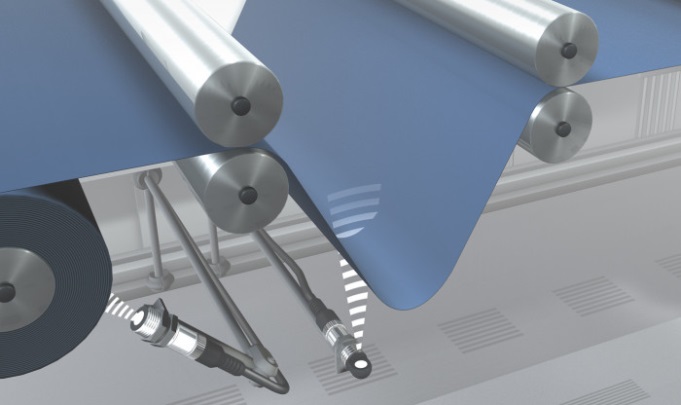
For example, ultrasonic sensor are not affected by color like photoelectric sensors are. Therefore, if the target is black in color or transparent, the ultrasonic sensor will still provide a reliable detection output where the photoelectric technology sensor will not. I was recently approached with an application where a Image2customer needed to detect a few features on a metal angle iron. The customer was currently using a laser photoelectric sensor with analog feedback measurement, however the results were not consistent or repeatable as the laser would simply pick up every imperfection that was present on the angle iron.  This is where the ultrasonic sensors came in as they provide a larger detection range matched with emitting and receiving sound energy. This provided much more stable outputs, allowing the customer to reliably detect and error proof the angle iron. With the customer switching to ultrasonic sensors in this particular application they now have better quality control and less downtime.

So when approaching an application, keep in mindImage3 to think of all sensor technologies as some will provide better results than others. Ultrasonic sensors are indeed an excellent choice when applied correctly. They can measure fill levels, heights, sag, or simply monitor the presence of a target or object. They perform very well in foggy or dusty areas where some other sensor technologies fall short.

For more information on ultrasonic and photoelectric sensors visit www.balluff.com.

Modular Enclosure Accessories Improve Customization and Scalability

Guest Contributor: Rittal Enclosures

5 accessories to enhance TS 8 enclosure functionality  

ts8

With 12 million units sold around the globe, the TS 8 modular enclosure is established as the worldwide-standard. As businesses grow and enclosure needs evolve, many customers are turning to a variety of accessories to scale their solutions. 

These five accessories for lighting, power distribution, viewing and operating, climate control, and assembly are the most popular customizations design engineers and facilities managers are utilizing to maximize their investments. 

1 – For Lighting: LED Compact Lighting System

The Rittal LED Compact Lighting System is a safe, energy-efficient, extra-low-voltage interior lighting solution that delivers full coverage to all corners of the enclosure.  

Enterprise-ready and suitable for voltages ranging from 100–240 V (AC) and 24 V (DC), the LED system can be installed tool-free with clips that connect to a latch-in hook pattern—though optional screw fastening is also available. Magnetic installation is another option, for free positioning within the enclosure. Whichever assembly option you choose, motion detectors or door-operated switches for hands-free illumination are also available.  

2 – For Power Distribution: RiLine Busbar System 

In many regions around the world, busbar systems are the predominant solution for managing power needs now, and in the future. For engineers not familiar with the technology, the RiLine copper busbar system provides reliable power distribution and requires less panel modification, contact points, and wiring work. Busbar systems save space and time for panel builders and offer more contact hazard protection than other cable management options. 

3 – For Viewing Windows and Operating Panels: WKDH Deep Hinged Window Kit 

The Deep-Hinged Window Kit is ideal for installing a viewing window where access to components mounted behind it is required. It is designed to protect HMI displays and components mounted on enclosure panels from wash-downs, rain, snow, sleet, dirt, and dust. The window depth allows for extra-deep pushbuttons (~2”/50mm) and comes with a full-size drill template for easy mounting.  

4 – For Climate Control: TopTherm Filter Fans 

Simply and efficiently manage air flow in your enclosure with filter fans designed for tool-free, snap-in mounting and installation. The TopTherm filter fan’s new diagonal fan technology creates greater pressure stability and constant airflow when installed, even with a contaminated filter mat. This new technology also allows air currents to spread diagonally from the fan, promoting even circulation throughout an enclosure. 

5 – For Base Assembly: Flex-Block Base/Plinth System 

Save assembly time with high-strength plastic corner pieces that clip together base/plinth components. With this system, enclosure transport is uncomplicated, both empty and fully-configured, by removing the base/plinth trim panel. Plus, cable management is straightforward and efficient, saving space for enclosure configuration.

Modular Enclosure Buyers GuideRittal Is Engineered Better 

Whatever your enclosure needs, Rittal has an extensive line of accessories to optimize enclosure functions. Download the Modular Enclosure Buyer’s Guide to see how Rittal products are better than the competition!

cropped-cmafh-logo-with-tagline-caps.png

CMA/Flodyne/Hydradyne is an authorized  Rittal distributor in Illinois, Wisconsin, Iowa and Northern Indiana.

In addition to distribution, we design and fabricate complete engineered systems, including hydraulic power units, electrical control panels, pneumatic panels & aluminum framing. Our advanced components and system solutions are found in a wide variety of industrial applications such as wind energy, solar energy, process control and more.

Balancing the Value of Air-to-Air and Air-to-Water Heat Exchangers

Guest contributor: Eric Corzine, Product Manager Climate Control, Rittal

Heat exchangers provide highly efficient cooling for electrical components. As energy costs increase, they are getting more consideration by system designers. Before making a design decision between air-to-air and air-to-water heat exchangers,  it is important to weigh installation considerations and use-cases. Here, we have provided an overview of each technology to help you determine which can best impact your equipment and your bottom line.

Air-to-Airsirair

Air-to-air heat exchangers are the most common type of exchangers. They work by utilizing the difference between the hotter internal temperature of an enclosure and the cooler, ambient air temperature. Engineers can implement air-to-air exchangers in a variety of industrial environments, including food and beverage, waste and wastewater, and automotive.

Air-to-air exchangers can utilize existing airflow patterns, through convection or forced air, and do not require additional accessories or equipment. The technology can utilize the airflow within an enclosure or can connect to existing ductwork and HVAC systems.

There are some limitations to air-to-air heat exchangers, particularly in the climates they could be installed. For instance, if the difference between indoor and outdoor temperatures is to great then the effectiveness of the exchangers can be significantly reduced. Recent technology upgrades, however, have made air-to-air exchangers functional even in climates that reach temperatures of -13°F.

These factors make air-to-air heat exchangers useful in applications where plumbing for liquid cooling would be difficult to install, and where existing air flow patterns and equipment layout allow for effective cooling. Often, this means situations with moderate thermal loads. HVAC engineers can install them quickly as well, which reduces setup time and costs. However, they are still less efficient compared to air-to-water exchangers because air is not as effective at transferring heat as water.

Air-to-Waterairwaterdownload (6)

Air-to-water heat exchangers use the same principle of temperature differential to provide heating or cooling, however, they alter the temperature of air by forcing it across water coils.

Because of the efficient heat transfer capabilities of water, they can help reduce energy use and utility costs significantly. This is especially useful in situations with large thermal loads, such as IT mainframe applications or an automotive manufacturing environment where water is already available.

One of the drawbacks of air-to-water heat exchangers is the need to pipe water to the unit. The technology requires plumbing and a reliable water supply or recirculation system, which often means pumps, valves, and other accessories.

These plumbing concerns often mean higher installation costs, so engineers need to balance the initial cost with the expected savings over the lifetime of the exchanger. Overall, air-to-water exchangers are useful for high-demand, energy intensive applications.

Making the Right Choice

It is important to consider the right exchanger for your specific climate control situation. The ultimate decision will balance installation and operational costs, target cooling capacity and thermal loads.

Air-to-air exchangers can get up and running quickly and engineers can integrate them into many different kinds of applications easily. Air-to-water exchangers deliver better efficiency and can suit more energy-demanding applications, but they require plumbing and water supplies, which may not always be available. The ultimate choice, then, should consider these factors and engineers should thoroughly research both types of exchangers to understand which one will best suit their application.

Learn more about climate control at Rittal.com 

About Us

cropped-cmafh-logo-with-tagline-caps.png

CMA/Flodyne/Hydradyne is an authorized  Rittal distributor in Illinois, Wisconsin, Iowa and Northern Indiana.

In addition to distribution, we design and fabricate complete engineered systems, including hydraulic power units, electrical control panels, pneumatic panels & aluminum framing. Our advanced components and system solutions are found in a wide variety of industrial applications such as wind energy, solar energy, process control and more.

Predictive Maintenance for Zen State of Manufacturing

Guest contributor: Shishir Rege, Balluff

In a previous entry, Mission Industry 4.0 @ Balluff, I explained that the industry4-0two primary objectives for Balluff’s work in the area of Industry 4.0 are to help customers achieve high production efficiencies in their  automation and achieve  ‘batch size one’ production.

There are several levers that can be adjusted to achieve high levels of manufacturing efficiencies in the realm of IIoT (Industrial Internet of Things). These levers may include selecting quality of production equipment, lean production processes, connectivity and interoperability of devices, and so on. Production efficiency in the short term can be measured by how fast row materials can be processed into the final product – or how fast we deliver goods from the time the order comes in. The later portion depends more on the entire value-chain of the organization. Let’s focus today’s discussion on manufacturing – inside the plant itself.  The long-term definition of production efficiency in the context of manufacturing incorporates the effectiveness of the production system or the automation at hand. What that means is the long-term production efficiency involves the health of the system and its components in harmony with the other levers mentioned above.

The Zen state of manufacturing – nothing important will come up on Google for this as I made this phrase up.  It is the perfect state of the entire manufacturing plant that continues production without hiccups all days, all shifts, every day. Does it mean zero-maintenance? Absolutely not, regular maintenance is necessary. It is one of those ‘non-value added but necessary’ steps in the lean philosophy.  Everyone knows the benefits of maintenance, so what’s new?

Well, all manufacturing facilities have a good, in some cases very strictly followed maintenance schedule, but these plants still face unplanned downtimes ranging from minutes to hours. Of course I don’t need to dwell on the cost associated with unplanned downtime. In most cases, there are minor reasons for the downtime such as a bad sensor connection, or cloudy lens on the vision sensor, etc. What if these components could alert you well in advance so that you could fix it before they go down? This is where Predictive Maintenance (PdM) comes in. In a nutshell, PdM uses actual equipment-performance data to determine the condition of the equipment so that the maintenance can be scheduled, based on the state of the equipment. This approach promises cost savings over “time-based” preventive maintenance.

PowerSuppliesIt is not about choosing predictive maintenance over preventive maintenance. I doubt you could achieve the Zen state with just one or the other. Preventive and predictive maintenance are both important – like diet and exercise. While preventive maintenance focuses on eliminating common scenarios that could have dramatic impact on the production for long time, predictive maintenance focuses on prolonging the life of the system by reducing costs associated with unnecessary maintenance.  For example, it is common practice in manufacturing plants to routinely change power supplies every 10 years, even though the rated life of a power supply under prescribed conditions is 15 years. That means as a preventive measure the plants are throwing away 30% life left on the power supply. In other words, they are throwing away 30% of the money they spent on purchasing these power supplies. If the power supplies can talk, they could probably save you that money indicating that “Hey, I still have 30% life left, I can go until next time you stop the machine for changing oil/grease in that robot!”

In summary, to achieve the zen state of manufacturing, it is important to understand the virtues of predictive maintenance and condition monitoring of your equipment. To learn more visit www.balluff.us.

cropped-cmafh-logo-with-tagline-caps.png

CMA/Flodyne/Hydradyne is an authorized  Balluff distributor in Illinois, Wisconsin, Iowa and Northern Indiana.

In addition to distribution, we design and fabricate complete engineered systems, including hydraulic power units, electrical control panels, pneumatic panels & aluminum framing. Our advanced components and system solutions are found in a wide variety of industrial applications such as wind energy, solar energy, process control and more.