Guest contributor: Jessica Yeh, Phoenix Contact USA
Sizing circuit breakers is confusing because there are so many factors to take into consideration. Of course, there are the typical concerns: price, size, and delivery time. But what about everything else?
What trip mechanism should be used? What ampere rating? Dual rated or regular voltage ratings? Why do I need a lockout/tagout? Does a shunt do the same thing as an auxiliary? What does bidirectional mean? What approvals do I need to take into consideration? Do I need NEC Class 2? NEMA? CSA? UL? IEC or IEEE certifications?
These are just a few of the things to consider when choosing a circuit breaker for a specific application.
Stop the ride, I want to get off!
Here’s the thing. Selecting breakers is a complex task, but the following list will give you a few basic ideas to get started in the right direction. This is by no means everything you should consider, but it’s a nice breakdown.
(The good kind, not the mental kind.)
What type of protection are you looking for?
Breakers are activated by various factors including PCB components in the case of electronic breakers, heat in terms of thermal breakers, magnetism for both thermal-magnetic and hydraulic-magnetic breakers, and more. Each trigger has a different reaction time. Depending on how critical the equipment you’re protecting is, you may want to use this basic guide.

Size matters (Use the 80 percent rule)
It’s common practice to choose a breaker with an ampere rating at around 80 percent of the nominal rating of your application. This ensures that you have a nice little buffer in case the current spike is particularly strong. The breaker will be able to trip well before the current level can get too high and cause damage.
Embrace the trip curves
When someone says “trip curve,” you either have one of two reactions.
A) Cringe and gulp down the nauseating feeling at the thought of having to squint over all those lines and numbers, or
B) Pass the information along to someone else so that they can exhibit reaction A.
While many companies add their own custom trip curves, the most common include B, C, and D curves, which are considered industry standard.
What you want to keep in mind when it comes to trip curves is that it’s not about all the little calculations, but the overall picture. Besides thinking “how fast does this thing need to trip?” also consider it in terms of your equipment. Sensitive devices should be protected by a breaker that reacts quickly. On the opposite end, equipment with higher startup currents like motors would probably be best protected by a breaker with a delayed trip curve.
Need for approvals
You may have heard the term “Listed” or “Recognized.” You may have also heard the terms “supplemental” and “branch” protection. Depending on your requirements and the type of breaker you’re using, you might need to select a specifically approved breaker. In most cases, these are the four basic types you’ll often see.
Supplementary protectors (UL Recognized) interrupt an electrical distribution circuit and are intended to protect equipment.
Branch circuit protectors (UL Listed) open a circuit during overload and short circuit and are intended to protect the circuit conductors.

Completing the outfit
When choosing an outfit, you always want to get the basics down first, before you start accessorizing. Outfitting a cabinet is no different. Once you’ve chosen your breaker, you can add additional bells and whistles to give you a little something extra. Here are just a few options.
To reset or activate/deactivate the breaker remotely, you would use its remote reset/control. Combined with remote status indication, you can easily service and maintain breakers without going to a job site.
But if you’re already on site, the local status indication feature uses color codes that allow you to easily service and maintain breakers.
Busbars reduce wiring by connecting a series of breakers to a common a power source.
And finally, lockout/tagout keeps things safe by attaching to the trip mechanism and preventing unwanted tampering during testing or maintenance.
As you get further into the process, you’ll still have to consider some of the more advanced questions raised above, but this list gives you some of the basic break(er)down that you need to know to get started! To learn more about circuit breakers and overcurrent protection options, visit www.phoenixcontact.com/cbpluggable.

CMA/Flodyne/Hydradyne is an authorized Phoenix Contact distributor in Illinois, Wisconsin, Iowa and Northern Indiana.
In addition to distribution, we design and fabricate complete engineered systems, including hydraulic power units, electrical control panels, pneumatic panels & aluminum framing. Our advanced components and system solutions are found in a wide variety of industrial applications such as wind energy, solar energy, process control and more.
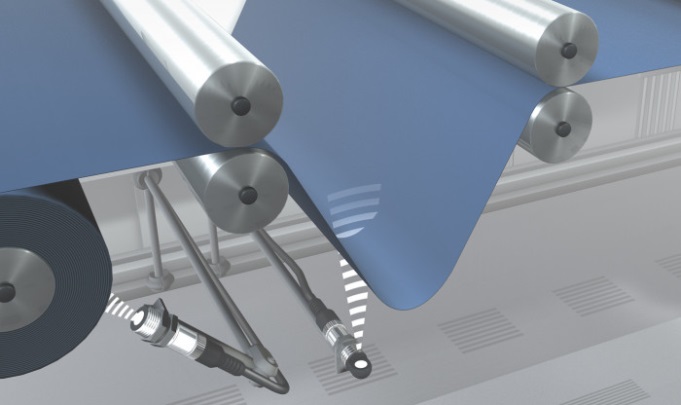 offerings as a go-to as they seem more common. Photoelectric sensors are solid performers, however they can run into limitations in certain applications. In these circumstances, considering an ultrasonic sensor could provide a solid solution.
 customer needed to detect a few features on a metal angle iron. The customer was currently using a laser photoelectric sensor with analog feedback measurement, however the results were not consistent or repeatable as the laser would simply pick up every imperfection that was present on the angle iron. This is where the ultrasonic sensors came in as they provide a larger detection range matched with emitting and receiving sound energy. This provided much more stable outputs, allowing the customer to reliably detect and error proof the angle iron. With the customer switching to ultrasonic sensors in this particular application they now have better quality control and less downtime.
 to think of all sensor technologies as some will provide better results than others. Ultrasonic sensors are indeed an excellent choice when applied correctly. They can measure fill levels, heights, sag, or simply monitor the presence of a target or object. They perform very well in foggy or dusty areas where some other sensor technologies fall short.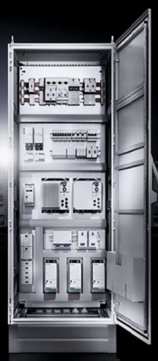




 two primary objectives for Balluff’s work in the area of Industry 4.0 are to help customers achieve high production efficiencies in their automation and achieve ‘batch size one’ production.

 CMA/Flodyne/Hydradyne


 The IoT Gateway collects data from various data sources and natively transfers it to the analysis and evaluation software (Production Performance Manager).
 Elements of the joint starter kit from Bosch Software Innovations and
 Incremental encoders are pretty simple and straightforward. They provide digital pulses, typically in A/B quadrature format, that represent relative position movement. The number of pulses the encoder sends out correspond to the amount of position movement. Count the pulses, do some simple math, you know how much movement has occurred from point A to point B. But, here’s the thing, you don’t actually know where you are exactly. You only know how far you’ve moved from where you started. You’ve counted an increment of movement. If you truly want to know where you are, you have to travel to a defined home or reference position and count continuously from that position.
 Absolute encoders, on the other hand, provide a unique output value everywhere along the linear travel, usually in the form of a serial data “word”. Absolute encoders tell you exactly (absolutely) where they are at all times. There’s no need to go establish a home or reference position.


 CMA/Flodyne/Hydradyne

